
HERE you will find the collected articles, interviews, and presentations of one of our most respected and prolific JFK researchers, attorney, author, and AARC Board member, Bill Simpich. Bookmark this page for updates.
1. Oswald was an FBI Source – JFK’s Opponents Invented the Story about Informant S-179 (2025)
2. My Summary of the Pepe Letters: Parts 1 – 4 (2025)
3. 2024 AARC Lecture A: November 1959 – November 1963 Kent Biffle and the Fort Worth Press
4. 2024 AARC Lecture B: The Dallas Journalists & Law Enforcement that Molded the Assassination Coverage
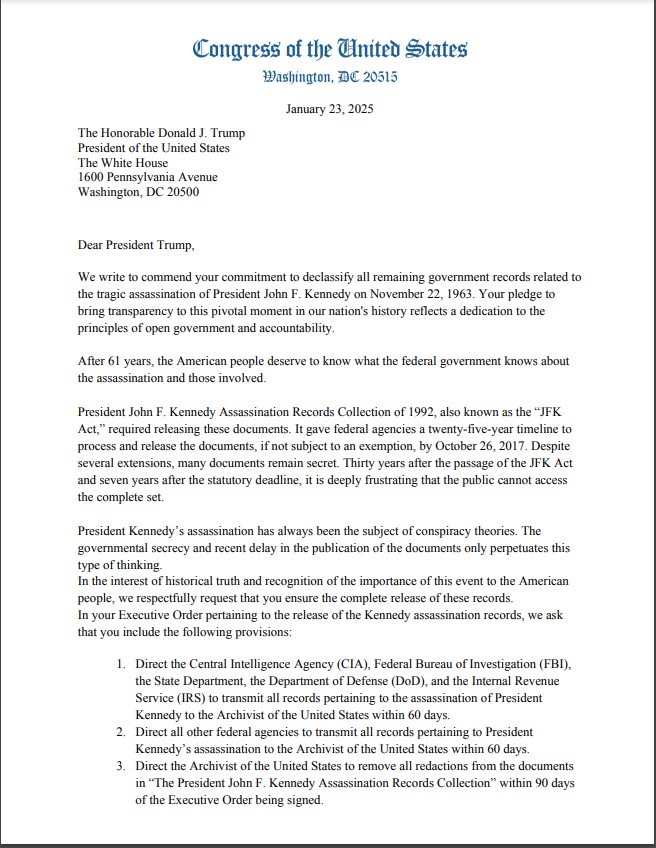
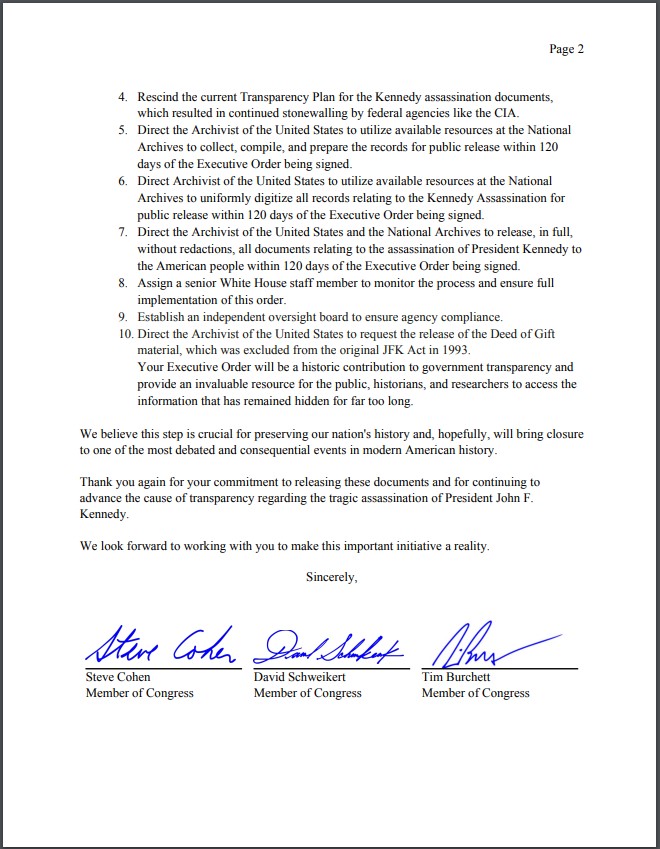
6. JFK RECORDS: Three Congressmen offered a ten-point program we should support. Here it is: (2025)
7. With No Satisfactory Explanation
9. Sirhan Denied Parole: It’s a Broken Criminal Justice System (2016)
10. Bobby Kennedy and the Promise of Rebirth (2018)
11. The JFK Case: The Twelve Who Built the Oswald Legend (2010 – 2018)
12. A CIA Tutorial: How to Avoid Providing Files (2017)
13. JFK CONVERSATIONS – Bill Simpich with Alan Dale: Parts 1 and 2 (2013)
15. Correlation Summaries (2025)
16. Select Interview and Video Presentations (2002 – 2025)
17. Wiretapping in America: The Moment of Decision Is Near (2006)
18. Election Theater: Or … The Capitol Hill Police Can’t Protect the US Capitol? (2007)
19. The Watada Mistrial: Here’s What Really Happened (2007)
20. The Murder of JFK: Another Puzzle Piece Solved (2015)
21. The Murder of JFK, Part 2: Counterfeit ID Planted in Oswald’s Wallet? (2015)
22. Secret Operations in the United States and their Effects on Democracy (2017)
23. Trump Promised the JFK Files, but the Big Dogs Ate His Homework (2017)
24. Introduction: The Lumpkin-Gannaway Network (2019)
25. The Lumpkin-Gannaway Network – Chapter 1 (2019)
26. How About a January 6th Records Review Board? (Why Trust a Commission?) (2021)
27. The JFK Documents: A Bird’s Eye View into the National Security State (2021)
28. November 23, 1963: Oswald’s Last Phone Calls (2023)
29. What Was Operation Stateside? (2025)
30. Why Wasn’t Jerry Hill Indicted for Obstruction in the Tippit Case in ’64? (2025)
Oswald was an FBI Source – JFK’s Opponents Invented the Story about Informant S-179 (2025)
9 September, 2025|Special to the AARC
*****
BILL SIMPICH: My Summary of the Pepe Letters (2025); DOUG CAMPBELL: Letters From Cuba (Nov. 2020)
11 March, 2025|Special to the AARC
*****
AARC Lecture Series
The AARC presents a new series of lectures commemorating and honoring the legacy of President Kennedy, the inspirational meaning of his term of office, and the consequences of his assassination sixty-one years ago.
In the words of the distinguished British scholar Malcolm Blunt, “Jesus Christ, what we lost when we lost that man.”
BILL SIMPICH: November 1959 – November 1963 Kent Biffle and the Fort Worth Press
By Bill Simpich (2024)
*****
BILL SIMPICH: The Dallas Journalists & Law Enforcement that Molded the Assassination Coverage
By Bill Simpich (2024)
*****
Bill Simpich: Analyzing the New JFK Revelations
Review of New CIA and FBI Documents That Change Cold War History
*****
JFK RECORDS: Three Congressmen offered a ten-point program we should support. Here it is:
Courtesy of Bill Simpich | January 23, 2025
*****
WITH NO SATISFACTORY EXPLANATION
By Bill Simpich
[Editor’s Note: The next time a talking head assures you that there is nothing in the JFK records of any significance, you might want to ask what they can tell you about exactly what’s not in the JFK records. Courtesy of Bill Simpich, Bill Kelly, and AARC Board member Malcolm Blunt. This new feature is a work in progress.
Bill Simpich
1. Despite the specific requests of the Assassination Records Review Board, very few assassination-related documents have been provided by NSA. The bulk of them were from their counsel’s office. While the CIA and FBI turned over hundreds of thousands of documents, only a few hundred were provided by NSA. NSA flatly asserted that none of their intelligence documents contained anything of investigatory significance to the JFK assassination. This statement is nonsensical, and should be given no weight.
2. In the same vein, all of the military intelligence agencies provided very few documents in comparison to the CIA and the FBI. One minor but illustrative example is the failure to find any records for the Director of ONI from 1959-1964. There are very few records of their handling of anti-Castro assets, agents, and informants. Their collective response is equally nonsensical to that of the NSA, and should be construed as a non-response.
3. LIFEAT records (listening posts not the embassies/consulates – generally on the homes and offices of targets) from December 1962-December 3, 1963 are missing. Note from 1977 to “Chris”, presumably Latin American Division chief Chris Hopkins, asks: “What is going on?” 104-10307-10055: FORM: PPD PHOTOGRAPHIC REQUISITION/HANDWRITTEN NOTES RE LIMITED, LIONION, LIFEAT, LIOMEN, LITAINT
4. At least 18 Staff D dispatches to NSA during autumn 1963 are missing from the files. On a couple of occasions, including 8/31/78, these specific Staff D documents were requested. The HSCA was told that the eighteen documents directed to Staff D remained unretrievable, because no “file number” was assigned to them. The logical conclusion is that these dispatches received no “file number” precisely because they involve Staff D.
5. The daily “resumen” (wiretap summary) provided by the LIENVOY base-house monitors for the period from 9/15/63 to 10/15/63 has not been provided despite a specific HSCA request – a full response as required by the JFK Act would have demanded all relevant resumen for a much longer period of time.
*****
Publication Spotlight:
State Secret: Wiretapping In Mexico City, Double Agents and the Framing of Lee Oswald by Bill Simpich
The Mary Ferrell Foundation is pleased to present the online serialization of this book by Bill Simpich. State Secret: Wiretapping in Mexico City, Double Agents, and the Framing of Lee Oswald delves deeply into the strange story of the Oswald Mexico City trip two months before the assassination, and how these events were used as part of the framing of Oswald after 11/22/63. With a focus on the wiretap operation and the curious manipulation of CIA information on Oswald, and based on voluminous research using the MFF’s CIA records, Bill presents a compelling new analysis of this mysterious event.
 “State Secret recounts an oft-told tale in the events leading to the Dallas tragedy: the story of Lee Harvey Oswald in Mexico City in September and October 1963. Bill Simpich adds revelatory new detail along with minimal theorizing and maximum lucidity about what we don’t know. To put it simply, he lays bare a state secret: the fact pattern of a counterintelligence operation.” Jefferson Morley, Investigator; Journalist; author of “Our Man In Mexico: Winston Scott and the Hidden History of the CIA” and “Snow-Storm In August: The Struggle For American Freedom and Washington’s Race Riot of 1835;” Editor In Chief, JFKFacts.org.
“The most important recent development in the JFK research community has been the ability to data-mine thousands of pages of primary material in record time. The ability to find leads, collate and cross reference data, and share information through sites like Mary Ferrell and the AARC is a quantum leap for serious researchers who are willing to put in the effort to run down each angle. No one has illustrated the power of these new tools like Bill Simpich, whose original and thorough examination of the intelligence connections to Lee Harvey Oswald is some of the most important work to be introduced in the past decade. That he has freely provided the fruits of his intense labor is a tribute to his sincerity and a model for other researchers.” Stuart Wexler, Historian; Researcher; Lecturer; co-author of “The Awful Grace of God” and “Shadow Warfare,” with Larry Hancock, and most recently, “America’s Secret Jihad,” his first solo effort.
“Standard intelligence requires that the identity and activities of virtually everyone associated with both operations and intelligence collection be protected from foreign espionage though the use of cryptograms (crypts), cover names and cover identities – as well as the use of aliases by operational personnel. While necessary for operational security, those practices make the historical study of intelligence documents extremely difficult, even once they are released in full. It requires intense study and comparison of literally thousands of both field and headquarters documents to determine the true names of both individuals and operations – such extreme efforts have been undertaken by no more than a handful of researchers. Simpich is clearly among the leaders in such work. In State Secret, Simpich has taken us beyond spy novels into the real world of intelligence operations – a world far more complex in fact than in fiction.” Larry Hancock, author of acclaimed volumes on America’s hidden histories: “Someone Would Have Talked,” “Nexus,” co-author with Stuart Wexlar of “The Awful Grace of God” and “Shadow Warfare.” His book “Surprise Attack: From Pearl Harbor to 9/11 to Benghazi,” was published September 15, 2015. He is the co-author, with David Boylan, of The Oswald Puzzle, (2025).
*****
State Secret: Wiretapping In Mexico City, Double Agents and the Framing of Lee Oswald
Preface
This book is about the counterintelligence activity behind the JFK story and its role in the death of President Kennedy. It examines how the existence of tapes of a man in Mexico City, identifying himself as Oswald, were discovered before the Kennedy assassination and hidden after the assassination. On November 23, 1963, FBI Director J. Edgar Hoover wrote President Lyndon Johnson and the Secret Service chief, telling both of them that the caller was not Lee Harvey Oswald. These tapes showed that the supposed “lone gunman” had been impersonated just weeks before the killing of JFK, tying him to Cuban and Soviet employees in a manner that would cause great consternation in the halls of power on November 22.
The other aspect of this book is about how the importance of the Mexico City tapes collided with the national security imperative of hiding American abilities in the field of wiretapping. These tapes were created by wiretapping the Soviet consulate. World leaders prize wiretapping because it enables them to find out the true motives of their friends and adversaries. It’s no wonder that Edward Snowden was castigated for daring to reveal the nature of these jewels. Back in 1963, wiretapping was the domain of the CIA’s Staff D, the super-secret division that did the legwork for much of the signals intelligence or ‘sigint’ that was provided to the National Security Agency.

The hiding of the tapes paralyzed any effort to conduct an honest investigation into what happened. Within days of the assassination, the agencies were flooded with phony evidence tying Oswald to a Soviet assassination team and Red Cuban plots. Lyndon Johnson and Robert Kennedy probably knew little about the tapes, but acquiesced to the cover-up rather than run the risk of a war on Cuba which might include the USSR. This story explains why LBJ was so insistent that Chief Justice Earl Warren chair the investigating commission and prevent the possibility of “40 million dead Americans”, and why the Warren Commission was denied access to the investigators, witnesses and documents needed to solve the case.
To win over Warren, LBJ said that “I just pulled out what Hoover told me about a little incident in Mexico City.” The purpose of this book is to bring this state secret into the sunlight. Sunlight on this secret dissipates idle talk of mystery. The more facts we can expose to the cold light of day, the less time is spent feeling our way through the dark. […]
The cover-up of the President’s death is a state secret. The tale of the Mexico City tapes is a state secret. Much of the history of the United States is hidden from us, behind a wall of over-classifications and redactions. By comparison, we know more about the JFK case than I ever thought was possible. Much more of it sits in the National Archives and on the websites of the Mary Ferrell Foundation, the Poage Legislative Library at Baylor, the Harold Weisberg Archive at Hood College, the National Security Archive, the presidential libraries, and many more locations, waiting for us to read it, sift through it, and analyze it. The hyperlinks in this story enable the reader to view the original documents and engage in the hunt. Are we interested in serious work, or would we rather argue about it as a form of entertainment?
Preface
Chapter 1: The Double Dangle
Chapter 2: Three Counterintelligence Teams Watched Oswald
Chapter 3: The Cuban Compound In Mexico City Was Ground Zero
Chapter 4: Mexico City Intrigue — The World of Surveillance
Chapter 5: The Mexico City Solution
Chapter 6: The Set-up and the Cover-up
Conclusion: Only Justice Will Stop A Curse
The JFK case is not an insoluble mystery, but more of a steeplechase. What we need is access to our history and a passion for tough-minded analysis. It’s not a lot different than a clear-eyed examination of the roots of war, or what it will take to end world hunger or global warming. Errico Malatesta was a well-known Italian agitator who spoke throughout Europe about his vision for a better world. Malatesta would often suggest that “everything depends on what the people are capable of wanting.”
–Bill Simpich
The Mary Ferrell Foundation and the Assassination Archives and Research Center have been able to publish 1.5 million documents and provide a variety of research tools because of the financial support of people like yourself. Rather than charge money for his efforts, Bill Simpich asks you to contribute a donation at the home page of either or both of these invaluable organizations.
*****
Sirhan Denied Parole: It’s a Broken Criminal Justice System
By Bill Simpich, Reader Supported News | 25 February, 2016
*****
Bobby Kennedy and the Promise of Rebirth
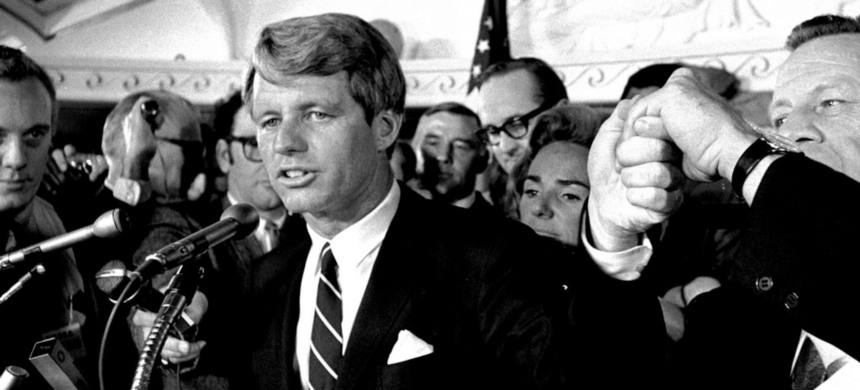
“The key question is to pass beyond the facts of CIA’s operations to the reasons they were established – which inexorably will lead to economic questions: Preservation of property relations and other institutions on which rest the interests of our own wealthy and privileged minority. These, not the CIA, are the critical issue.“
— Phillip Agee, CIA Officer
It was 1968.
Bobby Kennedy was running for President.
He offered the opportunity to redeem the terrible slaying of his brother.
Bobby blamed himself for Jack’s death. If it hadn’t have been for the machinations around Cuba, Jack might have still been President.
Bobby was in the middle of those machinations. He had been giving advice to the CIA on how to do its job in Latin America and elsewhere. Many Agency officers did not appreciate his efforts, and said so.
He had his own ideas on how to overthrow Castro – while ordering the Agency to stop working with the Mafia to assassinate the Cuban leader.
He had his own ruthless side. Historian Evan Thomas has described how Bobby considered manufacturing an incident to justify an American invasion in the midst of the Cuban missile crisis.
He also supported his brother when Jack changed tactics and tried to reach rapproachement with Fidel in the summer and autumn of 1963.
In the days after Jack’s death, both Bobby and Jackie Kennedy reached out to the Russians and told them that they believed that JFK had been killed due to a domestic operation.
LBJ didn’t want any part of Cuba after what happened to JFK. He turned to Vietnam.
The escalation of civil rights struggles in the midst of a war economy resulted in a social explosion. LBJ was forced to step down. Bobby found himself being forced to step up.
The question of “who had what” and “who had how much” was on the table.
The Black Panthers were seen doing security at his big city rallies.
He traveled to the Mississippi Delta to learn more about poverty.
Cesar Chavez and Bobby stood together in the Central Valley fields.
Working-class white people embraced RFK as one of their own. He was Irish. His father was a bootlegger.
Religious leaders welcomed him. He was a devout Catholic, fiercely ecumenical.
He was determined to bring an end to the Vietnam War.
In a divisive time, a terrible time, he offered the possibility of healing.
He delivered an incredible oration in Indianapolis that prevented riots in that city during the night that Martin Luther King was killed.
To that largely African American audience, he spoke about Aeschylus, the ancient Greek playwright. Aeschylus is known as the father of tragedy.
Bobby had studied Aeschylus in his attempts to cope with his profound suffering.
Aeschylus worked in a vineyard. He told how the god Dionysus visited him in his sleep. Dionysus commanded him to make tragedy his life’s work.
Aeschylus and his brother Cynegeirus fought to defend Athens during the Persian invasion at the Battle of Marathon. The Athenians triumphed over impossible odds. Cynegeirus, however, died in the battle.
From memory, Bobby quoted Aeschylus to the men and women turned towards him that night.
“He who learns must suffer. And even in our sleep pain that cannot forget falls drop by drop upon the heart, and in our own despair, against our will, comes wisdom to us by the awful grace of God.”
Even now, it is hard to grasp the loss of Martin Luther King. Or Medgar Evers. Or the four little girls in Birmingham. Or Malcolm. Or many other civil rights leaders.
When there was a second Kennedy assassination, it seemed like the end of hope.
Many of Bobby’s followers turned to the right and voted for George Wallace in the general election, a Southern governor who stood for segregation.
What made it even worse – if humanly possible – is that there was no attempt for justice for Bobby.
Everyone knew Sirhan Sirhan had fired a revolver – but the coroner made a critical finding.
“The powder residue pattern on the right ear of Senator Kennedy was caused at a muzzle distance of approximately one inch.”
No one saw Sirhan get closer than two feet from RFK. No one ever saw him get behind Bobby’s head. The acoustics evidence showed 13 shots. There were more than eight bullet holes. Sirhan’s revolver held eight bullets.
The evidence was manipulated by a special police unit led by Manuel Pena, who intimidated witnesses and misconstrued the facts at every turn. Pena had been working on special assignments for the CIA formore than ten years.
The autopsy report showing the “one inch muzzle distance” was not given to Sirhan’s lawyer Grant Cooper until he had already stipulated to his client’s guilt.
Furthermore, Cooper was fatally compromised. The attorney was facing disbarment due to a controversy involving grand jury papers found on his desk while he was on a defense team representing Johnny Rosselli, a key player in the CIA-Mafia plots to assassinate Fidel Castro.
Cooper wasn’t about to rock the boat by putting the government on trial. He used a diminished capacity defense and ignored the second gunman evidence. It was no surprise that this anemic approach failed. Sirhan was convicted for first degree murder and was given life in prison. Why did Sirhan do it? Who were his compatriots? We, the people, learned nothing.
From the seventies onward, the progressive challenge was to fight against succumbing to apathy. Poverty in America went from bad to worse. The forces of military and intelligence took a momentary hit after Vietnam, only to proceed to double and redouble their formidable budgets.
Many progressive organizers were no longer willing to work in national politics – or politics at all.
George McGovern managed to obtain the Democratic nomination in 1972 – only to learn later on that his victory was the plan of the Nixon inner circle. Nixon’s people sabotaged the campaign of the more centrist Ed Muskie.
Remember Lucianne Goldberg – the woman who convinced Linda Tripp to convince Monica Lewinsky to hold on to the blue dress with Clinton’s DNA all over it? During 1972, she succeeded in the outing of McGovern’s vice presidential candidate Tom Eagleton for electroshock treatments, effectively destroying any chance the campaign had to overtake Nixon’s reelection machine.
There was a resurgence of progressive work in the 70s – steadily beaten down and marginalized by the strange terrors of the SLA, the Zebra Killings, and Jonestown. The strange deaths of Harvey Milk and George Moscone. The mysterious assassination of RFK champion Al Lowenstein, one of the only politicians questioning the cause of Bobby’s assassination.
All of these tragedies – from JFK’s death to the shooting of Reagan – had one thing in common: the determined incuriosity of the elected classes and the media. Any organized attempt to investigate these events was waved off as unpatriotic or scoffed at as paranoid.
The result was predictable: A country that no longer knows its history. A nation with little belief in progress, or even the notion of progress. A culture that can be readily manipulated by yet another shock or media event.
The shooting of leaders seemed to end with the shooting of Reagan. The strange events then shifted to “honey traps” – Gary Hart and Bill Clinton were just two men whose careers and reputations took a U-turn. Plenty of Republican and Democratic leaders were taken down in the process. A particularly virulent form of opposition research.
The underground economy of drugs became as large as the visible economy. Arms trading, secret wars, Iraq, Afghanistan – fueled by the powerful tools emerging from Silicon Valley – became the driver of employment. The economy of the middle of the country was hollowed out. Manufacturers fled to the Third World for fewer regulations and cheaper labor. Meanwhile, the cost of real estate on the coastlines of the US and Western Europe spiraled to undreamed-of heights.
Now, in 2018, economic dislocation is the order of the day. Like in FDR’s time.
People in the West now realize what they have in common. In a culture based on possessions, most Americans own relatively little. The last thirty years have seen the biggest transfer of wealth from one social class to another in human history. One percent of the population controls about 40 percent of the resources.
The antipoverty organizer Cheri Honkala likes to say: “The poor have zero. They don’t own anything, so they can’t owe anything. A big portion of the middle class is $80,000 or more in debt.”
It’s no accident that candidates like Bernie Sanders have risen to the forefront. For decades, people on the left did contortions to avoid being called “liberals.” Sanders calls himself a “democratic socialist.” The polls show that enormous sectors of the voting population identify with his description.
In an era where Black Lives Matter, #MeToo, #NeverAgain, Fight for 15, and the Poor People’s Campaign are gaining traction, Bernie Sanders is just about the only socialist member of Congress. It’s hard to describe a more profound disconnect between the state and the people.
It’s also hard to describe a more profound disconnect for my generation, the Boomers. Ever since the Kennedys and the McGovern effort, progressives have been in the political wilderness.
With the aid of a corporate-driven security council, the Carter administration thought it would be clever to create a quagmire for the Soviets in Afghanistan. Then they invited the Shah of Iran to take refuge in the United States. It’s been downhill ever since.
The Boomers began their lives with youthful dreams of utopia. We have now spent our adult lives surrounded by Republicans and Republican-like Democrats. For most of my life, the legacy of FDR being prodded by vibrant social movements seemed as distant as Joan of Arc and the Hundred Years’ War.
The centrist Obama offered a brief moment of hope. Occupy and the social movements that erupted during Obama’s time were far more significant. Bernie Sanders opened the door to something real.
Look at the elections this week. Progressives are rising up around the country. Young working-class veterans are joining the fight, coming from a social milieu that doesn’t usually run for office.
These candidates would be getting nowhere without the emerging social movements. These movements are led by people of color and the millennials – the essential ingredients for lasting social change.
Last week, RFK Jr. called for a new investigation of his father’s death, stating that he was now convinced there was a second gunman. His call was joined by his sister, former Maryland, Lt. Governor Kathleen Kennedy Townsend.
The Kennedy family, for understandable reasons, has historically been reluctant to endanger any more family members by taking a position on this explosive question. Many Americans ask a related question: What’s the point?
On one level, it’s important to know everything we can know. Only then can we move on. On another level, it always comes back to the same thing.
Until a culture is willing to look into its heart of darkness, and grapple with its own weaknesses, nothing much is going to change. The only way to move forward is to face the greatest fears and come to terms with the hardest parts of reality. It’s nothing less than what Carl Jung, Joseph Campbell, and others call the hero’s journey.
It’s no different than looking at the history of racism or the roots of war. When you look at the life of Bobby Kennedy, there is one distinguishing characteristic – and it’s not his heroic death.
Bobby took the hardest blow that anyone can imagine – the assassination of his brother – and rose up to fight again. His power – his passion – is the heart of his hidden legacy. What Bobby Kennedy offers to all of us is the promise of rebirth.
*****
THE JFK CASE: THE TWELVE WHO BUILT THE OSWALD LEGEND
by Bill Simpich © February 11, 2018
Between August 2010 and January 2015 Bill Simpich produced 12 articles on the JFK case which became the backstory to his invaluable work, STATE SECRET: WIRETAPPING IN MEXICO CITY, DOUBLE AGENTS, AND THE FRAMING OF LEE OSWALD. Following are all twelve of his original chapters. An upcoming epilogue will be published this year.
*****
A CIA Tutorial: How to Avoid Providing Files
 With the October releases coming up, we should keep in mind what the ARRB has already told us we will not find.
For those of us who research the Mexico City story, it has always been very frustrating to find that there is no organized way to find the cables and dispatches between Mexico City and Headquarters, or between these two entities and JMWAVE in Miami, except within carefully circumscribed dates.
What we have run into amounts to a CIA tutorial on how to avoid providing information that is mandated under the law.

As shown below, the listing of files for JMWAVE begins on November 21, and the listing of files for HQ and Mexico City begins on October 1. Very unhelpful for putting together the Oswald story, as well as the events prior to the assassination in Miami.
But not all of the files are missing. A number of the files within this timeframe do exist – simply in a less organized format. Many memos are tucked away in various other files, such as the files on Cuban consul Eusebio Azcue in CIA microfilm, Reel 2.
In fact, it is probable that most or all of these files could have been provided by the CIA if they had simply cross-indexed the files within their own Records Integration Division.
The National Archives has the duty to index the files themselves, and send a demand to the CIA for the missing files. The Act is in effect until “the Archivist certifies to the President and the Congress that all assassination-related records have been made available to the public in accordance with this Act.”
From the ARRB Final Report in 1999
The Review Board deemed these gaps to be significant because both CIA stations played roles in U.S. operations against Cuba.
The cable traffic that the Review Board reviewed in the CIA’s sequestered collection commences on October 1, 1963, and contains the earliest known communication—an October 8, 1963, cable—between the Mexico City Station and CIA Headquarters concerning Lee Harvey Oswald.
1998 explaining that:
In general, cable traffic and dispatches are not available as a chronological collection and thus, for the period 26 through 30 September 1963 it is not possible to provide cables and dispatches in a chronological/package form.
During the periods in question, the Office of Communications (OC) only held cables long enough to ensure that they were successfully transmitted to the named recipient. On occasion. . .cables were sometimes held for longer periods but not with the intention of creating a long-term reference collection.
The Review Board was not able to locate cables or dispatches from the following periods:
After the assassination, the Office of the Deputy Director of Plans ordered relevant CIA offices to retain cables that they would have otherwise destroyed. The HSCA used the remaining cable traffic to compile its Mexico City chronology.
Had CIA offices strictly applied the ninety-day rule, there might have been copies of cable traffic commencing as early as August 22, 1963, rather than October 1, 1963, available to CIA on November 22, 1963.
Bill Simpich is a Civil Rights attorney and author of State Secret: Wiretapping in Mexico City, Double Agents, and the Framing of Lee Oswald.
*****
JFK CONVERSATIONS: Bill Simpich with Alan Dale
Alan Dale speaks with Bill Simpich: Civil Rights attorney, author of ground-breaking articles focusing on the hidden intricacies of the CIA, a leading and insightful analyst of the intelligence files associated with Lee Harvey Oswald’s enigmatic episode in Mexico City seven weeks prior to President Kennedy’s assassination. Bill’s eBook, State Secret, was published in 2013 and may be read in its entirety courtesy of Bill and the Mary Ferrell Foundation: State Secret: Wiretapping in Mexico City, Double Agents, and the Framing of Lee Oswald. Please support important work such as this by making a financial contribution to the Mary Ferrell Foundation.
PART ONE
PART TWO
*****
AARC 2014 Conference Presentation:
Bill Simpich – How Captain Westbrook and the Tippit Shooting Provide a Counterpoint Narrative to the Warren Report
Counterpoint Narrative to the Warren Report
“This is a counter-narrative that was held back from everybody on the Warren Report — and the Warren Commissioners, except for Gerald Ford and Allen Dulles, all said that they were lied to and not given enough information and all the rest. So we have had our history stolen from us.” Bill Simpich
Bill Simpich is a Civil Rights attorney, the author of ground-breaking articles focusing upon the hidden intricacies of the CIA, and is a leading and insightful analyst of the intelligence files associated with Lee Harvey Oswald’s enigmatic episode in Mexico City seven weeks prior to President Kennedy’s assassination. He is the author of State Secret, Wiretapping in Mexico City, Double Agents, and the Framing of Lee Oswald which is now available free of charge from the Mary Ferrell Foundation.
*****
Correlation Summaries
By Bill Simpich
Sept., 2025 | On files of major significance, the Bureau (FBI) often prepared a “correlation summary” which essentially is a chronological history of data contained in the file. This is extremely important because often the correlation summary identifies cross-references and related files that contain information about the subject which is not always released when the main file was processed. [See How to Read an FBI File, written by Phil Lapsley available courtesy of Rex Bradford and The Mary Ferrell Foundation.]
Teresa Proenza correlation summary
Select Interview and Video Presentations (2002 – 2025)
Wiretapping in America: The Moment of Decision Is Near (2006)
Election Theater: Or … The Capitol Hill Police Can’t Protect the US Capitol? (2007)
The Watada Mistrial: Here’s What Really Happened (2007)
The Murder of JFK: Another Puzzle Piece Solved (2015)
The Murder of JFK, Part 2: Counterfeit ID Planted in Oswald’s Wallet? (2015)
Secret Operations in the United States and their Effects on Democracy (2017)
Trump Promised the JFK Files, but the Big Dogs Ate His Homework (2017)
Introduction: The Lumpkin-Gannaway Network (2019)
The Lumpkin-Gannaway Network – Chapter 1 (2019)
How About a January 6th Records Review Board? (Why Trust a Commission?) (2021)
The JFK Documents: A Bird’s Eye View into the National Security State (2021)
November 23, 1963: Oswald’s Last Phone Calls (2023)
What Was Operation Stateside? (2025)
Why Wasn’t Jerry Hill Indicted for Obstruction in the Tippit Case in ’64? (2025)
Copyright © AARC. All rights reserved.