For background on Gannaway and the Special Services Bureau, see the Warren Commission testimony of Lieutenant Jack Revill (who became Assistant Chief in 1982) is very revealing in describing the duties and responsibilities of the Special Services Bureau. He stated: “I am currently in charge of the criminal intelligence section.” Later he outlined the overall task of the bureau. “Our primary responsibility is to investigate crimes of an organized nature, subversive activities, racial matters, labor racketeering, and to do anything that the chief might desire. We work for the chief of police. I report to a captain who is in charge of the bureau – Captain Gannaway.”
Lieutenant Revill later indicated that he had been assigned to an investigative panel set up to determine how Jack Ruby had gained access to the City Hall basement where he had shot Oswald. This type of enquiry was obviously also the responsibility of the Special Service Bureau.
For a very revealing account of the functions of the CIS, see Philip H. Melanson’s article “Dallas Mosaic” published in the Third Decade, vol. 1, no 3, March 1985, pages 12-15. Among other things, Dr. Melanson mentions that ” the spooky little unit was physically removed from the rest of the DPD and was headquartered in a building on the state fairgrounds.” (Vol. IV HSCA, 597.) The use of the word ‘spooky’ may or may not be a deliberate clue to something rather sinister.
I believe it was located very close to the Women’s Building on the State Fairgrounds.
The arrest wallet is now in the Archives. There is video of the wallet at the arrest scene. The wallets look extremely similar if not identical...(I think they are two different wallets, but the important thing is that they are extremely similar). It looks like there were two wallets, made by the same manufacturer. The crime scene wallet is similar to Oswald's arrest wallet at Archives. Circular snaps, metal strips, and a zipper over main compartment. One appears to have square corners and a metal band running from edge to edge. The other has rounded corners and a metal band that does not run from edge to edge. See the photos in the powerpoint, attached.
Oswald‘s landlady Earlene Roberts testified that while Oswald was home, she heard the police car tap the horn twice softly and then head towards Zangs Blvd. Oswald could have met the officers down the block. I believe they drove Oswald not to downtown Oak Cliff to shoot Tippit, but to the Texas Theater.
– Loss of evidence of crucial witnesses. All the records of the 21-odd patrons of the theater were lost on Westbrook’s watch, the man in charge. Westbrook admitted he didn’t know where the records had gone.
This is contrast to 1:12 according to Warren Report, 1:15 according to reports of Boyd and Sims; 1:11 according to radio report; but jibes with 1:00 according to Mooney, the other alleged finder of the hulls. How can two men independently find the shells?
Twenty-two years later, in 1986, Hill admitted to researcher Dale Myers that he made the call. When he was asked how he determined that the hulls were 38 caliber, Hill said, “Thirty-eight’s stamped on the bottom of it. I looked on the bottom.”
Hill’s problem is that the bottom of the hull will spell out for you what type of 38 it is! (See Dale Myers, With Malice, p. 261).
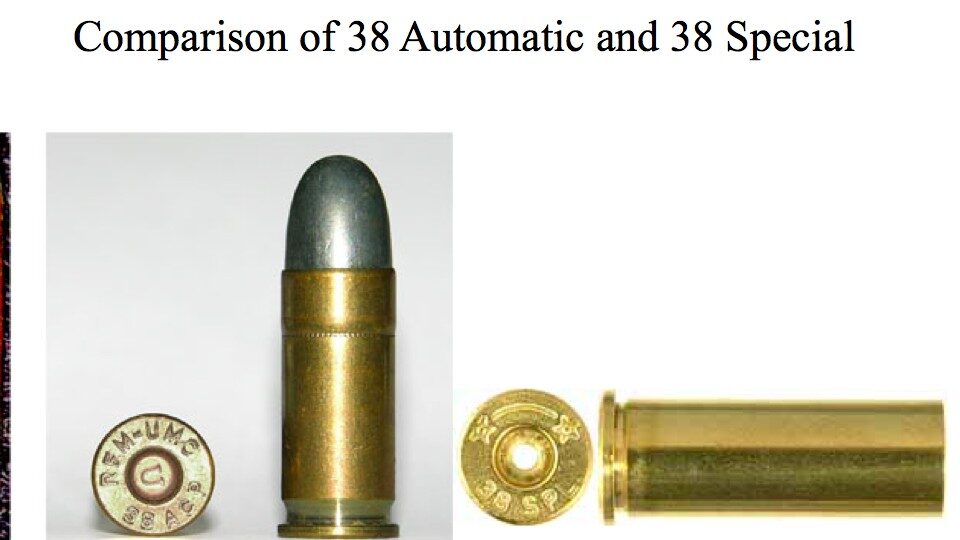
However, there are several problems. The hulls provided to the police were not found at the crime scene, but down the street and later in the day -– a good case that they were planted. Furthermore, the Davis sisters said that the marked hulls were not the hulls that they originally provided to the police.
Hill told Dale Myers that all of the shells were found within a foot and a half of each other. The problem with Hill’s story is that the police reports and testimony state that the four shells were found many yards apart.
Hill wrote in his report that one of the shells had a hammer mark on the primer.
Firearms and toolmark expert Cortlandt Cunningham testified to the Warren Commission, “We found nothing to indicate that this weapon’s firing pin had struck the primer of any of these cartridges.” In other words, Cunningham called Hill a liar.
The Warren Commission agreed with Cunningham’s finding.
– Hill leads the charge into the balcony, where Oswald could have been killed.
The backstory: At 1:46, In response to Hill’s question, Dallas police dispatcher says the suspect entered the theater, hiding in the balcony. Also see WC 705, pp. 29-30; see Armstrong, p. 864.
While Westbrook leads the main group into the main floor.
Two of the officers sprain their ankles running from the balcony the main floor when they learn the suspect is downstairs.
As a result of this testimony, any argument that the revolver was planted on Oswald in the Texas Theatre or switched in the police station by Jerry Hill or someone else would go to the weight of the evidence, rather than admissibility.
So, assuming that the revolver was in his hand, how can they match it to the other items of evidence?
– Hill’s former employers incriminate Buell Frazier, to put the heat on him to incriminate Oswald.
The backstory: At 2:00 pm – Hill’s former station, WBAP, an NBC affiliate, announces that the murder weapon was a Enfield 303 – the rifle owned by Buell Frazier.
(The Mannlicher rifle had been found minutes earlier, mis-identified as a Mauser).
3:00: The supposed “bag” is shown on television.
3:30 I believe this is why Buell’s sister Linnie Randle walks across the street and interrupts Ruth Paine’s interrogation by the cops to tell them that she saw Oswald carrying a bag, while Buell’s whereabouts are mysteriously unknown between 2-6 pm. Buell claims all the police records are wrong.
The backstory: Buell Frazier’s sister Linnie walks across the street and says to the police at the Paine house “we saw the bag”, that Buell said Oswald told him had “curtain rods” in it. It was probably a woman who dreamed up that story, unlikely that Frazier, Oswald or any man could have come up with “curtain rods” without Linnie’s help.
Told Warren Commission later that it was 24 inches, too small to carry a rifle. But that night wanted to keep Buell out of prison. Buell can’t be found until after 6 pm, at the hospital bedside of his estranged stepfather.
4:00 White House Situation Room announces there was one shooter, Oswald, and he acted alone.
6:45 Frazier is arrested. The police find his Enfield 303 and his ammo. They try to force him to confess as an accomplice.
John Armstrong makes these IDs – I am unsure about Croy, and the Ruby figure has a fedora and a prominent nose but an oddly-cut sideburn pointing to 2 o’clock.
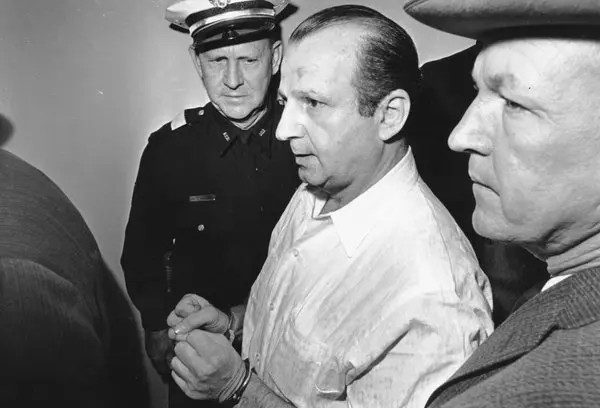
(We can see Ruby’s prominent nose but no 2 o’clock sideburn.) On December 1, 1963, Croy gave an affidavit in which he said, “I saw a man running into the crowd in a crouch. At that moment I reached for this individual and touched his coat tail attempting to stop him. I saw him run right up to Oswald ….”
Bill Turner was unequivocal that Butler was the man who had the overall responsibility for the transfer of Oswald.
Between 10-11 am, Thayer Waldo (in a 12/2/63 FBI interview) said that the reporters were standing outside on Commerce Street when Butler came up to them and told them “Come in.” They proceeded to enter where they were checked for weapons.
10:45 am: The reason for the delay in moving Oswald is that they needed to obtain armored vehicles – which didn’t arrive until this time. Later, Curry – who was at the Homicide Bureau – and others changed their minds and told Asst Chief Stevenson they had decided to use detective cars to transport LHO, using the armored vehicles as a decoy.
11 am: Lt. Butler’s statement – written 11/30/63, says he and several other detectives reported to Captain O.A. Jones, “who stationed the detectives where he wanted them”. Chief Batchelor, Sgt. Pat Dean and Butler searched the armored car before LHO came down. Dean allegedly told Butler that Batchelor wanted Butler to ride in the armored car with LHO.
Jones said Deputy Stevenson summoned him at 11 am and told him to move a few detectives “where needed“. He was plainly not in charge.
Stevenson said Cecil Tolbert was in charge of patrolmen; Jones (from the bunko squad) was in charge of detectives, and “homicide officers” were in charge of actual transport of LHO.
At 11:10 – Detective Roy Lowery states that Butler was cleaning out the armored car, with a group of officers around him. See the KRLD raw footage at around 8:00.
Fort Worth Telegram journalist Thayer Waldo said that the morning of 11/24, he never saw anyone trembling like Butler.
Waldo wrote in a long letter that he was stunned when Patrick Dean was introduced to the Ruby jury as the officer in charge of security at the jail that morning, rather than Butler. (Waldo is a crucial witness in the Secret Service segment, coming soon!)
Butler was busy on 11/24/63. On 24th November, 1963, Jesse Curry decided to transfer Lee Harvey Oswald to the county jail. The undocumented story is that Will Fritz placed Butler in immediate charge of the transfer.
Despite his role in the transfer of Oswald to the county jail and his long term relationship with Ruby, Butler was not interviewed by the Warren Commission.
Butler is listed as #13 in this schematic diagram of the police basement,
According to Harold Weisberg, Butler prematurely gave the signal to bring out Oswald. Bill Turner and Penn Jones described Butler as high up in the Klan. Even an FBI memo describes him as way to the right. Butler was also pals with Sylvia Odio and the whole Dallas Cuban crowd.
Weisberg wrote that if Butler had waited, the auto would have been parked and blocked the area where Ruby broke through to point his pistol at Oswald.
Butler is quoted as saying in those final seconds: “He’ll never make it to the street.“
As you can see in the youtube video starting at 1:41, Fritz is eight feet in front of Oswald. The story goes that Ruby emerged from the crowd with detective Blackie Harrison and reserve sergeant Kenneth Croy were his blocking fullbacks. The WC questioned Croy very closely – this is the guy who “found Oswald’s wallet” from an unidentified bystander at the Tippit crime scene, and never reported it to anyone for forty years.
This meant that Oswald was exposed to an assault similar to what happened when the Secret Service told the patrolmen not to flank JFK on their motorcycles. Meanwhile, the officers were blinded by the burst of television lights when Oswald came on the scene.
I wonder if Fritz actually made a gesture for Ruby to make his move?
The pickup car was so close to position that within seconds of Ruby firing the shot, the car tapped Ruby right in the butt! You can see it on the video.
The difficulty in verifying these photos show how little video there really is on the Oswald shooting, even though it was seen by millions of people around the world and was the first live murder ever shown on television. I can’t believe that the poor documentation is accidental.