
Courtesy of David Boylan.
Thanks to Doug Campbell of The Dallas Action and Quick Hits.
Source: Declassified CIA Documents (Sanitized Release, 1997)
Author: Unknown (With annotations and name reconstructions added by Brigade veterans)
PART 1: THE FOUNDATION AND USEPPA ISLAND (MAY – JUNE 1960)
This book contains the Campaign Diary of the National Liberation Project of Cuba, born from the firm purpose of a handful of men to fight to give their homeland a Christian and democratic way of life and government. This group of men decided to take the path of war, considering it inevitable due to the impossibility of achieving constitutional and peaceful solutions to the country’s political problems.
A revolutionary struggle like the one we have undertaken needs, to truly be so, to be inspired by democratic, structural, and procedural elements, such as recognition and obedience to a constitution emanating from the will of the people, organization of the State into its executive, legislative, and judicial bodies, which must be competent and independent of one another, free and periodic general elections, etc. It also needs to be imbued with the purest colors of justice and civility, which in the modern world only democracy can provide: recognition, respect, and dignity of the purpose of human nature and the rights corresponding to it, in conjunction with the constant and determined aspiration to achieve the highest possible degree of moral and material, individual and collective well-being.
This Crusade of ours will be justified in the eyes of the world and coming generations to the extent that it fulfills the sacred tenets that inspired it. We invoke God’s favor in the achievement of such a grand endeavor.
This period covers the recruitment work of the first group of young people who formed, outside of Cuba, the core of active military resistance to the regime of Fidel Castro. The majority of its members were recruited in Cuba to be sent to the United States, where they would acquire the necessary training to return to Cuba to join a competent and coordinated effort in a frank and open struggle. The general characteristics of this first group of men were as follows: Great cohesion; organization, as all were already working in the underground; youth; university or professional preparation; deep religiousness; middle-class social and economic standing; high ideological level; enormous idealism.
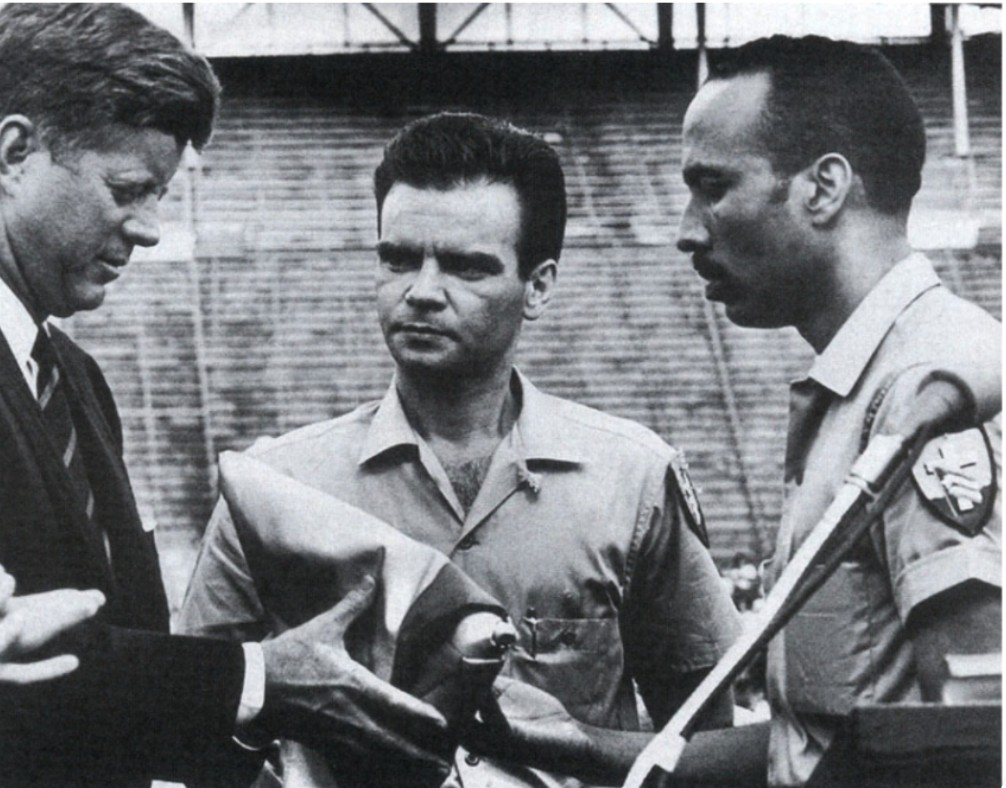
The group was recruited by Manuel Artime Buesa, a former first lieutenant of the Rebel Army and a doctor, who was their leader from the beginning, as well as in its organization during later stages.
We left Cuba individually, almost all by air and legally, to meet up with those who were already abroad. We lived in a two-story house on Brickell Avenue in Miami, as well as in a house in Fort Lauderdale and at the Avalon Hotel in Miami Beach. There we spent a few days, which we mostly spent at the Municipal Library and walking around the city, as well as in conversations and discussions in our house. Some had undergone a series of interrogations in various motels in the city, mainly the first ones to arrive, some of whom, such as Rafael “Chichi” Quintero Ibarba, Frank Bernardino Babot, and Carlos “Batea” Hernández Sánchez, had been forced to leave the country due to the communist opposition they had encountered in their work with the Rural Commandos in Oriente.
On May 15, 1960, we were picked up by several cars and driven to Fort Lauderdale, to the Marie Antoine Motel, where we spent three days. We were a group of 10; the others remained in Miami and Fort Lauderdale. In the motel we had comfort, a pool, and air conditioning, but little money, even for food. Every afternoon and evening we had readings and discussions of the books “La Gran Estafa” (The Great Scam) and “América Latina un Continente en erupción” (Latin America an Erupting Continent), both books by Eudocio Ravines, and “Por un Mundo Nuevo” (For a New World) by Father Lombardi, S.J. From the beginning, we understood the highly ideological nature of our struggle and strove to face it well prepared. The circles were small and under the direction of a leader, proving to be very fruitful.
During the early morning hours between the 18th and 19th, without prior notice, they went from room to room, waking us up and telling us to gather our luggage because we were leaving. In the motel reception were Manuel Artime, Roberto de Varona, and an American named Carl. They split us into two cars, one driven by Carl and the other by another American who went by the name Gordon. We headed west, and after several stops and phone calls made by the Americans and a few hours of travel, we arrived at a dock by the sea. There were several Americans there; we got onto a motorboat and navigated between small islands as the sun was beginning to rise. We arrived at our destination, Useppa Island, located geographically at the level of Fort Myers on the west coast of Florida.
There, we found a truly comfortable environment; there was a tennis court, shuffleboard, a large grass field, two docks, a small beach, and cabins. During the crossing, spirits were so excited that some believed we were going to be transported to a submarine, and others even imagined they had seen it. We lived in individual and double rooms, eating in a central building that also had lounges and a bar. The offices were located in another building.
A group of Americans was waiting for us. They took our pictures, had us fill out a form, and the first two weeks were spent going through a whole series of tests: psychiatric, psychological, intelligence, and aptitude tests. We filled out several personal forms, passed the lie detector, and gave all the information we had about Cuba. We were also medically examined—blood tests, X-rays, vaccines. We practically had time for nothing else and collapsed exhausted into our beds at night.
On June 2, the first group of military personnel arrived. Before them, there had been three trips that completed nearly forty members of the original group of students (in the end, we were 66). The military men were almost all former academy officers of the Constitutional Army of Cuba who were ready to go to Cuba on their own to fight against Castro, when Artime convinced them to join us. None of them, as we verified later, had been involved in criminal or dishonest actions. They had clean records of military service; some had fought against Fidel Castro, others had conspired against Batista and were imprisoned during the Batista regime.
They immediately placed themselves under the orders of our chief, Emilio Martínez Venegas, who was the civil representative of Manuel Artime and his right-hand man. They already knew where they were going, since one of their companions, Manuel Blanco Navarro, who had come with us, had informed them (his group had previously agreed on a phrase to be used in a letter, indicating if everything was safe and normal).
The initial reaction of our group upon their arrival was one of displeasure, born from the lack of information and the surprise of finding ourselves face-to-face with military men from a regime we had repudiated and fought against. We met and agreed to request that Artime come to resolve that situation, which was achieved. We met with him at the top of a small hill we called the Rincón Martiano (Martí Corner), and later in individual interviews during the night. The situation was clarified to the satisfaction of almost everyone.
From then on, we began to get along and make a common life with them, in the conviction that we were all clean Cubans with a single purpose ahead. The military men took the tests, but not all of them, and much faster. At this stage, two more small groups joined us; one in which Pepín López came, a former Rebel Army officer with a clean record of service, and another from Mexico composed of Luis Beltrán Nodarse, Manolo García Rubio, Mario Rodríguez, and René “el Cabezón” Chávez. Now we lived with almost nothing to do, swimming and playing tennis.
Around June 15, Carl James, the Chief of Counselors, called us in one by one to give us the test results and place us in our future specialties. Most of the students were assigned to radiotelegraphy, intelligence, and propaganda, with almost a small group for immediate action consisting of those who already had military or underground experience; the military men were designated to take cadre courses.
During those days, we had another visit from Artime, during which Carl explained the general outlines of the plan that was going to be followed. We telegraphers passed an aptitude test and began classes. Facing the reluctance of seeing that we would have to go to war with a radio set on our backs, Carl assured us that it was the safest way to go to Cuba to fight, because it was what was needed. We had telegraphy classes in the morning and radio classes in the afternoon. By three o’clock, we already had free time until the next day. At night we played cards, watched television, or had movies. We did physical exercises daily. Rubén de Quesada took charge of cutting the grass with a lawnmower; he started several projects, all unfeasible, and José Andreu became shuffleboard champion, and we had the help of a championship breeze.
After meals, we had political, social, and economic talks and discussions, reading excerpts from various books. In the Rincón Martiano, small groups gathered to read Martí. At night in the cabins, very strange things happened; one night Enrique Falla woke up buried in shaving cream, Billy Schuss had to jump into the sea to avoid getting a beating, a turtle was put in Jorge Gutiérrez’s bed, etc.
PART 2: DEPARTURE AND ARRIVAL IN GUATEMALA (JUNE – AUGUST 1960)
On the morning of June 22, the cadres and those for immediate action left. Previously, they had held elections to see who their leader would be. After achieving no result through this method, it was agreed to assign the command. They spent the 22nd in Fort Myers and left in the afternoon, arriving at their training base on the 23rd (Panama).
Around that time, we had a visit from Alfredo Goudie, who was supposedly financing the Project—an argument that nobody swallowed, of course. Goudie left there with the nickname “El Tío Rico” (Uncle Scrooge) by analogy with Donald Duck’s billionaire uncle. On July 4, Carl, who had recently arrived, informed us that we were going to go to a country with many mountains. We were supposed to say that we were in a microwave project. Radio classes continued until July 5, while impatience was rising in tone. Some shaved their heads bald and others like Cherokee Indians (Ramón Machado and Armando Acevedo).
Up until that day, we had progressed rapidly; our best radio operator was Ramón Machado, who was seen as the sentimental “Charro” of the group. Emilio Martínez had proven to be a consistent, simple, and intelligent leader; his sincerity was absolute, although his good qualities, as always happens, did not come to be fully appreciated until much later, when he voluntarily resigned from command.
On July 6, we had a farewell lunch (Tomás Cruz made a picadillo), in which José Andreu spoke on behalf of the Cubans. After turning in all our documents and collecting our clothes, we boarded the same small boat that initially brought us. When we reached the other side (all of this was at dusk), a closed truck was waiting for us; the door was a canvas tarp that they tied from the outside to prevent us from seeing or knowing where we were going. After a few hours of travel, we arrived at an airport (Opalocka Airport in Miami). We got out of the truck and immediately ran up the steps of the plane and boarded. The C-54 aircraft was a military transport type, with perimeter seating along the sides and covered windows so we could see nothing. We settled in, took off, and flew for a few hours.
We landed; we had great curiosity to know where they had taken us. When the airplane door opened, the first thing we saw as we descended were buses from the Guatemalan Army, and we noticed their license plates, which is how we knew what country we were in. Later we found out the location where we landed (San José, Puerto Barrios on the Atlantic coast of Guatemala); the dim light of dawn could still be observed. We got onto the Army bus and, after a few hours of travel, we arrived at the Helvetia coffee plantation, owned by Don Roberto Alejo. Carl (Carl Jenkins) was waiting for us.
They assigned us a small house next to the administrative offices; it had 3 rooms with bunk beds, and we split up among them. It had a cook (later we appointed Tomás Cruz as head of the kitchen, since Guatemalan cuisine was not to our taste). After settling in and each choosing a bunk bed, they moved us to what would be the location for telegraphy classes: this was the coffee warehouse. Inside, there was a room intended for sorting beans, which had tables with dividers. Each table had 5 spots, and everyone chose a spot; in the last row, I remember Blanquito, Quintero, and Souto sat down. Those who would be our radio instructors were introduced: Bill, Nick, and Bob. They gave us what would be our uniforms and boots, and we handed over all the clothes we had brought. They explained the training we would receive and gave us the schedule to follow, starting at 06:00 AM with exercises, breakfast, and we generally began telegraphy and cryptography classes at 08:00 AM. Instructor Bill (always dressed in his blue overalls) shared his personal experience as a telegraph operator.
That is how the day went. After lunch, we returned to classes and finished around 06:00 PM, after which we had the night free. After dinner, we generally returned to the classroom and tried to listen to news from Cuba or practice telegraphy. Each of us had a radio receiver, transmitter, and generator kit. The CIA had spared no expense in giving us full-scale training. There was no type of distraction, except swimming in the pool (Don Roberto Alejo’s main house had a pool) when it had water, which was ice cold. One day, Quintero, without realizing it, arrived at the pool, jumped off the diving board, and when he was mid-air, he realized he was falling into an empty pool without water. A miracle kept him from fracturing his head or any bones; from that jump, only the memory and laughter remain. In our field practices, we went out into the brush and tried to make radio contact with one another…
PART 3: REINFORCEMENTS, CONSTRUCTION, AND TRAGEDY (AUG – SEPT 1960)
These practices could be by day or by night. For this purpose, small teams of three people were formed: one would transmit and the other two would crank the portable generator. We rotated in that task, and in everything related to transmission (making the message, encoding it, decoding it, transmitting it), trying to replicate real conditions. Santiago Morales was in charge of local purchases, and Tomás Cruz cooked and managed. Later, Raúl (Yayo) de Varona was put in charge of the warehouse. Rafael Quintero and Humberto Solís slept in the coffee warehouse in a room that was there; the warehouse was large, as the coffee harvest was stored there. There was a room at one end where the three Americans—Bill, Bob, and Nick—slept, and they had their radio equipment there to communicate with the CIA or the American Embassy.
A few days after our arrival, we were introduced to two lieutenants, Guatemalan officers Ricardo Fuentes and Alfredo Matas, who were graduates of the United States Ranger School and were in charge of physical training (PT) every morning; one was a nephew of General Ydígoras Fuentes, President of Guatemala. They divided us into three groups: A, B, and C. Javier Souto was leader of group A, Gabriel Durán was leader of group B, and a third individual was leader of group C.
The first surprise we encountered was when the first Saturday arrived and they told us we had to start building the base. They packed us into a jeep driven by Rubén “Clavija” Vera and dropped us off at a site far out in the hills (out in the middle of nowhere). Needless to say, it rained torrentially every afternoon in that area, and the trips were terrible—a cliff on one side, holding onto the edges of the road… we went up in small groups; “Clavija” spent the whole day going up and down moving people. I remember Basulto and Blanquito acting as assistants with the PRC-10 radio, trying to communicate with the base in Helvetia. During the return trip, the Land Rover jeep got stuck more than once; we had to get out to push and place stones under the wheels to create a base for the tires to grip and get out of the mud. The military ponchos provided heat and withstood the rain, but they also retained water within their folds, and when you got into the jeep, there was water everywhere.
On August 16, 1960, the first group of new people arrived at Helvetia; there were 32 of them, from number 2569 to 2601. We began taking turns going out into the field in groups of four at all hours, both day and night, including the new arrivals from Miami. They served as our assistants with the portable radio generator, turning the cranks (as if we were pedaling, but using our hands and arms) to generate electricity. The cranks turned easily at first but locked up the moment transmission began; it required a lot of strength, and after a few minutes, no one’s arms could take it.
Ruben de Quesada was sent with a tractor to begin clearing the hill where Base TRAX would be located. Afterward, we all went every Sunday to help with the brush clearing and road construction. During this time in the month of August, Carl appeared with Colonel Martín Elena, Goudie, Father Jorge Sardiñas, S.J., and Colonel Napoleón Valeriano (alias Ernesto Vallejo). The latter would be in charge of war training—a man of great military experience of Filipino origin, who had been the architect of the defeat of the communist Huk guerrilla. Father Sardiñas had been commissioned by the Jesuit Provincial to visit the boys; Father Sardiñas spoke with Artime, who in turn spoke with the Americans. (This trip was the origin of the arrival of the other 7 chaplains the Brigade had).
They introduced Martín Elena to us as the Military Chief of the Operation. At that time, it was guerrilla warfare. One night, Jorge Gutiérrez Izaguirre, Ramón Machado Vidal, and José Andreu left in a truck for Base TRAX to test if it was possible to establish radio contact with Helvetia; the test was positive. We were visited by the Guatemalan Minister of Defense. José Andreu was designated administrator in Helvetia for everything relating to the group and moved to Security.
One night, we did a search exercise for hidden bottles (Ron Gallito), simulating that they were radio equipment, and they provided us with maps of the locations: one was behind the town church, another at a bend in the road, and the other in the garden of the administrator’s (Harold) house in Helvetia; all three were found. There was a massive drinking session, and that night, “Gilberto Hernández predicted that we would have an accident on the hill and come down crying”—and so it was: on September 7, 1960, Carlos Rodríguez Santana died.
The accident occurred when leadership decided to start looking for training sites in the area (we were going to wage our war in the mountains of Cuba, so we had to train in the mountains). Four cadres were designated: Roberto San Román, Alejandro del Valle, José Raffo, and Carlos Rodríguez Santana. Carlos occupied the third place in the line; they had begun to descend a mountain slope where the terrain was very porous/sandy, a volcanic area. Since they did not have sufficient equipment, they made the decision to return and prepare for a future trip. Carlos smoked heavily; José Raffo was behind him, and San Román and Alejandro were the first two in the ascent. Carlos stopped and told Raffo: “Go ahead, I’m going to smoke a cigarette.” Raffo passed him carefully due to the terrain conditions. No sooner had he passed him than Raffo heard a scream; it was Carlos Rodríguez, who had lost his footing—possibly while lighting the cigarette, he did not realize the danger, took a bad step on the terrain, slipped, and fell from a height of over 200 feet, his body striking a flat stone.
Rescue parties were organized, but the body was not located until the following day. The corpse was recovered by a local resident, who was able to climb down to where it was, though not without a scare, as he fell into the river. The only one who could get down was this native. Collazo and the American, Jimmy, tried to climb down but could not. That night, on the eve of the Virgin of Charity of El Cobre, we prayed a rosary, gathered together in the only barracks serving as a dormitory. Carlos had been the first National Coordinator of the Revolutionary Recovery Movement (“MRR”); he was a medical sales representative, which facilitated his work and kept him from drawing suspicion since he had to travel the whole island.
On August 8, the first group that would live at Base TRAX left. By that time, the first barracks had been built, which would serve as the warehouse, later divided in two to serve as an infirmary where the doctor Pepín Almeida and the dentist Polanco would work. A wooden house was built to serve as Headquarters, along with an annexed barracks to house the telegraph operators and the rest of us who were there, and construction continued. (See attached drawing).
Over the following days, the rest of the personnel moved to the Base from Helvetia; only Raúl “Yayo” de Varona, Aurelio Pérez Lugones, and José Andreu remained in Helvetia for administrative matters. Hard work continued on building the barracks to house the personnel and creating minimal sanitary and hygienic conditions. The hardships we went through were enormous; there was no food most of the time—it was condensed or evaporated milk, sliced bread, Spam—and no medicine. Sometimes we were left cut off because the roads were impassable; it rained every day, and we worked very hard.
We had a Land Rover jeep driven by Vera “Clavija,” and later a truck was purchased. They transported the beams and concrete sheets to a site called El Nil, and from there it had to be transferred to another vehicle to be taken to Base TRAX. It rained incessantly, sometimes up to 7 or 8 hours a day—morning, afternoon, and night—and floods washed away what we built. On one occasion, over 70% of the men fell sick. In addition to being builders, we had to continue with transmission practices in the hills, by day or by night.
On the 21st, the second group arrived at Helvetia and was taken from there to Base TRAX. During all this time, there was nothing but work; the hardest labor fell on the new arrivals. We telegraph operators had to stick to our telegraphy practice, though we also had to cooperate in the heavy labor. On August 28, the third group of recruits arrived, and on September 7, the fourth group arrived, preceded by the arrival of the cadres on August 22. These cadres had undergone grueling and complete training. They had lived on a very well-installed base with good barracks, high cleanliness, sheets and pillows, good food, cold beer and sodas, clean clothes, etc. They had a recreation room with magazines, newspapers, music, ping-pong, etc. They were in the middle of a tropical zone (Panama, Canal Zone); they had an airport nearby but were completely isolated. They received full training in guerrilla warfare, intelligence, weapons, demolitions, tactics, etc. They practiced primarily with European weapons, UZI submachine guns and others, and trained with mortars and recoilless rifles. They carried out several marching exercises, ending with a survival exercise that lasted three days, during which they were pursued by an army.
Realism was absolute; they blew up bridges, roads, and electrical transformers, ambushed trucks, lived off what they stole and raided, descended cliffs with ropes, and forded rivers. Pepín Lopez told the story that “to scare away snakes, he made so much noise when walking that they could hear him in neighboring countries.” They were a bit thinner but much stronger. When they arrived at TRAX, the Base was already organized by General Order No. 1 of August 24, 1960, which merged Bases A and X into the new Base TRAX (training A and X). The Order established General and Special Orders, as well as memorandums for all types of directives within the Base.
PART 4: COMPILING STRUCTURE AND CAMP REGIME (SEPT – OCT 1960)
The commander of Base TRAX, designated by the Armed Forces of the Democratic Revolutionary Front (“FRD”), will be Captain Oscar Carol Armand, Chief of Training. By the same Order, Emilio Martínez Venegas was relieved as the FRD representative before the training command, remaining as a member of the FRD forces. The Order was signed by Colonel Eduardo Martín Elena, by Carl James (Carl Jenkins), chief of advisors, and authorized by Vallejo (Napoleón Valeriano), Training Advisor. The advisors had already organized the Headquarters, which began operating with José “Pepe” Andreu as Executive and Assistant.
On September 5, a jeep driven by Silvino López, with Rubén de Quesada as a passenger, flipped down a ravine; one suffered a fractured hand and the other a head wound. Luckily, both emerged without further complications. Shortly before, the first group of aviators had arrived and were housed in Helvetia while they finished preparing Base RAYO in Retalhuleu; they would be the members of our Liberation Air Force (“FAL”). As an anecdote, the first flight of a B-26 over Base TRAX was made by Captain Matías Farías, who did it without permission and was consequently suspended from flying for a few days. On September 7, we had the misfortune of losing Carlos Rodríguez Santana #2506, a narrative told at the beginning of this Diary.
The day after the cadres arrived (August 23), the personnel had been organized into infiltration teams using letters from A to L, along with a work team comprising the last group to arrive and some who had experience in construction. Mirto Collazo was named Chief of Engineers, replacing Adolfito Mendoza, who had been appointed head of construction when we arrived at Helvetia (he claimed he knew about construction). General Order #2 of August 23, 1960, reorganized the teams from letter “A” to “L.” Teams A, B, and C would go to Pinar del Río; teams D and E to Havana; team F to Las Villas; team G to Matanzas; team H to Camagüey; I and J to Oriente; team K would be the core of a shock force; and team L was Headquarters.
General Order #3 was published on September 10, 1960, creating the Interior Guard Service of the Post and organizing it with an Officer of the Day, a Guard Commander, nine sentries, and three posts. A few days earlier, four men arrived who had been separated from the rest of the cadres at the training Base. Their inclusion was put to a vote among the cadres, resulting in a tie, which Carol broke by voting in favor of incorporating them into the infiltration teams. They were William “Billy” Schuss, José Benito Clark, Manuel Rodríguez Treto, and Pepín López—the latter two having been members of the Rebel Army. We worked all day after doing exercises very early, and at night we attended classes with Vallejo (in the barracks that later became the armory). Pepe Andreu was the official translator, night after night.
On September 18, the Post Schedule was published:
- Reveille (Diana): 05:50 AM
- Breakfast 1st Table: 06:40 AM
- Old Guard Change: 07:00 AM to 07:40 AM
- Call to Classes: 07:45 AM
- Lunch 1st Table: 11:45 AM
- Athletics (Exercises): 13:25 PM to 16:20 PM
- Showers: 16:30 PM
- Dinner 1st Table: 17:30 PM
- Barracks Call: 17:55 PM
- Specialized Training: 19:35 PM
- Night Inspection: 21:55 PM
- Silence: 22:00 PM
Guerrilla Warfare classes formally began on September 19 in accordance with the previous schedule. The day before, an individual had been arrested under accusation of attempted rape of the girl who worked with the cook at Helvetia. On September 21, Carl Jenkins gathered a group accused by Oscar Carol of conspiring against command, and after speaking sharply to them, he interviewed each of them personally during the night.
Afterward, there was a meeting of the cadres, and things remained as they were until ten days later when Carl gathered them and took them to Helvetia, forming two infiltration teams with them—one would go to Havana and the other to Oriente—completed by Ramón Cubeñas, Manuel “Cawy” Comella, and Máximo Casal. The rest of the teams were formed by Pepín López, Manolo Rodríguez Treto, José B. Clark, Guido Valladares, Guillermo Fernández Mascaró, Raúl Villaverde, Jorge Sounville, Jorge Soularis, and Orlando García.
The first two months of life in the camp, and even later, were of a “wild-west” type due to all the convulsions and accidents that occurred: fights, threats, uncertainty, cliques, tensions, etc. There were also moments of comedy, such as when one night in late August, Carlitos López Oña put some eggs in someone’s bed, and when he lay down, they burst. The result of the joke was that they lined up all the personnel and put them on a double-time march for 40 minutes, with patrol duty all night for those living in that barracks; only a few were saved by proving they were not there at the time of the incident, among them Blanquito, who was with cadre T. Moreno, who testified in his favor.
On September 21, electricity arrived; they had installed a power plant behind Headquarters, and heating via central hotplates began operating. Around that time, the prison built by Mirto Collazo and his group was inaugurated. On September 23, a theatrical performance was given in the barracks built at the end of the esplanade, next to the ravine where the tower for parachute jump practice was also installed. Chirino Piedra took charge of organizing the show, which featured star performances imitating Alejandro del Valle (alias Captain Rayo); Orestes Maíz played a Hawaiian dancer and did a Russian Cossack dance; Antonio Frontela imitated local politicians and acted as an interpreter, with someone else imitating Andreu as an interpreter. It was an unforgettable night.
On September 26, tribunals were designated to judge an individual for insubordination, and another to judge one for a serious offense, etc. Every day there were tribunals constituted; these were very turbulent times, and the cadres complained constantly because they barely left one tribunal before entering another. We worked based on a Provisional Penal Code until the Front could send us theirs, which would be the definitive one. On the 28th, the Code was modified by General Order #9 to state that serious offenses would be reported to Headquarters in writing and judged by three-member tribunals. On the 30th, the armory and its surroundings were declared out of bounds, and detailed disassembly of weapons was prohibited.
On October 2, a contest began to design the Army emblem. There were more than twenty proposals, and the one by Blanquito (Blanco-Capote) was accepted by a majority vote; it featured a circular shape showing a Cuban landscape with palm trees, hills, and the national colors. (This emblem was later altered without changing its context, following a suggestion made by Manuel Blanco to Blanquito, changing the circular shape to a shield to make it more military, with the national colors represented by the Cuban flag over the cross; subsequently, the shield was delivered to Carl Jenkins). As additional information, this shield was rejected by the Democratic Revolutionary Front (“FRD”), as they already had a shield. The Front’s shield showed the island of Cuba, and over the island, they had placed three letters: “FRD”. In the end, the Americans decided to use the one approved in the camp. Furthermore, the FRD no longer existed; it was now the Revolutionary Council.
During those same days, Andreu began giving Political Orientation classes, which lasted three weeks: two weeks of general talks followed by oral and written exams. Short specialization courses on labor, agrarian, educational, and military matters were led by Francisco García Zayas, Ramón Conte, Ramón Machado, Rafael Quintero, Enrique Casuso, and Roberto Pérez San Román respectively. On October 12, the class schedule was changed, and the Post Guard, Old Guard, and kitchen services were reorganized. Almost all General Orders from this period contained designations of tribunals and the results of trials held.
On October 28, Bernie, Chief of Advisors, arrived. On October 29, Vallejo announced the imminence of an air attack to be carried out by a Britannia aircraft converted into a bomber. The scramble was immense. Twelve .30 mm caliber machine gun nests were improvised, and the entire camp was evacuated. Headquarters hid in a hole hastily dug next to the prison. But everything passed without issue, which did not prevent the men from sleeping out in the field under the rain, nor Headquarters from returning to its barracks, planes or no planes.
On October 30, General Order #28 was issued, reorganizing Headquarters as follows:
- #2551 Oscar Carol: Chief
- #2538 José “Pepe” San Román: Executive Officer and S-3
- #2501 José “Pepe” Andreu: S-1
- #2530 Manuel Blanco: S-2
- #2534 Ramón Ferrer: S-4
- #2548 Tomás Cruz: Assistant S-1
- #2764 José Morales Cruz: Assistant S-4
That same day, under the same General Order, the Justice Commission was established to handle all legal matters of the Base and draft the Military Penal Code. Its members were: José Andreu (President), Rafael Álvarez, Miguel Chardiet, Pedro Reyes, and Edgardo Buttari. A few days earlier, Tomás Cabañas from the Miami General Staff had visited us to inspect the Base. On the same day, the 30th, two men were judged for the theft of a pistol; the first was declared innocent and the second guilty, being sent to prison.
PART 5: CRITIQUE OF THE MANDATE AND CRISIS (NOVEMBER 1960)
Spirits were highly inflamed, and there was great discontent at the Base among a significant group of soldiers. On November 2, several men presented themselves voluntarily to go to jail, and were later joined by others via the same route. That same afternoon, Carol gathered a group of around thirty members of the discontented Group/Team on the parachuting esplanade. They protested against the reorganization of personnel, which had left people out of the infiltration teams who wanted to be in them; others protested because almost all positions were in the hands of former military men and there were no rebels. Others protested just to protest, and some didn’t even know what they wanted.
Carol had ordered a change of command for Group/Team “K,” removing Oscar Acevedo and José González Morejón without consulting the advisors, and this, combined with an argument he had with Bernie, triggered a new crisis. That night, Carol spoke to the rebel officers in the classroom, and a solution was reached to send a commission to Miami to bring someone from the FRD to fix the situation, since the rebel officers stated there were no command ambitions and they didn’t believe anyone was the problem.
The next day, Carol gathered the troops and explained the result of the meeting and that they would try to send the Commission to Miami. The situation was one of general discontent and sorrow over the fracturing of order and discipline. That same night, Carol left in a jeep with three “Falcons”—members of the Slavic instructor group that had recently arrived. (The story is that Carol was removed from command by the Americans and taken off the Base). José “Pepe” San Román was left in charge of the Army, with Andreu as Executive. (Correction to what was said previously: Carol did not leave the Base then, but four days later, already with news in the air of the events in Puerto Barrios and following the fresh arrival of Frank, the new Chief of Instructors, who only spent a few hours with us on that occasion).
As an interpolation for the month of October, it must be said that on the 17th of that month, sections “X” and “Y” of Grey and Black teams were created under the command of Miguel Orozco Crespo and Erneido Oliva González respectively. The first Grey Teams would be responsible for going to Cuba first to prepare the ground with their experts in intelligence, psychological warfare and propaganda, weaponry, demolitions, and tactics. The second Black Teams would carry out specific missions to destroy objectives of military value.
On November 7, the second trip to the Escambray zone was carried out from Base RAYO in Retalhuleu in a C-46 aircraft. This was a very important trip, as the American advisors had lost faith in the Cuban crews after the first trip sent to Cuba in September, which had dropped weapons in a different zone; furthermore, that plane lost its bearings and landed near Comitán in Mexico, where the aircraft was lost after being seized by Mexican authorities. The success of this second trip—being able to make the round trip without issues—revived the confidence of the American advisors.
On November 14, rumors began to be heard of a military uprising in Puerto Barrios, a military airport located in San José, against the President of Guatemala, General Miguel Ydígoras Fuentes. (At that time, the same crew from the previous trip was quartered in the control tower and had received a briefing to make another trip to Cuba, to the Sierra de los Órganos; this was on November 10, 1960). It was rumored that an invasion of Fidelista Cubans was being planned in support of the uprising. (Read on the Brigade’s webpage: bayofpigs2506.com, TOP SECRET DOCUMENTS, declassified documents regarding the attempted coup d’état in Guatemala, October/November 1960). Those news items served to shift attention away from internal problems.
On November 11, a General Order had been issued by order of Manuel Villafaña, Chief of the Liberation Force, appointing a commission composed of “Pepe” San Román, Rafael, and Miguel Chardiet to classify the written suggestions that personnel had submitted by Villafaña’s order to improve the management of Army affairs. Around November 15, an order came from Villafaña to organize a group of soldiers, placed under the command of Alejandro del Valle, to be transported in trucks to the airbase and by plane to Puerto Barrios. Two days later, a second group left under the command of Hugo Sueiro for the same destination.
PART 6: WITNESS ACCOUNT OF THE PUERTO BARRIOS CRISIS
Account by Vicente Blanco-Capote, member of the infiltration teams, assigned as Radio Operator in the Liberation Air Force, who was an eyewitness to the plans for the attack on Puerto Barrios—a plan devised by Frank, who had recently arrived in Guatemala.
Two days after returning from the second trip carried out from Base RAYO to bring weapons to the insurgents in the Escambray, they called us again and quartered us in the room set up for that purpose in the Control Tower. This room had space for 5 double bunk beds and a wooden table for 6 places. They had given us the briefing for another trip to Cuba, which would go to the Sierra de los Órganos; the crew members were: Captain Jorge Prellezo, Co-pilot Sergio García, Navigator Eduardo Ferrer, Radio Operator Vicente Blanco, and flight crew Luis Regalado and Alberto Pérez. Briefings were held on the morning of the mission day; generally, we left the base at dusk and arrived in Cuba around 11:00 PM to 12:00 PM. They canceled the departure and did not explain why; it was simply postponed.
While we were in that room, unable to leave, a Guatemalan captain, Villafaña, Frank, and others made their entrance. They deployed a map of the Puerto Barrios area, specifically the airport area of San José, and proceeded to plan the seizure of the airport. Frank decided that three C-46s would land one after the other; the first would be Prellezo’s, the second Mario Tellechea’s, and the third Echegoyen’s. Each plane normally had an assigned crew; for identification, everyone participating would wear a piece of yellow tape tied to their arm like an armband.
The Attack Plan involved one or two B-26s crewed by Americans (Connie Seigrith, alias Simpson, was one of them), which would attack the base, softening up the rebels, and thus the three C-46s would land one after the other. This would allow time for each plane, without stopping its engines, to brake so our men could slide down a rope (for this purpose, they had been practicing descending by rope). At the moment the first C-46 landed and was running down the runway slowing down, someone inside the plane began to shoot; the door of the plane had been removed to make exiting easier. That resulted in the Captain of the Guatemalan Army screaming: “This is an ambush, let’s take off!” The Captain of the plane, Jorge Prellezo, quick as a flash, gave full power to the engines and took off, doing a “touch and go.” The other planes did not attempt to land; all headed back to Base RAYO in Retalhuleu.
As an anecdote that shouldn’t be lost to history, about 30 minutes later, the Aero Commander of the President of the Republic, piloted by the Guatemalan Colonel Batlle, landed at the San José Airbase, thinking it had already been taken by us. To his surprise, he landed, taxied to the ramp in front of the control tower, shut down the engines, and when he opened the door, he was detained by the rebels. They immediately told him to call our planes by radio to make them return. He told them that to do that, he had to start the plane’s engines to connect the radio; they allowed it, and he immediately applied power, taxied down the runway, and took off. (Clarifying the takeoff: this Aero Commander could take off on short runways and had the capacity to climb almost vertically immediately. I was personally a witness when Colonel Batlle narrated this episode upon landing at Base RAYO).
The troops remained stationed at the Air Force base until the situation in Puerto Barrios and Zacapa was brought under control. (The rebels thought Alejo and President Ydígoras had a private army, and that changed the situation; the rebels had also detained members of our Air Force who were at the La Aurora airport base when the events unfolded). I was assigned as a telegraph operator on a C-46 sent to Guatemala City to pick up our personnel after they were released, among whom I remember Ramiro Sánchez Montesinos.
As a historical fact, the Chief of the Airbase, Billy Campbell, did not authorize the delivery of defensive weapons to the Air Force personnel to defend themselves in case of an attack; the only thing he thought to do was park a truck in front of the Control Tower with the weapons still in their boxes, with instructions to open them and take them if we were attacked (the Americans were afraid we were going to kill each other). I remember that 200 Thompson submachine guns, ammunition, and bombs for their planes were sent to the troops loyal to the government.
In the minds of the Cuban personnel, it was clear that we would not accept any American getting onto a plane and leaving us stranded there if it turned out that the rebels triumphed. There was an incident at the Airbase with a group of troops who got drunk, and one of them grabbed a .30mm caliber machine gun, causing a bad time because the man was out of his mind.
PART 7: THE CRUISE CONTINUES AND FORCES AMALGAMATE (NOV – DEC 1960)
Meanwhile at TRAX, things remained turbulent. The friends of Oscar Carol demanded information about him, demanding they bring him back because he was imprisoned. Manuel Blanco was sent to check with Villafaña at FAL, and seeing that he did not return, Andreu and Piedra were sent with the task of returning within 12 hours with information. They went down to the FAL and spoke with Villafaña, who gave them assurances that Oscar Carol would go to Cuba in a special team. This being reported back at TRAX calmed spirits somewhat, but the issue was agitated again, demanding they bring Carol back.
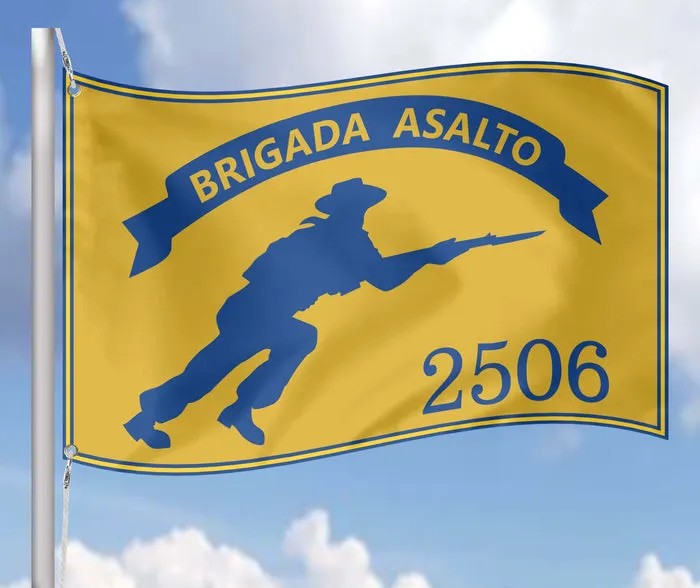
Around November 23, Carol arrived, which calmed tempers. Carol left the following day with two infiltration teams: Rafael “Chichi” Quintero, Manuel Blanco, Humberto Solís, Santiago Morales, and Jorge “Fotingo” Silva. On November 24, in General Order #35, the final reorganization with 12 infiltration teams was issued, made by Manuel Villafaña and José Andreu. That same day, under General Order #36, the designation of a Base Headquarters was issued with Manuel Villafaña and the two delegates from the Miami General Staff, Díaz and San Pedro; the organization of teams was ratified, and the Assault Brigade was created, composed of: 1 Headquarters and Service Company, 1 Heavy Mortar Company, and 3 Infantry Battalions, two of which would be created immediately. Designated for the Brigade Headquarters were: Chief – José San Román #2538; G-1 and 2nd Chief – José Andreu Santos #2501; G-2 – José “Yayo” Raúl de Varona #2511; G-3 – Ramón Ferrer #2534; G-4 – 2624.
Starting November 28, a duality of General Orders began to be issued: those of Base TRAX, signed by the delegates of the Miami General Staff regarding everything relating to Post matters, and those of the Assault Brigade, regarding everything relating to the internal organization of the Army Corps that circumstantially found itself at TRAX. That same day, November 28, General Order #1 of the Brigade was issued, creating Battalions No. 1 and No. 2. In No. 1, they designated Roberto Pérez San Román as Chief, Armando Guerra as Executive, Rodolfo Díaz as Sergeant Major, and Edilio Pereira as Quartermaster of the Heavy Mortar Company. Alejandro del Valle was named Chief and Rafael Candia Executive of Battalion 1. In No. 2, they named Erneido Oliva as Chief and Francisco Montiel as Executive of Battalion 2. The General Order was signed by José A. Pérez San Román, Chief of the Brigade, and José Morales Cruz, Assistant.
Around December 12, the infiltration teams departed after final changes made by Carl Jenkins: they sent Rafael Francisco Cañizares, Manuel Vives, Ricardo Cervera, José Candia, and González Castro to the Teams. And they reintegrated Edgardo Buttari, Sergio Ares, Cecilio Padrón, Herman Koch, Luis Olivera, Juan Tamayo, and Celso Pérez back into the troops. (Herman Koch was denied entry to the Infiltration Teams because he was an American citizen—the hypocrisy of the American government; he moved to the paratroopers and died at Girón, killed as he descended by parachute). These latter men came to Headquarters to find out why they had been removed from the infiltration teams, but they were informed it had been a decision by Carl Jenkins. The group left one morning by bus; they constituted the cream of the crop of the Camp and had received good training.
The departure of the teams inaugurated a period of relative calm; those of us who remained realized that the Project was moving forward, that we were not wasting our time. Previously, there had been the natural impatience of men who had come with the idea of preparing themselves in a short time and starting to fight. And one has to realize the hardships gone through from the beginning and the fact that we were stationed without possibilities of recreation or seeing normal people in towns. The Project passed through these initial phases thanks to the human element of the army, which was of higher quality than normal, and the spirit animating us all. Even the irregularities that occurred were a product of immaturity rather than bad faith, such as when on December 5, a group went out partying: Mario Ravelo, Atilano Domínguez, Jesús Vilarchao, Nelson Torrado, Carlos Hernández R., Angelito Hernández, Claudio Orozco, and Gilberto Hernández. They were all good boys, young men who only wanted to have some fun, walk around, and drink a bit.
On December 13, by Brigade General Order #6, José Andreu Santos #2501, who was the 2nd Chief of the Brigade, was named Chief of Staff and Chief of the Legal Service; José Morales Cruz #2764, who was in the position of Assistant, also became G-1; and Tomás Cruz became Sergeant Major. Battalion 1 was converted into the Airborne Battalion, with Alejandro del Valle #2546 as Chief of the Airborne Battalion and Pedro Vera #2565 as Executive Officer. Battalion 2 was converted into the Armored Battalion, moving the Weapons Company to the 2nd Infantry Battalion, which was organized with my headquarters, 3 Rifle Companies, and 1 Weapons Company. Its Chief was Hugo Sueiro #2542 and its Executive Officer Humberto Olivera Pérez #2589. Battalion #3 was activated, and Francisco Montiel Rivera #2823 was designated as Chief, who would continue as 2nd in command of the Armored Battalion until personnel arrived to form his Battalion. It had been more than a month since we received personnel, and this contributed greatly to fostering impatience and hopelessness of leaving soon among the troops.
On December 15, 1960, Rubén de Quesada Rioseco #2528 was named Chief of Supplies for the Brigade (G-4), and Enrique Falla Crabb #2514 was named Chief of the Headquarters Company. On December 19, a file was opened against an individual for the theft of a watch and other items from the Guard Corps. But the case was archived because it had been the American instructor Harry who had ordered him to steal them. From then on, we began to know the paratroopers well. From the Chief of the paratroopers on down, they plundered what they could; they were the privateers of the Brigade, having a letter of marque. They didn’t do it on their own; rather, it was a whole organized system.
On December 17, the schedule and regulations for prison camp #46 of TRAX were established by General Order, signed by leadership, making the prisoner regime stricter. On December 21, a new group of American instructors arrived for the Brigade. The Falcons had been instructors, but for guerrilla warfare. On December 23, Pedro Arozarena Castellanos #2575 was placed in charge of prisoners after the prisoners had staged a riot in the jail the previous night. That same day, December 23, the Chief of the Brigade notified that a Commission had been created to go to Miami to recruit personnel. It would be composed of José Andreu and Pedro Vera, who would go to Venezuela; Hugo Sueiro and Francisco Montiel to Mexico; and Roberto Pérez San Román and José Morales Cruz to Miami. Heading the Commission would be José “Pepe” Andreu. All would be flown to Miami, from where they would scatter to their specific points. That night, an amnesty was decreed for all prisoners and those with pending cases.
The Commission received some money and final instructions on the morning of the 24th, departing for the Liberation Air Force base in Retalhuleu and from there to Miami at 12:30 PM, making a peaceful journey during which they planned how to act in the recruitment work. We arrived in Miami at night and were taken to the General Staff building. After a first conference with Messrs. Martín Elena and Oscar Díaz, we understood that our instructions from TRAX differed enormously from what we were being told there. From the first day, we tried to adjust to the norms of the General Staff, before whom we came accredited and placed under their orders by a letter of introduction from the Chief of the Brigade, but all the efforts we made were useless. We always found suspicion, arrogance, and hypocrisy on the part of the General Staff—the latter especially from two of its members. Despite this, we carried out fruitful recruitment work, resulting in more than 300 men recruited in 10 days.
The biggest obstacle we encountered was that people said the General Staff capriciously vetoed whomever they pleased, and (something we verified personally) files were delayed immensely, and many people were rejected without explaining why in writing for each case. We spoke with many groups and made many contacts individually. But tension at the General Staff persisted. We were called to report to the Democratic Revolutionary Front (“FRD”), where we explained what was happening. The FRD executive then agreed to accept our proposals and send them as orders for implementation by the General Staff. There was some reaction from the latter, but within two days everything returned to its previous state. Finally, we were accused by the General Staff of working against them, and their American advisors were asked to ship us out to TRAX as soon as possible, subject to a pending trial we faced for insubordination. Hugo Sueiro, filled with indignation, refused to follow the order, but together we managed to calm him down. The treatment we received from the General Staff was intolerable; our money was restricted, and we were only given three cars for the six of us operating in Miami, as the trips to Venezuela and Mexico had been canceled by Jim, the advisor to the General Staff. The day after the tempestuous meeting…
PART 8: CHRONOLOGICAL ENTRIES (JANUARY – FEBRUARY 1961)
Friday, January 6, 1961: We left with a transport of personnel (at night) for Guatemala (the planes departed from the Opalocka Airport in Miami. It was a base under the charge of the NAVY and was not in use. The CIA obtained permission to set it up for these transport trips for recruits and other matters), arriving in the morning at Retalhuleu, Base RAYO, and leaving immediately for Base TRAX, reporting our management to the American chief Frank Egan. In the subsequent days, more than 300 new Cubans arrived, the vast majority recruited by us.
Saturday, January 7: Transfers are made to the different Battalions. The President of Guatemala, General Ydígoras Fuentes, visits the Base. It was a day of great enthusiasm. Military exercises are performed in his honor. He arrived at 16:00 hours. The anthems of Guatemala and Cuba were played. Review and inspection of the formed troops took place. President Ydígoras is shown the Russian and Czech weapons with which the enemy is armed. These weapons are compared to American ones of the same type, which prove superior in every sense. Moments later, 2 B-26 planes did a flight demonstration over our forces, followed by artillery fire exercises. In the demolition field, two squads of the Armored Battalion did an exercise: taking a hill. President Ydígoras dined and stood in line with the troops. Afterward, he congratulated the Chiefs on the efficiency and discipline the troops showed during the exercises. All personnel present this day.
Sunday, January 8: 40% of the troops have agreed that after the 18th of this month they will not do any type of exercise. Morale is declining. They argue that the training period has already expired and wish to be transferred to another base. G-2 informs the Chief of the Brigade of this anomaly so that the necessary measures can be taken.
Monday, January 9: All personnel present at the Reveille roll call and barracks call. By order of the Chief of the Brigade, the patrolling method was changed. A .45 caliber pistol was stolen from Mr. Cruz de la Torre, Supplies Officer. Mr. Adolfo Díaz, second in command of the Tank Company, was named Investigating Officer. Mr. Díaz, accompanied by Counterintelligence Officer Mr. Armando López Estrada #3162 and two soldiers under his command, conducted a search in the barracks where the Guatemalan personnel (construction workers) sleep, finding alcoholic beverages and wallets belonging to Brigade soldiers, who traded their belongings with the natives. A large quantity of American cigarettes was found in the possession of a Guatemalan, who was brought before the G-2 and identified Mr. Pedro Arnao García #2850 as the perpetrator of the trade. The departure of the Falcon Base for the paratroopers was announced.
Tuesday, January 10: At Reveille, Retreat, and Silence hour, all personnel were present. Morale improves among the troops once certain concepts they were unaware of were explained to them. The Battalion and Company Chiefs conferred with Mr. José Andreu to inform the troops of these incidents. The American, Mr. Pat, pointed out some security measures to be taken in the camp starting on the 11th. Several transfers are made.
Wednesday, January 11: By General Order #7, the Brigade schedule is changed; the order is signed by José A. Pérez San Román and José A. Morales Cruz. All Brigade personnel answer as present to the regular calls. According to comments that various elements want to produce acts of sedition and indiscipline, the Chief of the Brigade is aware of the names of these persons. Mr. Armando López Estrada finds a map of the Base abandoned in a field, denoting a lack of responsibility by those responsible for guarding them. The Bunker post reports that at 01:00 AM, a truck stopped at a prudent distance and focused its lights on the post, remaining in this position for a few minutes. The post alerted the Commander of the Guard, who moved to the location where the truck had stopped, finding nothing suspicious.
Thursday, January 12: Transfers are made to the distinct Battalions. Morale rises with the arrival of new members joining the struggle. Letters and packages are received. All personnel are present at the distinct roll calls. The mobile patrol is suspended until further notice. The conspiracy to produce the strike on the 18th is dissolving after informational work that left the fallacies the leaders intended to spread without effect. In some cases, officers have come to headquarters to place themselves under orders.
Friday, January 13: All personnel present. Transfers are made. A Pan American plane buzzed the camp, causing alarm among personnel. Once investigated by Headquarters, it was learned that it had authorization to fly over this zone and at that altitude. A special service is created to watch press elements trying to obtain information.
Saturday, January 14: Tranquility in the Camp. All personnel present at the distinct roll calls. The Officer of the Day investigates noises coming from La Aurora; it turns out to be heavy road construction equipment. A Tribunal is appointed to judge an individual for verbal insubordination, sentenced this same day to 6 days of arrest. A Tribunal is appointed under Order #10 against another for physical insubordination. Epifanio González Errasti #2573 is transferred as second in command of the 2nd Battalion. Elio Machín Machín #2935 is named cook for the Headquarters Company. The Heavy Mortar Company is converted into the Heavy Mortar Battalion, composed of a Battalion Chief, a 4.2 Mortar Company, a platoon of 75mm Recoilless Rifles, and a platoon of .50mm caliber Machine Guns. The leadership of the new Battalion comprises Battalion Chief Mr. Roberto A. Pérez San Román #2539, and Executive Officer Mr. Manuel Pérez Márquez #2685.
Sunday, January 15: All personnel present in the Brigade; no incidents all day.
Monday, January 16: All personnel present in the Brigade. News arrives from the Escambray Front, and the troops become inflamed and impatient to go fight; morale is very high. A tribunal is named to judge an individual for physical insubordination.
Tuesday, January 17: All personnel present in the Brigade. Joy with the arrival of a new group from Miami with letters and packages; morale high. There are transfers and changes in the commands of distinct Companies. The 3rd Infantry Battalion is activated, organized from the following units: 1 Headquarters, 3 Rifle Companies, and one Weapons Company. Mr. Francisco Montiel Rivera #2823 is named Battalion Chief. The Armored Battalion is constituted by 1 Headquarters, 3 Motorized Rifle Companies, and 1 Weapons Company instead of the Tank Company, which will become an independent unit. Mr. Félix E. Pérez Tamayo #2828 is named Chief of the Armored Battalion, and Mr. Valentín Bacalao Fonte #2590 as battalion executive. Mr. Rodolfo Díaz Hernández #2784 was named Chief of the Tank Company. Mr. Rubén de Quesada Rivero #2528 was named G-4 of the Brigade.
Wednesday, January 18: All personnel present in the Brigade. A soldier was brought in detained from Helvetia for being absent from his post yesterday from 04:00 PM until today at 07:00 AM. Members are transferred to distinct units.
Thursday, January 19: All personnel present at Reveille, barracks call, and Silence. 3 men who were at the Airbase have disappeared (Guido Valladares, Luis Beltrán, and Guillermo Fernández Mascaró). Journalists are expected, so the necessary measures have been taken to avoid incidents with these gentlemen, given they were at the base in La Suiza and interrogated various peasants about whether there were Cubans in that area. Special posts continue operating to prevent the presence of journalists. Edgardo Buttari Puig #2626 is named Civil Matters Officer. Other transfers and appointments are made.
Friday, January 20: All personnel present. A large number of transfers. Expectation regarding journalists continues.
Saturday, January 21: All personnel present. Cuban posts are changed and replaced by Guatemalan soldiers. Various members of the Brigade are evacuated due to illness. Transfers are made.
Sunday, January 22: All personnel present in the Brigade. The Chief of the Brigade orders the arrest by the Officer of the Day of Mr. Esteban Bovo Caras #2445 (he was on temporary duty for the FAL at Base TRAX, jointly with Fausto Gómez #2465 and Alberto Pérez Sordo #2443, who was assigned to the paratroopers in La Suiza), belonging to the Liberation Air Force (“FAL”) and on temporary duty at this Base, for verbal insubordination and wanting to hinder the better development of the Brigade (an hour after his arrest, San Román ordered his release from jail). At barracks call, two individuals were absent; when located, they claimed they went to a party in La Aurora. Note: The reason for the arrest was that Captain Bovo Caras told San Román that the General Staff should be there in the camps and not in Miami. This was during the stage when they talked about the “Coup d’État in the Camps.”
Monday, January 23: All personnel present in the Brigade. The food didn’t even reach half the personnel. Infiltration exercises begin, consisting of crawling along the ground for a distance of 100 meters while passing through barbed wire placed one foot off the ground, as .30mm caliber machine guns fire over the heads of the troops. Additionally, they place C-3 explosive charges to substitute for the effect of mortar fire, providing realism and psychologically preparing the soldier to hear bullets whistling overhead and forcing the body closer to the earth.
Tuesday, January 24: By General Order #17, badges and positions are created; they do not signify ranks but point out the responsibility of the wearer. All Brigade personnel are present. At 23:00 hours, the Armored Battalion left for Base Halcón (a small farm); a contingent of new recruits arrived, 58 in total, coming with letters and packages. The troops enthusiastically receive the new arrivals.
Wednesday, January 25: All personnel present. The appointment of Armando López Estrada as Chief is left without effect. The Order creating badges for positions is left without effect, and Chiefs are ordered to return the badges. Severe water scarcity throughout the Camp.
Thursday, January 26: All personnel present; no incidents during the day.
Friday, January 27: All personnel present; personnel arrived from Miami.
Saturday, January 28: With the exception of a medic belonging to the Headquarters Company, all base personnel were present. The Chief of Military Police, Mr. Arozarena, goes out in his search with two patrols under his command. The individual is captured near the Pan-American Highway. Reverend Father Ismael de Lugo, a Capuchin priest, is named Chief of Ecclesiastical Services of Military Chaplains of the Brigade. Transfers and appointments are made.
Sunday, January 29: All Brigade personnel present. A painful accident occurs while two companions were cleaning weapons in the G-4; Nildo Acevedo was seriously wounded.
Monday, January 30: All personnel present. Nildo Acevedo was hospitalized by Dr. Sordo in Guatemala City. The result was satisfactory; the bullet remained lodged in the hip. The operation lasted 5 hours. By order of the Chief of the Brigade, it has been ordered to collect all bullets, as men sometimes hide them during practices. Yesterday, another incident occurred where a member of the Brigade was wounded, this time in the town of La Aurora. The version is that while several members of the Engineer Corps authorized by Headquarters were there, they began consuming alcoholic beverages. Subsequently, one received a gunshot wound inflicted by another, according to an eyewitness or secondary report, referencing Heavy Weapons Officer Mr. Modesto Castañer #2680. All these accidents have caused alarm at Headquarters, so orders have been given to take the necessary precautions to avoid their repetition.
Tuesday, January 31: All personnel present at Reveille roll call, barracks call, and Silence. At 08:00 AM, all Battalions were formed on the esplanade with their officers in front. In the central part was a grandstand occupied by the chief of our instructors, whom we know as Bernie. He took the floor, criticizing the carelessness that produced the accidental discharges. He announced the presence of communist agents both in the Camp and in the surroundings. He added that he personally had verified that a few months ago Castro needed thirty hours to know what was happening at our base, whereas currently he knows it with only a twelve-hour difference—meaning that if we improved our conditions, the enemy also progressed. That is not counting that a bastard named Guillermo Hernández Vega—remember this name, he said—has denounced us to the enemy. His brother protested the insult this phrase signified, but maintained order in the formation. He then announced that we would soon embark to fight, so security measures, order, and discipline had to become exquisite. He finished under a volley of applause.
Afterward, Villafaña, Chief of the Air Force, spoke, reading a letter expressing his disagreement with the arbitrary removal by the General Staff of Colonel Jaime Varela Canosa, the person assigned by the FRD as Chief of the Navy. Likewise, Villafaña stated that he would only obey orders from the FRD from that moment on, and not from the Miami General Staff, which had been operating without accounting for what was ordered by the Civil Power. Some considered Villafaña’s attitude to constitute insubordination, and Dr. Omar Castañeda took the floor, expressing that until a representative of the FRD arrived, he and a group would not accept orders from Headquarters. This attitude was assumed by the Officers of Battalions No. 2 and 3 under the command of Hugo Sueiro and Francisco Montiel. Officers Napoleón Vilaboa, Orlando Rodríguez, and Eulogio Lavandeiras immediately expressed their allegiance to the Brigade Headquarters, as did the Liberation Air Force answering to Mr. Manuel Villafaña, the 1st Paratrooper Battalion, the Armored Battalion, and the Heavy Weapons Battalion. The Chief of the Brigade, Mr. José A. Pérez San Román, given the turn things had taken and as proof of his attitude free of cravings and ambitions, presented his resignation from Headquarters and joined as one more soldier in the Tank Company.
Wednesday, February 1: All personnel present in the Brigade. The situation created yesterday regarding Manuel Villafaña’s letter remains in the same condition. Battalions 2 and 3 refuse to do training exercises as a form of protest. Only some men go out to exercises, creating a situation of tension in the barracks, which came to a crisis when some of those doing exercises were assaulted by their companions. At 12:00 PM, a general formation was ordered again on the esplanade. The Chief of all instructors, Mr. Bernie, addressed the formed troops. He expressed to the troops that first and foremost we were soldiers governed by military discipline. That the attitude of those refusing to attend exercises did not correspond to military discipline and harmed the Project in general, as well as the plans to liberate Cuba. That he promised, but could not say when, the leading elements of the Democratic Revolutionary Front (“FRD”) would come to Base TRAX to clarify the situation. However, he reminded them again that ceasing military exercises constituted something negative for the Brigade. As for San Román’s resignation, he could not accept it. Immediately following, he called San Román and handed him command of the Brigade. San Román stood before the Brigade and said: “Those who want to fight for Cuba under my command or anyone else’s, step to the left.” A group of soldiers and officers belonging to Battalions 2 and 3 crossed the ranks and joined the left, leaving the base divided into two perfectly defined groups. On the spot, it was ordered that exercises begin. The rebel brigadists stayed behind talking with Manuel Villafaña.
Thursday, February 2: All personnel present. Battalions 2 and 3 have created their own commands, but accept being trained by the Americans. Some members of these two battalions come to Headquarters to explain their position; others recognize they were wrong. The Military Police is increased to 8 members. The night passed peacefully.
Friday, February 3: No incidents during the whole day. Brigade personnel all present at calls and roll calls. Battalions 2 and 3 continue without recognizing the Brigade Headquarters, but attend the exercises.
Saturday, February 4: All personnel present. Two brothers are accused of wanting to leave the Base without permission and are jailed. The day passes with absolute tranquility.
Sunday, February 5: All personnel present; passed with absolute tranquility.
Monday, February 6: All personnel present. Two members of the Base situated in Helvetia have been sent for due to security reasons, since an event will take place there in which distinct diplomatic representations will attend.
Tuesday, February 7: All personnel present. A .22 caliber pistol was seized from a Guatemalan employee. He is identified as an active member of the Guatemalan Army, and the Chief of the Brigade orders that the weapon be returned to him. A search is ordered in the barracks of the Guatemalan personnel and others to look for lost weapons.
Wednesday, February 8: All Brigade personnel present. Frank Egan arrived from his trip to the USA. He appears in the barracks of Battalions 1 and 2, explaining that the civil elements of the FRD cannot attend for now because they are in New York handling matters related to this Project. This produces commotion among the dissatisfied to the extreme that some call the instructor a liar. Some came to blows. Some elements of the rebel battalions decided definitively not to attend exercises and requested their evacuation.
Thursday, February 9: Everything without incident, Brigade personnel present.
Friday, February 10: All personnel answered to the roll calls of Reveille, barracks call, and Silence. Post #3 fired several shots that caused alarm, claiming they heard voices and footsteps. The Post was reinforced.
Saturday, February 11: All personnel present. An exercise for the whole Brigade is ordered; they will not return until tomorrow, Sunday, with the exception of about 40 brigadists; all members attend. By order of the American advisors, the following members were removed from Base TRAX: (This group was transferred to the jungle of El Petén, to a camp built by the Americans):
- 2589 Humberto Olivera
- 2687 Ricardo Martínez de la Cruz
- 3134 Cecilio Fuentes Rico
- 3145 Omar Castañeda Cifuentes
- 2529 Fernando Trespalacios
- 2544 René Chávez Pérez
- 2900 Manuel F. Chávez
- 2573 Epifanio González Errasti
- 3060 Rodolfo Nodal Tarafa
- 2679 Rodolfo Barthelemy
- 2660 Antonio Frontela Gómez
- 2884 Adalberto Delgado Calero
- 2772 Rolando Fuentes Rico
- 3316 Julio A. Moreno Hidalgo
- 2656 Luis A. Olivera González
- 2791 Martin Torres Fortes
Sunday, February 12: The Officer of the Day reports all Base personnel as present. Several individuals are jailed in the cells for the alleged offense of altering public order. Battalion 6 leaves for Base Halcón. Patrol runs are reported as normal.
Monday, February 13: All Base personnel present. By order of the Assistant Chief of the Brigade, José A. Morales Cruz, the individuals detained yesterday are released. The day passes normally.
Tuesday, February 14: All personnel present at the Base. #3374 Raúl Artiles enters the cells. Passes for local natives coming to the Medical Service are suppressed by order of the advisors. Men are reported absent at Base Halcón. Sentry post rounds are normal.
