Summary Of My Current Thinking on the JFK Assassination
Based upon many years of independent research and newly acquired information published by Jefferson Morley’s JFKFacts, I now believe the Texas School Book Depository Building may have been chosen as the site of the assassination because it was under the control of its owner, the extraordinarily well-connected David Harold Byrd. Byrd was an ultra-conservative Texas oil and aerospace magnate, a co-founder of the Civil Air Patrol (CAP), and a prominent member of an Air Force/CIA consortium of leaders who sought control of US foreign policy and domestic military contracting throughout the Cold War era.
In part as the result of technological advances acquired by the U.S. from the collapse of Nazi Germany, the 1950s saw vastly increased government spending on aerospace programs and created secret power centers previously unimagined. Utilizing anti-communist, anti-Soviet methods adopted from the Nazis, intelligence systems and techniques were cultivated to conceal what was being developed by what President Eisenhower would eventually label the military-industrial complex. In defense of the security of the United States, a generation of ultimate rabidly anti-communist Cold Warriors committed themselves to a life-or-death struggle against the Soviet Union during the Atomic age. According to the Doolittle Report (1954): “We are facing an enemy whose objective is world domination by whatever means, at whatever cost. There are no rules.”
_______________________________________________________________________________________________________________________________________
“We could make no more tragic mistake than merely to concentrate on military strength. For if we did only this, the future would hold nothing for the world but an Age of Terror. And so, our second task is to do the constructive work of building a genuine peace.”
— Dwight D. Eisenhower, State of the Union Address, January 9, 1958
_______________________________________________________________________________________________________________________________________
Byrd, Doolittle, and the PFIAB
On February 13, 2026 JFKFacts reported that the paymaster for CIA’s assassination capability in the early 1960’s was Air Force Colonel Jack Ledford, using money from black budget aerial reconnaissance programs. David Harold Byrd, owner of the Texas School Book Depository building, was a top-five military contractor supporting Air Force aerial reconnaissance programs. His company TEMCO installed highly secret electronic equipment in Air Force reconnaissance aircraft; in 1960 TEMCO merged with Ling Electronics to form the defense conglomerate LTV, out of which emerged E-Systems, a well-known CIA contractor.
Byrd was a substantial friend and safari partner of General James “Jimmy” Doolittle, who served on the President’s Foreign Intelligence Advisory Board (PFIAB) under both Eisenhower and Kennedy, and chaired its CIA panel. Doolittle had chaired a 1954 commission, at Eisenhower’s request, to evaluate and strengthen CIA’s covert functions. In the summer of 1963, PFIAB tasked Doolittle with determining why CIA had failed to implement President Kennedy’s ordered reforms of the agency — reforms Kennedy pursued in the aftermath of the Bay of Pigs. That inquiry was still pending on November 22, 1963.
Byrd’s own account of the friendship, from his 1978 autobiography I’m an Endangered Species: The Autobiography of a Free Enterpriser, describes their shared hunting trips and Byrd’s skill at sleight-of-hand tricks learned through a Dallas magicians’ club — detail that establishes the closeness and informality of the relationship in Byrd’s own words:
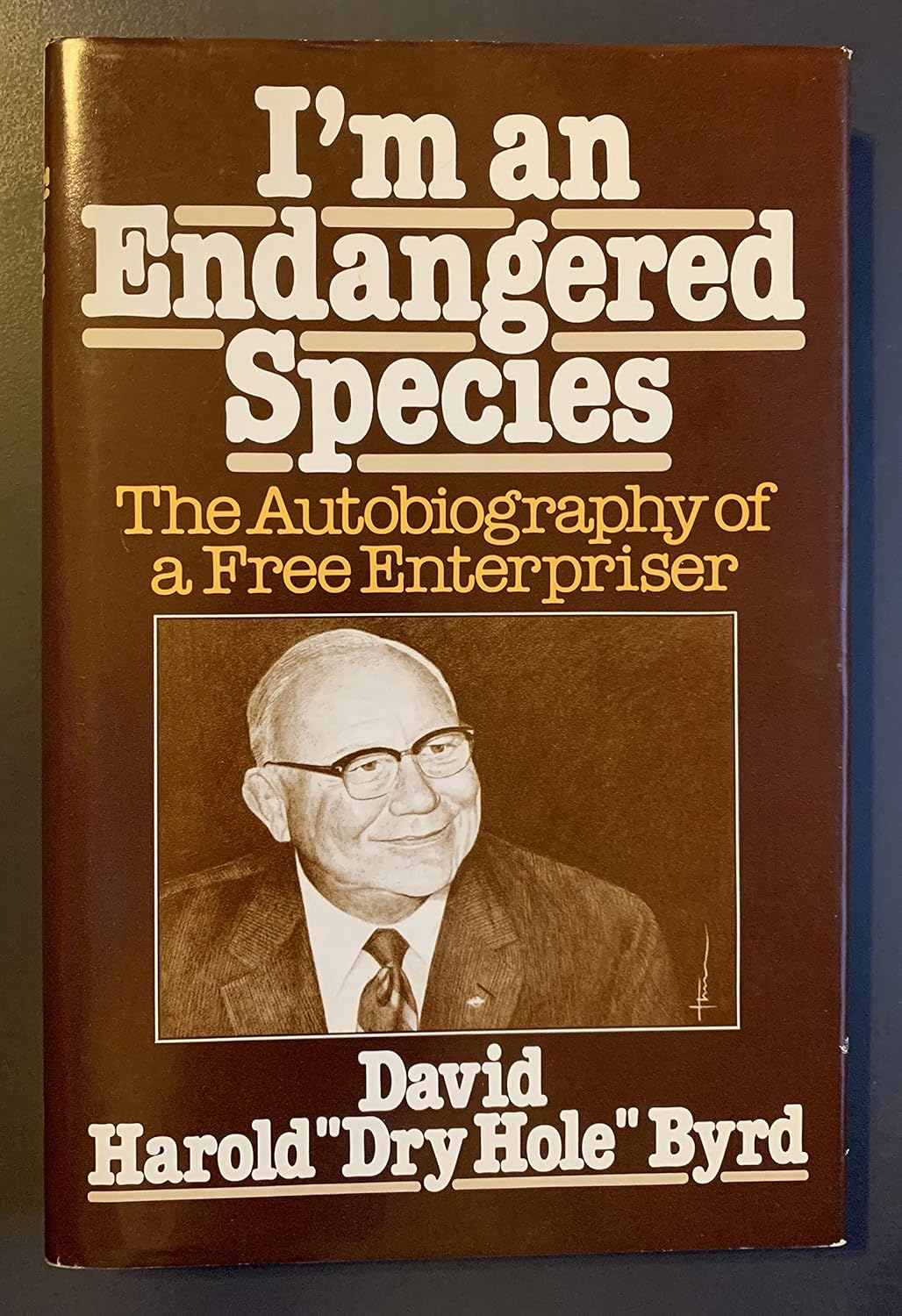
“… it is possible that he (Doolittle) has an exaggerated admiration for my skill with tricks of magic. On one of our tiger hunting trips in Sumatra, I astonished the natives with card tricks and prestidigitations with coins and other objects. What I didn’t tell Jim was that in my younger days in Dallas I had joined a Magicians club which in turn had affiliations with professional magicians who met in Chicago. We
exchanged trade secrets and vied with each other, using both prepared tricks and dexterity. With the advantage of being an “insider,” it was easy for me to confound the General along with the gullible Sumatrans.”
~ Page 40, “I’m an Endangered Species: The Autobiography of a Free Enterpriser” (1978).
[Note: CIA in 2024 published Smoke and Mirrors: The Magic of Spycraft, an essay on CIA’s use of magic techniques in its intelligence operations.]
Given Byrd’s control of the building from which the shots were allegedly fired, and his documented closeness to the official responsible for investigating why CIA was resisting Kennedy’s reform effort, the relationship warrants continued scrutiny — an intriguing matter of documented association, not yet of demonstrated foreknowledge.
The von Alvensleben Question
AARC’s research has also uncovered the presence of Werner von Alvensleben — a former Nazi assassin later turned OSS double agent — as a guest of Byrd’s in Dallas in late 1963. Von Alvensleben had been convicted by Austrian authorities for participation in a 1933 assassination attempt tied to Nazi leader Heinrich Himmler, and later ran a safari operation, Safarilandia, in Portuguese East Africa. Reports place Byrd at Safarilandia on November 22, 1963; however, a photograph identified as Byrd at the camp has been determined not to be him, and that claim should not be relied upon. CIA has thus far declined to search its operational files for records on von Alvensleben, leaving open whether he was a CIA asset at the time of his association with Byrd.
The Walton-Bolshakov Document
A Russian document authored by Soviet intelligence officer G. Bolshakov, part of a 382-page submission delivered to the Luna Task Force by the Russian ambassador, reports on a December 1963 Moscow visit by Bill Walton, a close friend of President Kennedy. Walton reportedly told his Soviet contacts that the assassination was undoubtedly the result of a large political conspiracy. Bolshakov had cultivated a friendship with the Kennedy family and served as an informal back channel to Soviet leadership; his report adds detail to a story that had been told before, and supports treating the assassination as a matter of broader political conspiracy rather than isolated action.
Angleton
James Angleton’s role deserves further investigation. Appointed CIA’s Israel desk officer early in his career, Angleton grew close to Israeli intelligence and later staffed the 1954 Doolittle Commission, from which his appointment as CIA’s counterintelligence chief emerged. He handled the Oswald file from October 1959 onward. His record includes a 1945 Vatican intelligence fabrication scheme, later covered up, and his failure to detect his close friend Kim Philby as a Soviet double agent. Jefferson Morley’s forthcoming book reportedly centers on Angleton, William Harvey, and Richard Helms as responsible figures, describing how multiple CIA operations converged on November 22.
Method and the Luna Task Force
AARC’s research relies substantially on open-source information alongside government documents — a standard practice within government intelligence agencies themselves. By contrast, the Luna Task Force and Jefferson Morley’s reporting have largely confined themselves to government records, and have not yet engaged with AARC’s findings regarding Byrd’s ownership of the building or his documented ties to Doolittle, Doolittle’s PFIAB role, and the pending 1963 reform inquiry. By Morley’s own account, the Task Force is unlikely to return to the case in a major way, having moved on to other business.
_______________________________________________________________________________________________________________________________________
“In the councils of government, we must guard against the acquisition of unwarranted influence, whether sought or unsought, by the military-industrial complex. The potential for the disastrous rise of misplaced power exists and will persist.”
— Dwight D. Eisenhower, Farewell Address, January 17, 1961
_______________________________________________________________________________________________________________________________________
Eisenhower’s warning was never really about individual malice. It was about structure — about what happens when an immense, permanently funded military establishment fuses with private industry and a “scientific-technological elite,” acquiring influence that operates beyond the reach of ordinary democratic accountability. Byrd, Doolittle, and their circle were, by every available account, sincere Cold Warriors who regarded themselves as defenders of American security. That sincerity is precisely what makes Eisenhower’s structural warning so apt: the danger was never confined to bad actors, but to a system of unaccountable power that could act — and obstruct a president’s own reforms — regardless of the intentions of any one man within it.
A Closing Note
A few matters, as we understand them, remain worthy of continued scrutiny and formal record.
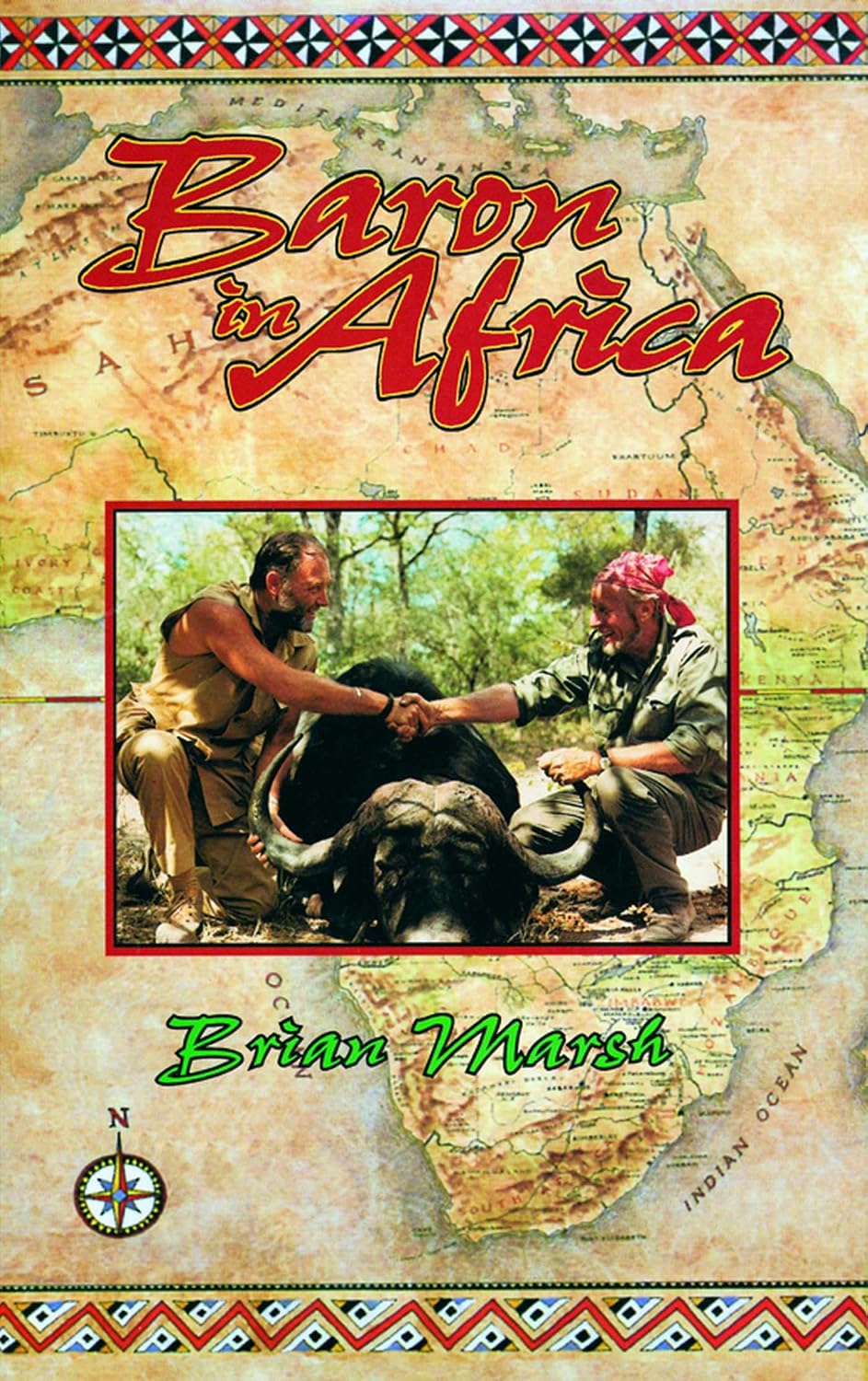
First: the association between D. Harold Byrd and Werner von Alvensleben. Contemporary Dallas newspaper accounts placed Byrd on safari in Portuguese East Africa with his friend and associate von Alvensleben — a former Nazi assassin turned OSS double agent — at the time of the assassination. If that reported holiday occurred as described, then the question stands: why has a photograph purporting to identify Byrd at that African camp been shown not to be him? A false identification does not resolve the underlying association; it raises it. CIA’s continued refusal to search its operational files for records pertaining to von Alvensleben leaves this question open rather than answered, and it should remain open until those files are searched.
Second: the ideological temperament of the era’s leading “super patriots” deserves to be stated plainly, within the bounds of the documented record. General Jimmy Doolittle chaired the 1954 commission urging more aggressive CIA covert action and, as PFIAB’s CIA panel chairman, was supposed to pursue the 1963 inquiry into why Kennedy’s CIA reforms were stalled. President Kennedy’s murder ended that inquiry. General Curtis LeMay, present among the Joint Chiefs during the Cuban Missile Crisis, argued for invading Cuba even after the Soviets agreed to withdraw their missiles, and afterward called the crisis’s peaceful resolution “the greatest defeat in our history.” General Lyman Lemnitzer, as Chairman of the Joint Chiefs, signed the March 1962 Operation Northwoods proposal — a plan for staged, false-flag violence against American targets intended to manufacture a pretext for invading Cuba — which President Kennedy rejected. These were men who regarded the president’s diplomatic accommodation with the Soviet Union not as statesmanship but as a species of appeasement bordering on treason, and who each, in his own capacity, resisted or opposed the President’s efforts to resolve international conflict through negotiation rather than confrontation.
Third: the record of what President Kennedy actually did in the thirteen months following the October 1962 Cuban Missile Crisis deserves to be set down in full, because it is against this record and in this essential context that the antagonism of the super patriots must be measured. Kennedy delivered his American University commencement address on June 10, 1963, calling on Americans to reexamine their attitudes toward the Soviet people and announcing a unilateral moratorium on atmospheric nuclear testing. Ten days later, on June 20, 1963, the United States and Soviet Union agreed to establish the direct Washington-Moscow hotline, installed that August. On July 25, 1963, the United States, Soviet Union, and United Kingdom reached agreement on the Limited Nuclear Test Ban Treaty, formally signed in Moscow on August 5 and by Kennedy in Washington that October. On September 20, 1963, Kennedy addressed the 18th UN General Assembly and proposed that the United States and Soviet Union abandon competition in space in favor of a joint expedition to the moon — a proposal he formally directed NASA to begin implementing on November 12, 1963, just ten days before Dallas. And on October 11, 1963, Kennedy signed NSAM 263, approving the withdrawal of 1,000 U.S. military personnel from South Vietnam by the end of the year. The document’s ultimate meaning remains debated among historians, but researchers including Dr. John M. Newman have concluded, on the basis of the withdrawal planning record, that Kennedy was genuinely committed to disengagement from Vietnam rather than escalation.
Read together, this is not the record of a typical Cold War president espousing typical Cold War rhetoric and policies. It is the record of an uncommon president, a proponent of peace, and a sustained, deliberate campaign — conducted in the final year of his life, against the considerable resistance of men who saw themselves as the nation’s last line of defense — to replace confrontation with the Soviet Union with cooperation. That the men who resisted him controlled or influenced the very apparatus responsible for reconnaissance, covert action, and military recommendation is not, by itself, proof of anything beyond what the documents show. But it is the reason the documents deserve to be available, to be read carefully, and reflected upon deeply. It may also reveal something unsettling about why the complete records of President Kennedy’s assassination have been withheld from public scrutiny for so long.
In this year of 2026, the AARC remains committed in its efforts to combat government secrecy, to obtain, preserve, and disseminate information on political assassinations, and to carefully offer rational and informed analysis of what those records reveal. Our work and our dedication continues.
— Daniel S. Alcorn, President, Assassination Archives and Research Center
