
Published: May 05, 2026

George Robert Blakey, the William J. and Dorothy K. O’Neill Professor of Law Emeritus, died Friday, May 1 in Chicago. He was 90 years old.
Blakey was a towering figure in criminal law, legislation, and legal education. His career spanned more than five decades of public service, teaching, and litigation, including service at the highest levels of the federal government, and a distinguished tenure in academia, including 37 years on the faculty of Notre Dame Law School.
Widely regarded as the nation’s foremost authority on the Racketeer Influenced and Corrupt Organizations Act (RICO), he helped shape the legal framework used to combat organized crime, public corruption, and complex financial offenses.
“Few have had as significant an impact on modern criminal law as Professor Robert Blakey,” said Dean G. Marcus Cole, the Joseph A. Matson Dean and Professor of Law. “He was on the faculty when I first interviewed at Notre Dame in 1997. His work on RICO made him one of the most celebrated legal scholars in American history, a true giant of the law. He served for decades as a devoted teacher and mentor, forming generations of students with both intellectual rigor and a deep commitment to justice. A devout Catholic, he lived a life of purpose and service to others. We give thanks for his life and pray for him, his family, and all those who were blessed to know him.”
Blakey taught and mentored thousands of students, first as a member of Notre Dame Law School faculty from 1964 to 1969, then as a professor at Cornell Law School, and returning to Notre Dame from 1980 to 2012. He taught courses in criminal law and procedure, federal criminal law, terrorism, and jurisprudence, and was known for his rigorous intellect, deep commitment to justice, and dedication to his students. Former students remembered him as a caring professor with very high standards whose teaching immensely shaped their thinking and influenced their careers.

He also played a significant role in shaping the Law School’s faculty, recruiting a number of professors who continue to have a lasting impact today. In 1985, he was named the William J. and Dorothy K. O’Neill Professor of Law, and moved to emeritus status in December 2012.
After his initial years on the Law School faculty, Blakey took on a central role in the development of federal criminal law as chief counsel to the U.S. Subcommittee on Criminal Laws and Procedures. In that position, he drafted Title IX of the Organized Crime Control Act of 1970, known as the Racketeer Influenced and Corrupt Organizations Act (RICO), as well as the Title III federal wiretapping statute, and went on to contribute to other significant federal and state criminal legislation over the course of his career.
Since its enactment, the RICO statute has played a significant role in both criminal and civil proceedings involving organized crime, gang-related activity, white-collar offenses, and corruption in public office. Blakey frequently argued or consulted on several cases involving RICO statutes at both the federal and state levels, including before the United States Supreme Court.
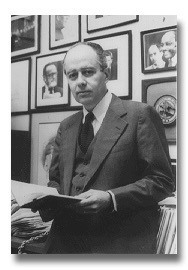
Blakey’s public service spanned decades and multiple branches of government. He served as an organized crime consultant to President Lyndon B. Johnson’s Commission on Law Enforcement and the Administration of Justice, contributing to the development of landmark racketeering and wiretapping legislation. He later served as chief counsel and staff director of the U.S. House Select Committee on Assassinations, investigating the assassinations of President John F. Kennedy and Dr. Martin Luther King Jr., and helped draft the President John F. Kennedy Assassination Records Collection Act of 1992. He also worked in the 1980s as special counsel to the U.S. Senate Judiciary Committee and as a consultant to the U.S. House Judiciary Committee, focusing on white-collar crime control.
Blakey received his bachelor’s degree from the University of Notre Dame in 1957 and his J.D. from Notre Dame Law School in 1960. He began his legal career at the U.S. Department of Justice as a special attorney in the Organized Crime and Racketeering Section of the Criminal Division, where, under Attorney General Robert F. Kennedy, he helped prosecute organized crime figures as well as corrupt public officials and union leaders.

Colleagues and friends remember Blakey not only for his extraordinary legal accomplishments, but for his legacy as a teacher, mentor, friend, and scholar.
Fernand “Tex” Dutile, professor emeritus of law, first met Blakey more than 60 years ago, when Blakey had just arrived on the Notre Dame Law School faculty and Dutile was a third-year law student.
“It was the very first year any electives were available in a curriculum that had been, until then, totally mandated,” Dutile recalled. “Giddily exercising this new freedom, I chose Bob’s course on organized crime. Our small but enthusiastic group met, some would say fittingly, in a darkened bar at the nearby ‘Five Corners.’ His course was, predictably, both enlightening and engrossing, and, as frosting on the cake, it yielded my highest grade as a law student.”
Dutile later joined Blakey as a colleague on the faculty and saw firsthand the depth of his influence.
“Bob was brilliant, indefatigable, and devoted,” Dutile said. “It’s hard to think of many scholars whose work had a more salutary influence on American society than did his development of RICO.”
Jimmy Gurulé, professor of law and a longtime colleague and friend, recalled Blakey’s extraordinary impact as both a mentor and a friend.
“In 1989, Bob recruited me from the U.S. Attorney’s Office in Los Angeles to join the law faculty,” Gurulé said. “For more than 23 years, he was my close friend, colleague, and mentor. Bob was a brilliant lawyer, scholar, and teacher. He was a man of uncompromising integrity and deep religious faith. He had a profound impact on my life and legal career, for which I will always be grateful.”
Gerard “Gerry” Bradley, professor emeritus of law, remembered Blakey’s reputation even before he arrived at Notre Dame, when the two overlapped at Cornell Law School.
“When I arrived at Cornell Law School in 1977, Bob was already something of a folk hero,” Bradley said. “Those of us interested in criminal justice regarded him as an icon. We revered him for his accomplishments as a scholar and legislative draftsman. He was famous for his brilliant, distinctive way of breaking down criminal statutes into their constituent elements. Everyone at Cornell knew, too, that Bob could fill an hour or two with stories about the ‘Mob.’”

Bradley noted that Blakey’s influence extended far beyond the classroom.
“During those years, he ran the Institute on Organized Crime on a federal grant, effectively providing high-level training for prosecutors at every level,” he said. “He was a kind of godfather of mob studies and the nation’s most authoritative commentator on RICO.”
“Bob was conspicuously Catholic, known widely for his pro-life convictions at a time when that was rarely seen in the legal academy,” Bradley added. “Our Lady’s University was always first in his heart and his true academic home. He was a ‘double Domer’ in the usual way—he held two Notre Dame degrees—but also in an unusual way, with two stints on the Notre Dame Law faculty, split by those years in Ithaca. From his return to Notre Dame up to his retirement in 2012, Bob went, as the Psalmist wrote, ‘from strength to strength.’ He came to be revered by another generation of law students, who left Notre Dame Law School with Blakey’s fingerprints on their understanding of criminal justice.”
Bradley also noted that shortly after returning to Notre Dame, Blakey chaired the Law School’s Appointments Committee, where he spearheaded a period of hiring that has had a lasting impact on the Law School’s academic excellence and Catholic character. In his later years, he remained an active and influential voice in criminal law, frequently called upon as a national expert on RICO and the high-profile investigations he had helped lead.
Blakey is survived by his children Michael Blakey, Elizabeth Blakey, Marie Blakey, John Blakey (and wife Christina), Katherine Cox (and husband Michael), Christine Coury, and Margaret Clarke (and husband Kevin), as well as 18 grandchildren and three great-grandchildren. All of his children are graduates of the University of Notre Dame and three are graduates of Notre Dame Law School. He was preceded in death by his wife, Elaine Menard Blakey, and his son, Matthew Blakey.
Funeral services will be held later this year at the Basilica of the Sacred Heart.
The entire Notre Dame community extends its deepest sympathies to Professor Blakey’s family.
https://law.nd.edu/news-events/news/in-memoriam-g-robert-blakey-william-j-and-dorothy-k-oneill-professor-of-law-emeritus-notre-dame-law-school/
