
Special to the AARC
At 12:30 p.m., on November 22, 1963, assassin’s bullets killed President John F. Kennedy on the public streets of Dallas, Texas. Thus, fell the most powerful man who had ever trod this fractured earth.
At the President’s sole command were scores of nuclear-tipped missiles at the ready in scattered silos. B-52 bombers loaded with nuclear bombs stood on ready alert, 24 hours a day, awaiting notification that would never come. Nuclear armed ballistic missile submarines rested for days undersea in waters around the globe awaiting authorization to launch. Stored in vast protected depot warehouses were incendiaries, nerve agents and other means of mass destruction awaited deployment in the event of war.
Without authorization by the Commander-in-Chief, no action was taken.
President John F. Kennedy’s death was a local crime. It was not a federal crime to kill a President of the United States. It had the same weight as as the death of a dog catcher or victim of a bank heist. On November 25, 1963 during a telephone call [Telephone Transcript of Johnson-Hoover conversation, 10:30 a.m.] with FBI Director, J. Edgar Hoover, President Lyndon B. Johnson indicated that Texas Attorney Waggoner Carr would be announcing the formation of a court of inquiry into the assassination that morning and that the FBI would cooperate with it.
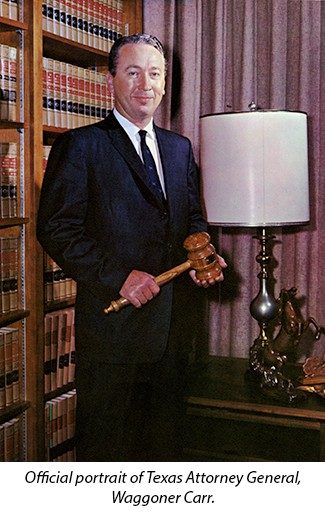 In a news conference later in the day, Attorney General Carr announced the formation of a Texas Court of Inquiry to investigate the assassination of President John F. Kennedy, the attempted assassination of Governor John Connally and the murder of Lee Harvey Oswald. When asked by the press if federal officials would cooperate with the Inquiry, he said that he planned to ask for the FBI’s cooperation.
Later that same day, Deputy Attorney General Nicholas deB. Katzenbach wrote a memorandum to the special assistant to the President advocating an appointment of “a Presidential Commission of unimpeachable personnel to review and examine the evidence and announce its conclusions …” Under outside pressure, President Johnson announced the formation of just such a Presidential Commission to be headed by U.S. Supreme Court Justice, Earl Warren over despite Warren’s deep reservations.
Shortly after the announcement, Attorney General Carr visited the office of the Chief Justice to seek a meeting with Earl Warren. According to Robert Carr, Waggoner Carr’s brother, his brother was made to wait in the outer office of the Chief Justice for several hours for a meeting. When a significant amount of time had transpired, Carr stood up and prepared to leave, Warren’s Secretary jumped up to inquire as to the reason for Carr’s departure. Robert Carr recalled that his brother testily indicated that he [Waggoner] was also a busy man and was not prepared to be kept waiting any longer. The Secretary politely requested that he stand by to allow her to consult with Warren behind the closed office door. Returning moments later, Carr was invited into the Warren’s office where he was allowed to address Warren. Carr left the meeting quickly thereafter and returned to the office to compose his letter of December 5, 1963 which detailed the purpose of the Texas Court of Inquiry.
In Texas, a Texas Court of Inquiry was formed with Texas Attorney General Waggoner Carr, Judge Robert G. Storey and Leon Jaworski as its members. On December 5, 1963, Attorney General Car wrote Chief Justice Warren to acknowledge the President’s desire for a special commission that it would be “helpful to you [Warren] and other members of the Commission to explain the nature of the Texas Court of Inquiry … and give effect to the President’s desire that it [the Commission] be the only body to report conclusions.” [Waggoner Carr Letter to Chief Justice, 12/5/63]
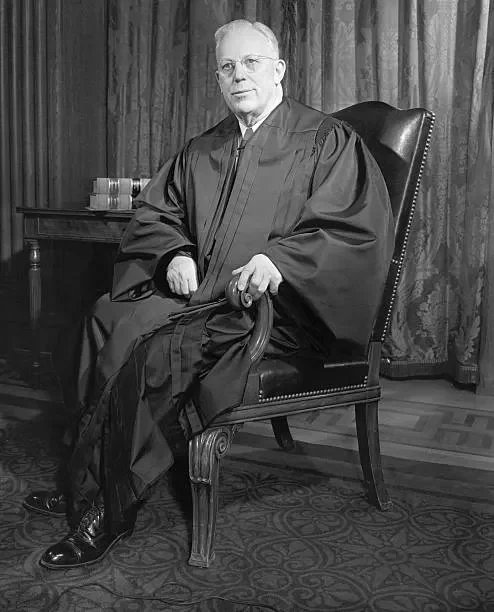
Chief Justice Warren detested the Texan and refused to work with the Texas Court of Inquiry’s investigation. What to do? Working with Jaworski behind the scenes, President Johnson resolved it.
Carr and Jaworski met in Warren’s office. The two Texans sat in chairs at a table with Warren opposite them. Warren so detested Carr, that he refused to talk to Carr and only referred to Carr as “him” when talking to Jaworski.
Warren spoke with Jaworski and Jaworski would turn to Carr and repeat what the Chief Justice has just said. Carr, in turn, would speak to Jaworski, and Jaworski would turn to the Chief Justice to parrot back Carr’s response. This would continue until an amicable agreement would be reached to have members of the Texas Court of Inquiry attend the Commission’s meetings.
Jaworski, upon completion of the meeting, walked over to the White House to find Johnson swimming naked in the White House pool and relayed the resolution. Johnson responded, “Well done.”
On December 6, 1963, the Chief Justice Earl Warren responded adroitly with,
“We are most anxious, as I am sure you are, to take make no steps which would could impede investigation or which could lead the public to mistaken conclusions based upon partial factual information. In addition, as you point out in your letter, the Commission, as well as the Texas Court of Inquiry, must be extremely careful not to prejudice in any way the trial in Texas of Jack Ruby.”
The Commission would not wish to interfere in any way with you or other State authorities in the conduct of matters which are your responsibilities, and in which as you point to it, the State of Texas has a proper and important interest. At the same time, it is the view of the Commission, for reasons stated above, that a public inquiry in Texas as this time might be more harmful than helpful in our mutual search for truth. Recognizing that the timing of this inquiry is your responsibility and your decision, we cannot refrain from the suggestion that you consider the wisdom of postponement of this court.” [Warren Letter to Carr, 12/6/63]
On December 16, 1964, Carr wrote Warren:
“I gratefully acknowledge receipt of your letter of December 6, 1963, following the visit Mr. Leon Jaworski and I had with you.
Although I have previously accepted orally your invitation extended in behalf of the Commission to participate in its work, I want again to accept such responsibility in behalf of Texas; Because of such participation in the work of the Commission, Texas will postpone its Court of Inquiry pending a decision that it would serve a useful purpose in addition to the Commission’s investigation.”
Here is the fate of the world balanced on the outcome of the investigation of the murder of President Kennedy, and these men, callous politicians, are like school boys tussling on a play ground.
How did we survive?
Copyright ©2026 David R. Wrone. All rights reserved.
