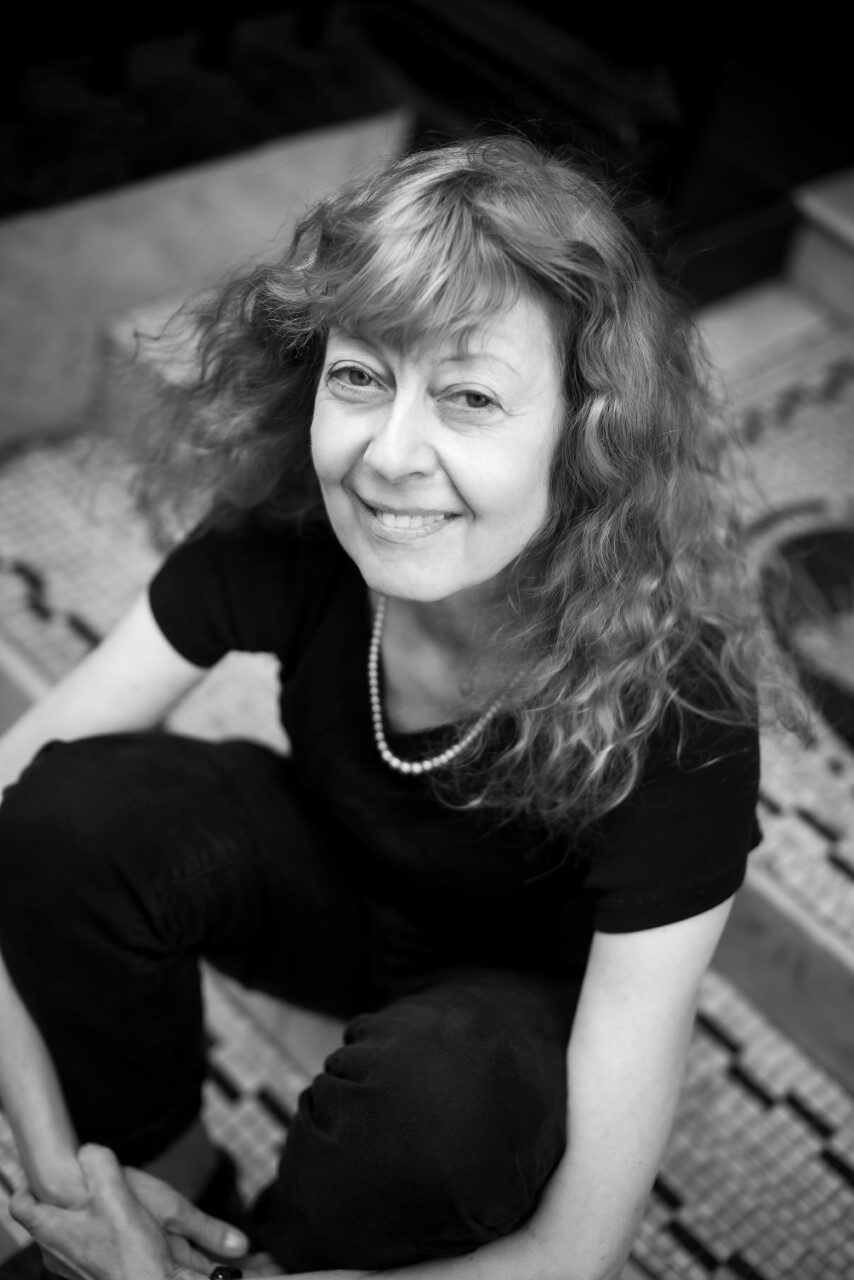
Dr. Susan Williams is a senior research fellow at the Institute of Commonwealth Studies in the School of Advanced Study, University of London.
Her book COLOUR BAR, the story of Botswana’s founding President, was made into the major 2016 film, A UNITED KINGDOM, directed by Amma Asante and starring David Oyelowo and Rosamund Pike.
Her book WHO KILLED HAMMARSKJÖLD? (2016) triggered a new UN investigation in 2015 into the death of the UN Secretary General; the investigation is ongoing.
SPIES IN THE CONGO spotlights the link between US espionage in the Congo and the atomic bombs dropped on Japan in 1945.
The PEOPLE’S KING: The True Story of the Abdication presents an original perspective on the abdication of Edward VIII and his marriage to Wallis Simpson.
Her most recent book is White Malice: The CIA and the Neocolonisation of Africa (2021).
_______
Dr. Susan Williams Awarded 2023 Windham-Campbell Prize for Nonfiction
Congratulations to historian, Dr. Susan Williams, author of “Who Killed Hammarskjold?: The UN, the Cold War and White Supremacy in Africa,” “Spies in the Congo: America’s Atomic Mission in World War II,” and “White Malice: The CIA and the Covert Recolonization of Africa,” named among this year’s recipients of the distinguished Windham-Campbell Prize, administered by Yale University.
Visit Dr. Williams Amazon Author’s page HERE
RELATED: AARC Board Member Dan Alcorn’s Book Review: Spies in the Congo by Susan Williams
Courtesy of Dr. Susan Williams:
Dag Hammarskjöld’s Plane Crash: The Continuing Search for Truth
The Institute of Commonwealth Studies at the School of Advanced Study, University of London, in partnership with the United Nations Association Westminster, hosted a day-long conference on 29 February 2024 to review: the progress that has been made by the current UN investigation – led by Justice Mohamed Chande Othman, formerly Chief Justice of Tanzania – into the 1961 plane crash near Ndola in Northern Rhodesia (now Zambia) that killed UN Secretary-General Dag Hammarskjöld and fifteen others; and to identify next steps to assist the investigation.
Revisiting Dag Hammarskjöld’s Mysterious Death
One man is known to have survived the infamous crash. Why was his testimony hidden?
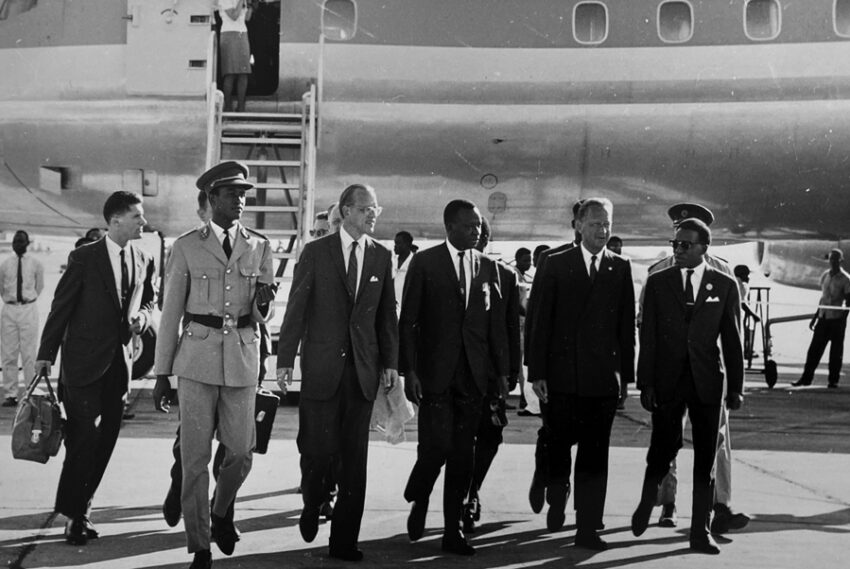
Shortly after midnight on September 17–18, 1961, a DC-6 aircraft flying from Leopoldville (Kinshasa), the capital of the newly independent Congo, plunged into dense forest in central Africa. The crash occurred about nine miles from the town of Ndola in Northern Rhodesia, then a British colonial territory (now Zambia). It was a moonlit night with a slight haze and no cloud, and the weather was fine.
The plane was carrying Dag Hammarskjöld, the second United Nations secretary-general. Hammarskjöld had arranged to meet at Ndola with Moïse Tshombe, the leader of the breakaway Congolese province of Katanga. A little more than a year earlier, the Congo had become independent from Belgium, but Tshombe, with the support of the Belgian government and mining interests, had almost immediately orchestrated Katanga’s secession. His forces, which were dependent upon white mercenaries from Europe and South Africa, had been fighting with U.N. peacekeeping troops, and Hammarskjöld was hoping to negotiate a cease-fire.
News of the crash and of Hammarskjöld’s death was celebrated by some white settlers in central and southern Africa, who saw him as a supporter of African decolonization and of majority rule. But it was met with horror across the world. The blue and white flag of the U.N. flew at half-mast at its headquarters in New York, and the flags of the ninety-nine member states were lowered.
And, as strange details swiftly emerged about the crash, suspicions about the cause grew. “Whether this was due to accident or some kind of sabotage, I do not know,” observed Prime Minister Jawaharlal Nehru of India. Former U.S. president Harry S. Truman is reported to have said to the press: “Dag Hammarskjöld was on the point of getting something done when they killed him. Notice that I said, ‘When they killed him.’”
Julien may have said more about the last moments of the crash than we have yet heard.
In the decades that followed, the crash has remained a mystery. In 2011, I published a book called Who Killed Hammarskjöld?, which presented the case for a new inquiry into the crash. That led to the establishment of a commission of distinguished jurists known as the Hammarskjöld Commission: Sir Stephen Sedley of the UK, who served as chair; Ambassador Hans Corell of Sweden; Justice Richard Goldstone of South Africa; and Justice Wilhelmina Thomassen of The Netherlands. There is “persuasive evidence,” stated the commission’s report in 2013, “that the aircraft was subjected to some form of attack or threat as it circled to land at Ndola.” The commission recommended that the U.N. re-open an earlier investigation into what had happened to Hammarskjöld’s plane.
That recommendation was taken up. In December 2014, the U.N. General Assembly adopted a resolution calling for a fresh investigation into Hammarskjöld’s death. The U.N. Secretary General then appointed the Honourable Mohamed Chande Othman, the former
Chief Justice of Tanzania, to lead the inquiry, which is ongoing. Over the course of this inquiry, Justice Othman has paid new attention to evidence that was dismissed in earlier decades and discovered new information. In his last three reports he has written that “it appears plausible that an external attack or threat may have been a cause of the crash.”
there were sixteen people on board Hammarskjöld’s plane. But only one person survived long enough to be found alive: Harold M. Julien, an American who was in his mid-thirties. He was suffering from burns over roughly half his body, a partial fracture of the skull, and a dislocated right ankle.
Julien was the acting chief security officer of the United Nations Operation in the Congo (known as ONUC). He and a dedicated team of aides and security personnel had flown to Northern Rhodesia with Hammarskjöld. A newsreel shows the team waiting together on the tarmac of Leopoldville’s airport to board the aircraft, which was called the Albertina after a hit song by Papa Wendo, the star of Congolese rumba.
As the Albertina neared Ndola airport between ten and fifteen minutes after midnight on September 18, it obtained clearance to land. But the plane never made it to the runway. Extraordinarily, the British High Commissioner to the Federation of Rhodesia and Nyasaland, Lord Alport, who was at the airport heading a group of British officials preparing for Hammarskjöld’s arrival, announced that the secretary-general must have decided “to go elsewhere.” Shortly after 3:00 a.m., the air traffic controller closed down the runway and put out the lights in the tower. Apparently there was no tape recording of communications in the control tower that night.
Even odder, as this essay will reveal, there was a mysterious hiatus between the times when the wreckage was first discovered and the official response. Despite reports of the sighting of the crash site in the morning, no help of any sort was sent to the site until 3:10 p.m. local time, which colonial officials recorded as the time the wreckage was discovered. This was about fifteen hours after the crash.
When police officers and ambulance men finally arrived, they saw that 75–80 percent of the fuselage of the plane had been burned and that most of the bodies were charred beyond recognition. Only Hammarskjöld’s body was not burned, and only Sergeant Julien was breathing.
“The smell of death was everywhere,” reported one of the first journalists on the scene. “Large mopani flies were beginning to settle on the bodies before they were covered by blankets and put into waiting trucks.”
Julien was conscious and able to speak, but in terrible pain from his burns and fractures, aggravated by acute sunburn and heat prostration. He was taken to the hospital in Ndola at 4:45 p.m. That evening, Senior Inspector A.V. Allen of the Northern Rhodesian police asked him some questions:
Allen: The last we heard from you, you were over Ndola runway. What happened?
Julien: It blew up.
Allen: Was this over the runway?
Julien: Yes.
Allen: What happened then?
Julien: There was great speed. Great speed.
Allen: What happened then?
Julien: Then there was the crash.
Allen: What happened then?
Julien: There were lots of little explosions all around.
Allen: How did you get out?
Julien: I pulled the emergency tab and I ran out.
Allen: What about the others?
Julien: They were just trapped.
Studies of the crash have tended to focus on the U.N. Secretary General. This was inevitable, given the significance of Hammarskjöld’s distinguished role and the high regard in which he was held by many. President John F. Kennedy said of Hammarskjöld following his death, “I realize now that in comparison to him, I am a small man. He was the greatest statesman of our century.”
But as Hammarskjöld would have insisted, every person on the flight of the Albertina was serving the cause of peace and the U.N. Charter. And in the case of Harold Julien, there are many questions about the flight and the crash that have yet to be answered and compel particular attention.
“Harry” Julien, as he was known by most people, was good-looking: five foot ten inches tall, with brown hair and blue eyes. A former Marine who had served in Korea, he had a dignified bearing and was extremely fit—an enthusiastic athlete and a fine swimmer and diver. He was well liked by his U.N. colleagues.
Julien left the U.S. Marine Corps in 1952 and joined the U.N. Security Force. As someone with a French mother and an Italian father, he felt at ease in the international atmosphere of the U.N.
While working in New York, he met his future wife Maria, who had been born in Cuba and was also at the U.N. They had two young sons: Michael and Richard.
In 1958, Julien took on a year’s assignment in Jordan, and in July 1961, he joined the Congo mission. By then the family had moved to Florida.
It was at home in Miami that Mrs. Julien received the shocking news that her husband had been in an air crash and had been hospitalized. The U.N. arranged for her to fly to New York and then on to central Africa, leaving the children with family. The plans for the journey were made with great urgency but took several days to implement.
Meanwhile, Julien was visited every day in the hospital by the resident U.S. consul in Lusaka, the capital of Northern Rhodesia.
On Tuesday, September 19, the day after Julien had been taken to the hospital, he was “slightly better.” Though “still dangerously ill,” he was expected to survive. A day later, he was reported as “holding his own.”
Even so, there were many missed opportunities to care successfully for him. It is odd that he was not airlifted to a better and more modern hospital in the region, such as the ones in Lusaka and Salisbury (now Harare).
Dr. Mark Lowenthal, a junior doctor who usually worked in the “African” hospital but had been brought to the “European” hospital in Ndola to assist in Julien’s care, could not understand why Julien was not flown to the United States. “Julien was a strong young man and, with the best that modern care of the time could offer, would have survived,” stated Lowenthal later. “I was inexperienced, four years out of medical school and not in charge of the case. A mature me would have unofficially told the Americans to send an aircraft to take him to the US quickly. The matter remains with me as a great regret.”
maria julien arrived in Ndola on Thursday, September 22, and was with Harry on the final day and night of his life. He was sedated and did not speak much. But she knew he was fully in his senses, because he asked about a chain that he had sent to her to be repaired—a chain to a medallion of St. Christopher, the patron saint of travelers. They were both devout Catholics, and Maria had called a priest to her husband’s bedside.
But on the morning of the next day, her husband died—despite the expectation that he would survive. This was five days after the crash. The coroner’s summary report listed the cause as “Renal failure due to extensive burns following aircraft accident.”
In the last hour of his life, according to a nurse who was present, Julien said to his wife: “Honey, take me home. We must get out of here quickly. You will take me home?” Mrs. Julien reassured him. Then he seemed to become very anxious. “Where’s the book?” he asked; after a pause, he called again for “the book”; and yet again, more agitated, “the book.” His wife said that she had it, and Julien then relaxed.
It is unclear what Julien meant by “the book.” Possibly it was a coding book for the CX-52 cipher machines used on Hammarskjöld’s mission. (Hammarskjöld and his team were not aware that these machines had been developed with cooperation from U.S. signals and intelligence agencies, which could decode with relative ease encrypted messages sent on them.)
That was not all Julien said. His son Richard told me that after his mother had returned to Miami, she told her sister that her husband had said that in the last minutes of the flight there had been three explosions on the plane.
Julien’s medical staff also later provided testimony about what they heard him say. Dr Lowenthal, for one, had tried to extract as much information about the crash as possible. When he asked Julien why the plane had not landed as expected, Julien replied that Hammarskjöld had changed his mind or had said “Turn back.” Julien then said that there had been an explosion and a crash, first in that order, then in the other.
According to one of his nurses, Julien stated, “I was the only one that got out, all the others were trapped.… We were on the runway when Mr. Hammarskjöld said go back, then there was an explosion.”
Another nurse heard him refer to “sparks, sparks in the sky.”
Julien’s statements—as well as his replies to Inspector Allen in that first interview after the crash—match many of the testimonies of people on the ground. Davidson Simango, a charcoal burner who was working at night in the forest where the Albertina crashed, said that at midnight he saw two airplanes flying closer together than was usual. The noise from the planes faded, but within a few minutes grew louder again. There was then a flash, after which the other plane went down, then a loud explosion. He later saw one plane flying back.
Dickson Buleni, also a charcoal burner, was sitting outside his home that night with his wife when they saw a large plane with a small plane flying above it. He saw a “fire” coming from the small plane to the roof of the big plane, when he heard the sound of an explosion. Then the big plane fell down and crashed.
Squadron Leader John Mussell, who was the officer in charge of the Royal Rhodesian Air Force (RRAF) detachment in Ndola on the night of the crash, reported that at approximately 9:15 a.m. on September 18, messages originating from police headquarters in Ndola “gave reports of flashes seen during the night.” Further reports included one by R. A. Phillips of the Vacuum Oil Company, who was on duty at the airfield at the time, and saw “the aircraft pass overhead going out Westwards and he watched the lights for approximately two minutes.” He then lost sight of the aircraft “and shortly afterwards he saw two flashes, one big and one small.”
the story of the crash of the Albertina is like a jigsaw with thousands of pieces. Some of them seem to fit together easily, such as the testimonies of Julien and of the witnesses who saw a flash in the sky. Other pieces are odd shapes that seem to have no place at all. Many are baffling. And some of the most important pieces appear to be missing. Recently, though, some of those pieces have turned up. This is so in the case of Harold Julien.
In 2019, new information emerged relating to Julien’s stay in the Ndola hospital, provided by the government of Zimbabwe to the current U.N. inquiry. This fresh information reveals that the Rhodesian authorities actively sought to prevent Julien’s statements about the flight and the crash from being made public. A senior Rhodesian intelligence official instructed Julien’s medical superintendent that “no one of his hospital staff must talk about this,” in relation to Julien’s statements that he had seen sparks in the sky. The superintendent and another doctor were warned about “the security angle” and asked “to make sure that none of their staff talked.”
Justice Othman views this new evidence as significant. In his view, “a general undervaluing of the evidence of Harold Julien…may have affected the exhaustiveness of the earlier inquiries’ consideration of the possible hypotheses.”
It also suggests that Julien may have said more about the last moments of the crash than we have yet heard.
the men who tried to keep Julien’s statements from becoming public were working for the government of the Federation of Rhodesia and Nyasaland. This white-ruled entity, which was made up of Northern Rhodesia (now Zambia), Southern Rhodesia (now Zimbabwe), and Nyasaland (now Malawi), had been created by Britain in 1953 despite widespread African opposition.
There were around eight million Black people living in the Federation in 1960, and roughly 310,000 whites (less than four percent of the overall population), who labeled themselves “Europeans” (regardless of where they were born). The official creed was one of partnership between the races. But Roy Welensky, the prime minister of the Federation at the time of the crash, described this partnership as “the same as exists between rider and horse”—the white settler being the rider and the Black person the horse.
(In 1960, the Federation had been included in a tour of Africa arranged by the U.S. State Department for Louis Armstrong, the world-famous trumpeter. While Armstrong was there, he was interviewed by local white journalists. One of them asked, “Well, Mr. Armstrong, how do you like Rhodesia?” Armstrong’s answer was biting: “Y’all sure know how to keep little Black children in bare feet!”)
The Albertina crashed in the forest next to an “African township” called Twapia. No so-called “Europeans” lived in Twapia, which had been built on the outskirts of Ndola in the early 1950s as a way of segregating Blacks from whites and keeping them out of the town when they were not working there for whites. Townships were built for Black people all over the Federation, who had to carry an identification pass at all times; a special pass was needed to go into the towns at night and for other purposes.
The historian Robert I. Rotberg has described the color bar in Northern Rhodesia: “Post offices retained separate entrances, hospitals separate services and plants, and the railways differential facilities of all kinds.… Hotels, stores, and private establishments discriminated. An industrial color bar effectively prevented Africans from competing with whites for jobs. Even the federal civil service remained a white preserve.” Black people had to buy meat at the back door of a shop or from a hatch opposite the European counter. They had no meaningful representation or power in the Federal Assembly.
Whereas whites had access to adequate health care and education, services for Blacks were rudimentary or nonexistent.
By 1961, though, the Federation was teetering. A nationalist movement in Northern Rhodesia had orchestrated a civil disobedience campaign against white supremacy called the “Cha Cha Cha.” (Its name came from the exuberant hit song “Indépendance cha cha,” which had been written by Joseph Kabasele in 1960 to celebrate the forthcoming independence of the Congo from Belgian colonial rule.) Thousands of people insisted on being served in shops that were “whites-only,” and they burned the chitupa—the hated identity pass. The government cracked down severely; the prisons became so full that there were “as many as three prisoners to a blanket.” Among them had been the resistance leader Kenneth Kaunda, who in 1964 would become the first president of independent Zambia. “Our demand,” insisted Kaunda, “is home rule and secession from this fraudulent and abominable Federation now!”
Many of the whites in the Federation loathed the U.N. But for the majority population, it offered reason for hope. In his introduction to the U.N.’s Annual Report of 1960, Hammarskjöld described the new states of Africa and Asia as “powerful elements in the international community,” whose independent voice in the world polity was a factor to be reckoned with. The U.N. was to them their “main platform” and protector, he said, as they “feel themselves strong as members of the international family but are weak in isolation.”
That helps explain why a large group of people were waiting outside the airport on that night of September 17–18, 1961 to welcome the secretary-general. Wanting to show their appreciation of Hammarskjöld’s work and his commitment to majority rule, they carried placards stating their opposition to the Federation and their support for a unified Congo. They had been shocked by the assassination of Patrice Lumumba, the first democratically elected prime minister of the Congo, on January 17, 1961. That tragedy had taken place eight months earlier in Elisabethville (now Lubumbashi), fewer than 125 miles from Ndola.
They were forced to stay outside the airport, since no Black people were allowed into the terminal—even though this was their country.
By contrast, any white from anywhere could enter the airport without restriction. It was a common occurrence for South African, British, Belgian, French, and other mercenaries to drink in the terminal bar. They were employed by multinational mining interests and the Katangan government to fight against the U.N. in the Congo, on the other side of the Northern Rhodesian border.
Katanga was one of the richest areas of the world in terms of mineral resources, including uranium. The mining companies, supported covertly by the United States and other Western powers, were determined to maintain control of the region.
On the night of the crash of the Albertina, there were a number of mercenaries in Ndola. These men included the notorious mercenary Mike Hoare, whose work for the CIA in the Congo in the 1960s was recently established by a file released under the John F. Kennedy Assassination Records Collection Act of 1992.
Three inquiries into the cause of the crash were conducted in 1961–62: two under the auspices of the Rhodesian government and one by the U.N.
The Rhodesian inquiries were conducted under, and influenced by, the conditions and attitudes of British occupation and colonial rule. Nearly all the statements and testimonies of Black witnesses were dismissed or disqualified. In the photographs of the victims, the bodies are labeled according to their nationalities, with the exception of Sergeant Serge Barrau from Haiti; his body is simply labeled as “Coloured.”
Some Black witnesses, as we know, said they saw a second, smaller plane in the sky, which, they said, shot down Hammarskjöld’s plane. But their testimonies—even those of the charcoal burners living and working near the crash site—were rejected. “It was incredible,” observed Timothy Jiranda Kankasa, who was the secretary of Twapia Township at the time and would become a government minister after independence, “that all the Black witnesses were supposed to be unreliable.”
The November 1961 report of the Rhodesian Civil Aviation Board of Investigation was unable to reach a firm conclusion. It regarded pilot error as one of several probable causes but also considered other possibilities, including the “willful act of some person or persons unknown which might have forced the aircraft to descend or collide with the trees.” It regarded this as unlikely but was unable to rule it out, “taking into consideration the extent of the destruction of the aircraft and the lack of survivor’s evidence.”
The U.S. ambassador sent a cable to Washington that explicitly referred to the possibility that the plane was shot down.
The subsequent Rhodesian Commission of Inquiry reached a conclusion in 1962 which it presented as “more precise”: that pilot error was the cause of the crash, an explanation that over the years became the prevailing view. It did not make this claim because there was any positive evidence for it, but because all other possible causes had supposedly been eliminated.
As Sgt. Julien was the only person left to describe what had happened on the flight, his recollections should have been crucial to the investigations of the Rhodesian Commission. But the commission discounted Julien’s statements to the nurses, writing: “No attention need be paid to remarks, later in the week, about sparks in the sky. They either relate to the fire after the crash, or to a symptom of his then condition.” Even Julien’s comment about the plane having blown up, made to police inspector Allen, was not given serious attention.
The senior medical staff at the hospital dismissed Julien’s recollections of the crash as the ramblings of a sick man; his reference to “sparks in the sky” was attributed to uraemia. But Dr. Lowenthal took a different view. He stated that Julien’s recollections were spoken during a plasma transfusion and before an injection of pethidine, which means that Julien had not been sedated at the time. Lowenthal felt so strongly about the need to establish this truth that he participated in the Rhodesian hearings as a volunteer witness; he insisted that when Julien spoke about the crash, he was “lucid and coherent.”
CONTINUE READING AT THE YALE REVIEW
Dr. Williams’ AMAZON author’s page may be found HERE.
______
Secretary-General’s remarks Commemorating the 62nd Anniversary of the Death of Dag Hammarskjöld
Courtesy of Dr. Susan Williams
13 September 2023
Secretary-General’s remarks at Wreath-Laying Ceremony Commemorating the 62nd Anniversary of the Death of Former Secretary-General Dag Hammarskjöld
 Excellencies, Ladies and gentlemen,
We gather to pay tribute to Dag Hammarskjöld on the 62nd anniversary of his death.
We honour a virtuoso of multilateral action.
With passion and compassion, courage and curiosity, diplomatic skill and boundless stamina, Dag Hammarskjöld lived – and died – for the ideals of our United Nations.
I welcome the General Assembly’s resolution in December 2022 to continue the investigation into the cause of the plane crash in which Dag Hammarskjöld died, and echo the General Assembly’s call for Member States to release any relevant records in their possession.
We have a shared responsibility to pursue the truth – for Dag Hammarskjöld and those who died alongside him, for their loved ones, and for the United Nations and the people we serve. I remain personally committed to that quest and intend to write to relevant Member States on the matter.
Dag Hammarskjöld shaped our United Nations in innumerable ways – setting new standards of public service and launching our Organization on its active career as the custodian of world peace.
His legacy endures, not as distant memory, but as a living guide for our shared mission.
He recognized that the United Nations may be imperfect – but he knew it was indispensable. And he summoned us all to reach higher.
As he once said: “It is when we all play safe that we create a world of utmost insecurity.”
Let us take inspiration from the courage of his convictions and the power of his example.
Let us move forward together in unity and purpose.
And let us keep striving to narrow the gap between the world as it is, and the world as we know it can be.
I would like to ask all of you to join me in a moment of silence.
[Moment of silence]
Thank you.
______
30 December 2022: Mandate to renew the UN Investigation into the death of UNSG Hammarskjöld
Courtesy of Dr. Susan Williams:
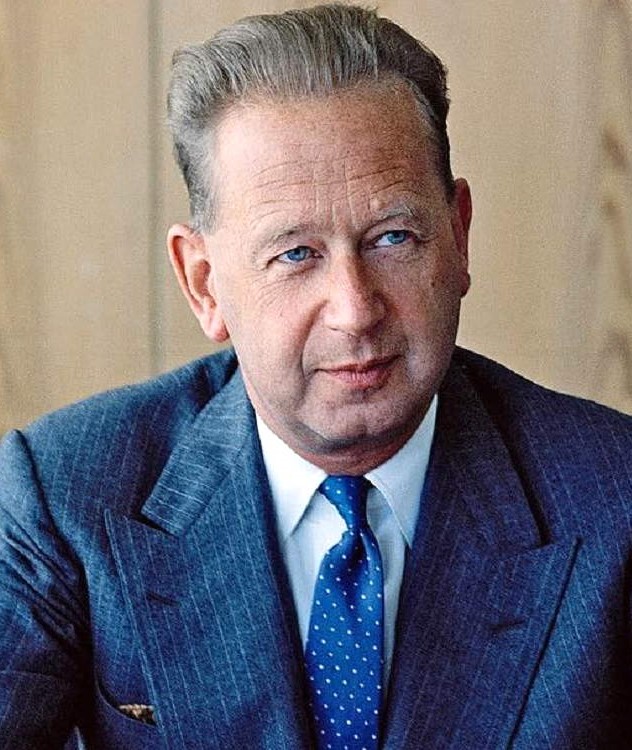
On 30 December 2022, the UN General Assembly passed Resolution A/77/L.31, which authorises the renewal of the UN’s ‘Investigation into the conditions and circumstances resulting in the tragic death of Dag Hammarskjöld and of the members of the party accompanying him.’ It further authorises the reappointment of the Eminent Person, Judge Mohamed Chande Othman, to lead the investigation.
The Resolution was initiated by Sweden and co-sponsored by 141 Member States (out of 193). The US and the UK did not co-sponsor the resolution.
The Resolution follows Judge Othman’s latest report (A/76/892), which is readily available on the UNA Westminster webpages on developments relating to the Hammarskjöld plane crash (along with various other significant documents and updates).
In this latest report, Judge Othman writes:
‘…I respectfully submit that the burden of proof to conduct a full review of records and archives resulting in full disclosure has not been discharged at the present time. Indeed, information received from other sources under the present mandate underscores that it is almost certain that these Member States [that is to say, the USA, the UK, and South Africa] created, held or were otherwise aware of specific and important information regarding the cause of the tragic event. That information is yet to be disclosed.’
In case of interest, the passing of the Resolution by the GA can be watched on UNTV. It takes about three minutes from 1.04.40: https://media.un.org/en/asset/k14/k14tlsg06p
RELATED:
Do Spy Agencies Hold Answer to Dag Hammarskjold’s Death? U.N. Wants to Know
______
Courtesy of Dr. Susan Williams
United Nations General Assembly
Seventy-sixth session
Agenda item 131
Letter dated 25 August 2022 from the Secretary-General addressed to the President of the General Assembly
I have the honour to refer to General Assembly resolution 74/248 concerning the investigation into the conditions and circumstances resulting in the tragic death of Dag Hammarskjöld and of the members of the party accompanying him on flight SE-BDY on the night of 17 to 18 September 1961.
In accordance with paragraph 1 of resolution 74/248, in March 2020 I reappointed Mohamed Chande Othman as Eminent Person to continue to review the information received and possible new information made available by Member States, including by individuals and private entities, to assess its probative value and to draw conclusions from the investigations already conducted. Owing to the coronavirus disease (COVID-19) pandemic, in December 2020 the General Assembly decided, with my support, to extend the mandate of the Eminent Person, and also requested me to report to the Assembly before the end of the seventy-sixth session on progress that had been made.
I recall that I had previously appointed Mr. Othman as Eminent Person for successive periods in 2018 and 2017, pursuant to General Assembly resolutions 72/252 and 71/260, respectively, and I reported to the General Assembly on progress made in 2019 (A/73/973) and 2017 (A/71/1042). I also recall that I had previously appointed Mr. Othman as Head of the Independent Panel of Experts, established in accordance with Assembly resolution 69/246.
I renew my profound gratitude to the Eminent Person. The United Nations is indebted to him for this exemplary and consequential work in the pursuit of the full truth concerning the tragic event.
I am encouraged that the Eminent Person has received significant new information and that further advancements in the body of relevant knowledge have been made, following the review of many thousands of pages of records and forensic tests and consultation with experts. I note that such new information includes the areas of probable intercepts by Member States of relevant communications; the capacity of the armed forces of Katanga, or others, to have conducted a possible attack on flight SE-BDY; the presence in the area of foreign paramilitary and intelligence personnel; and further new information relevant to the context and surrounding events of 1961.
As in the 2019 report, the Eminent Person assesses that it remains plausible that an external attack or threat was a cause of the crash. I take note of the conclusion by the Eminent Person that it would not be reasonable at this point to reach a conclusion as to the cause of the tragic event based on presently available but incomplete information. At the same time, I am encouraged by the conclusion of the Eminent Person that, given the growing body of evidence, there remain only a limited number of hypotheses to explain what occurred on that fateful night.
I wish to express my gratitude to Member States, independent high-ranking officials appointed by Member States (Independent Appointees) to conduct reviews of their intelligence, security and defense files and private individuals and entities for their cooperation with the Eminent Person and their willingness to provide additional information.
I am encouraged that key Member States have committed at a high level to full cooperation and provided assurances that search requests have or will engage appropriate security, intelligence and defense agencies, and that Independent Appointees from a number of Member States have provided, and may provide in future, additional information. I am also encouraged by the significant information that has been provided to the Eminent Person by private individuals and non-governmental entities.
At the same time, the Eminent Person notes that: (a) no significant information has been provided by key Member States since mid-2017; (b) it is almost certain that further relevant information exists, including radio or other communications; (c) Member States have yet to discharge their burden of proof to show that they have conducted a full review of their records and archives resulting in full disclosure; (d) Independent Appointees may need more time to provide information; and (e) it would be neither judicious nor responsible to reach a conclusion without the benefit of all potentially material information, in circumstances where such information has been shown to be almost certain to exist.
Accordingly, I support the recommendation of the Eminent Person that the United Nations appoint an independent person to continue the work undertaken pursuant to the current mandate of the Eminent Person. I also support the Eminent Person’s recommendation that key Member States be again urged to appoint or reappoint Independent Appointees to determine whether relevant information exists in their security, intelligence and defense archives. More broadly, I call on Member States to ensure comprehensive access to all archives and provide relevant information, more than 60 years after the tragic event, and agree with the proposal of the Eminent Person that potential modes of disclosure and conditions of confidentiality be offered to Member States, without necessarily requiring that relevant information be disclosed in full or publicly.
I also support the Eminent Person’s recommendation that all Member States be encouraged to make assistance available to the independent person, including forensic analysis or other research.
Finally, I support the recommendation of the Eminent Person that the United Nations continue to work towards making key documents of the Dag Hammarskjöld investigation publicly available through a dedicated online collection, including documents pertaining to the 1961 United Nations Commission on Investigation, the 2013 Hammarskjöld Commission, the 2015 United Nations Independent Panel of Experts and the 2017 and 2019 reports of the Eminent Person, as well as his present report.
It remains our shared responsibility to pursue, with renewed urgency, the full truth of what happened on that fateful night in 1961. We owe this to Dag Hammarskjöld, to the members of the party accompanying him and to their respective families. We owe this also to the United Nations. I consider this to be our solemn duty and I will do everything I can to support this endeavour.
I call on the General Assembly to remain seized of the matter and to endorse the report of the Eminent Person and his recommendations, as discussed above.
(Signed) António Guterres
DOWNLOAD AND READ THE COMPLETE REPORT HERE: N2244798
* * *