
16 December, 2021
by Dennis Bernstein and Bill Simpich
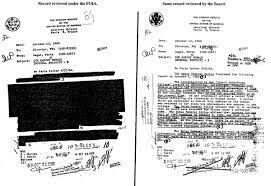
Even 58 years after the murder of President John F. Kennedy – approximately 15,000 investigative documents in the case still have to be released in full.
Study of the Kennedy case and other cases like it provide a bird’s-eye view into the national security state that is unavailable anywhere else.
The JFK Records Act, passed after the Oliver Stone movie got made in 1991, contains unique language that makes it stronger than the Freedom of Information Act – it forced the National Archives to release a lot of assassination-related documents that include sources and methods of the CIA and the FBI and other agencies that they fight to hide from the public eye.
Thanks to the JFK Records Act, documents about the drug trade are being released, along with documents about embassies being spied on by second-story men from US intelligence who were breaking in and stealing the codes and the ciphers from foreign governments.
Now, they don’t do it with strong-arm tactics and wiretapping. They do it with computers and sensors. Now, the intelligence agencies don’t confine this activity to just foreign countries. They do it increasingly on our own citizens.
From now until December 2022, the fight for the release of these documents is front and center.
For the reasons why, see the November 2021 interview by Dennis Bernstein with Bill Simpich, below.
Dennis Bernstein: [Music playing] And you’re listening to “Flashpoints”, on Pacifica Radio. I wanna welcome back to these airwaves Bill Simpich, attorney William Simpich. Bill is a civil rights attorney in the East Bay. Since the 1980s, his work has centered around housing, employment, government misconduct, particularly within the military and intelligence communities. In recent years, he has focused on the over-classification of government documents. He says the granddaddy of over-classification has always been the JFK case. Besides the problems with the story around his violent death, the JFK documents include revelations about wiretapping within dozens of foreign government embassies in the ‘60s and ‘70s, a practice that has only accelerated with the more advanced technology.
Bill Simpich, welcome back to “Flashpoints”. The struggle to get these documents free has surfaced once again. Could you give us the context. Why are we hearing about this fight now? The Biden administration is holding onto them.
Bill Simpich: Well, the JFK case is the greatest hot potato there ever was in terms of getting inside the national security state. The great thing about studying the Kennedy case and other cases like it are that you really get a bird’s-eye view that you don’t get anywhere else. The Kennedy case has got a unique set of laws around it, passed after the Oliver Stone movie got made, that forced the Archives to cough up a lot of documents they didn’t want to cough up. And these include sources and methods of the CIA and the FBI and other agencies that they fight jealously to protect.
And that’s where – frankly, that’s where the fascination comes in, because as you stated at the beginning here, we’ve had a long battle throughout the decades of spying on other governments, on – knocking off heads of state of other governments, and starting wars in other countries, drug traffic. All these things are what’s happening front and center, right now. The DEA, which didn’t even exist back in the ‘60s and ‘70s, filed objections to these JFK documents being released.
And the reason why is because documents about the drug trade inevitably get coughed up, along with documents about embassies being spied on by second-story men who were breaking in and stealing the codes and the ciphers. Now, they don’t do it with wiretapping. They do it with computers. And now, they don’t confine it to just foreign countries. They do it increasingly on our own citizens. That’s the power of technology and the weakness of Congress in reining these people in. So, it really falls to people like you and me and the listeners and others to take what action we can to try to steer the ship right.
Dennis Bernstein: So, essentially, you’re saying that all these objections of these agencies really have nothing to do with the JFK case itself, although that’s of concern. You mentioned sources and methods. You want to talk a little bit more specific about what sources and methods they might be embarrassed about, ashamed about? I know we had a friend, a former CIA man named Philip Agee, who told a lot of stories that made a lot of people nervous.
Bill Simpich: Well, Philip Agee’s a great example, because Mr. Oswald supposedly went to Mexico City in the month or two before the assassination. And there’s all this CIA paperwork on him. And then, lo and behold, they accuse him of shooting the president, in a situation that seems designed to start a war with Cuba. We’d almost gone to war with Cuba twice in the last two years, before that, the Bay of Pigs, Cuban Missile Crisis. CIA and other agencies were humiliated, particularly at the Bay of Pigs, where they basically tried to offload their right-wing, anti-Castro buddies and use them as an excuse to start a shooting war in Cuba.
So, that’s the history going forward. You go right up to Afghanistan and Iraq, it’s the same story all over again. And Mr. Agee comes to play because he was in Mexico City, but two, three years after the disaster involving Oswald. And he got so disgusted with what he saw at the CIA that he wound up leaving the Agency, working with the Cubans and other progressive forces around the world and becoming a public enemy, to the point he couldn’t return to the United States. But he blew the whistle on the CIA, more effectively than anybody else in history that I can think of. He stands as tall as Daniel Ellsberg and Julian Assange, in my view.
Dennis Bernstein: I remember the first time I met Phil Agee, in New York City [laughs], and we went into a restaurant, and he – he insisted on a table all the way in the back, with his back to the wall [laughs] —
Bill Simpich: [laughs] That’s the way to do it, back to the wall. [laughs]
Dennis Bernstein: — for good reason. And the courage that he showed sort of gave us the Church Committee hearings and gave us – he was more cordially despised than any other current or former employee of the CIA there ever has been, or will be. And we’re grateful for his courage, because we understand why the government would go to such extraordinary lengths to hold back on documentation. They’re not protecting us. They’re protecting themselves from being prosecuted under national and international law for – what? You name it. Things leading to mass murder —
Bill Simpich: Yeah. And —
Dennis Bernstein: — killing presidents of countries.
Bill Simpich: — and we can’t get the Senate, of course, over the last decades, going back to World War II and before, to follow international law, to ratify these international treaties. I mean, people like Obama have had to give up trying to pass treaties, because he knows they can’t get them through the Senate.
So, we’re like the outlaw in the international community. People like George Bush and Henry Kissinger aren’t allowed to go to Europe, because there’s high risk they’ll be arrested for what they did in Iraq. And people in America are almost totally oblivious to that fact. And this is why the Kennedy documents, at the end of the day, are so important. Sure, there are some good items in there about the atmosphere before Kennedy was killed. I think we’ll find the real reasons, if we keep combing through the documents we already have, and it’s a tragedy in this country that we don’t have attorneys that treat this case with the same importance as, like, an asbestos case, for example.
In an asbestos case, you’d take 100 million documents, you’d put them through a scanner and digitize them in 6 months, and you’d get an army of analysts to break down, and you’d have your answer. And that’s what’s commonly done. These Kennedy documents have been sitting in the dark for the last 30 years, since they were released in large numbers, thanks to the Oliver Stone movie. So, it’s a very exciting prospect, this whole Kennedy research angle, because they are increasingly being digitized.
Dennis Bernstein: Let me just jump in here and – let me reintroduce, because I want to tell people where we’re going, and then, I want to ask you to jump into the Kennedy part of this for a moment, I mean, the investigation of JFK. We’re speaking with Bill Simpich. Bill is a civil rights attorney, and he’s been fighting the government and really fighting against secrecy and the way in which the government holds back crucial documentation that we need to make judgments about our life and about what our government is doing in our name. Bill has lived his life on the cutting edge of that purpose and that mission, and we appreciate that, Bill.
Let’s talk about Kennedy, in particular. What kinds of things might you expect? What do you know about documents, and you just can’t get your hands on them? And what do you – if it didn’t happen the way we all sort have been taught to think, you know, he’s riding down the road, and there was Lee Harvey Oswald. He got into the book depository building and opened fire, and that was it.
Bill Simpich: Well, it’s important to keep in mind that Dallas, Texas, was the center of the military-industrial complex in the South and Southwest, the burgeoning aircraft and missile business, in particular. And Kennedy was not moving in the direction of the monopolists in this country. He was moving – he was an Irishman. He knew anti-Colonialism. He stood with the anti-colonial forces in Africa, more than any post-war president has. He had feet of clay in some areas, no doubt. But he was far more progressive on foreign policy, in particular, than any president’s been – before or since.
And, in particular, he didn’t have a lot of truck with the way the Cuban approach was being handled in the wake of Fidel taking over. There was one attempt after another to start a war with Cuba. It almost got the whole world blown up in 1962. And if he hadn’t been very evenhanded and bucked his own Joint Chiefs of Staff, it would’ve been a different situation. The documents that are coming out in the last 10, 20 years are showing the Joint Chiefs of Staff in that era were completely out of control. They were willing to even do things like down an American plane or use an American airplane crash as an excuse to blame it on the Cubans and then start a shooting war with Cuba, that kind of crazy, provocative stuff that we saw start the Iraq War.
And that’s the atmosphere of the Kennedy case. The Kennedy shooting occurred, and keep in mind, nobody else has ever been shot long distance, as an American President, before like that. And whoever did it wasn’t trying to publicize Cuba or anything. This person wanted to get away – or people wanted to get away. And I’m working right now with an attorney who defended the Trump whistleblowers, whistleblowing on Trump, in DC. He and I filed a lawsuit this week in Washington, DC. We’re saying if the CIA and the FBI want to object to these last documents being released, they’ve got to make their objections public.
And again, they’re trying to hide them. They’re trying to make them secret. And this is the way this discussion’s gone for many years. It’s – and it goes far beyond the Kennedy case, because one of the reasons it’s shrouded in mystery is because we were using the Mexico City CIA base to spy on the entire Western Hemisphere, as well as the area around the United Nations. Lots and lots of CIA wiretapping and FBI wiretapping going on. And so, in that view, think about the modern era. If people see these documents, where we’re bringing down the governments in Brazil and the Dominican Republic and threatening Cuba and Vietnam and all the rest of it, it’s very easy to draw those parallels with Iraq and Iran and Afghanistan in today’s era.
The only difference is, I keep saying, instead of using wiretaps, the more mechanical route, we’re using computers. And we’re getting far more people in our net. Now we’re able to listen to Angela Merkel’s phone calls, you know? People don’t like that. [laughs] People want to keep their conversations private [laughs].
Dennis Bernstein: [laughs] I guess not. I’m starting to get nervous about this conversation, Bill. [laughs]
Bill Simpich: Well, you and I are not [crosstalk]
Dennis Bernstein: But I – but I am glad to be having it with you. I am – go on. Sorry.
Bill Simpich: [laughs] Oh, I’m sorry. I’m just saying, you know, you and I are not Angela Merkel, but they’ve got the power to do it. They’ve got the power to cast a very broad net and bring in very selective material. And…
Dennis Bernstein: — I was just gonna say, I was thinking a lot about this in the modern era, when I realized that – I think Randy Credico and I among the last people to interview Julian Assange, before they put him in jail. And this was right about the time they were contemplating whether they should kidnap him and then kill him. So, I’m thinking [laughs] that innocent old me came up in that conversation. I’d like to know that.
Bill Simpich: Well, you know, what came out in these documents in the last years, and a lot of people don’t know it yet, is that President Eisenhower ordered the killing of Lumumba, and also ordered the killing of Trujillo, who was the dictator in the Dominican Republic. Lumumba, on the other hand, was a progressive African leader who was a stout anti-Colonial. And he ordered the killing of both of these men. And [crosstalk].
Dennis Bernstein: Now [crosstalk], – you’re talking about Eisenhower? Ike? Our Ike —
Bill Simpich: Yes. Exactly.
Dennis Bernstein: — ordered the killing of this —
Bill Simpich: Yeah.
Dennis Bernstein: — emerging African hero —
Bill Simpich: Right. Right.
Dennis Bernstein: — at a time when he was – he would be beloved and in need and doing really good for the people of Africa. Why would he murder him and do – anyway —
Bill Simpich: [crosstalk] there’s a picture of JFK getting the news on the telephone about Lumumba’s murder, and it’s a very poignant photo. I can only describe it on the radio, but his face is in contorted agony and sadness. Kennedy was a very different man than Eisenhower. Eisenhower’s portrayed as affable, Kennedy is portrayed as reckless. I would offer it was just the reverse. Again, all these people in the presidency have feet of clay, but it’s very rare to have a president who stands with the anti-Colonial forces, in any context. And we —
Dennis Bernstein: [crosstalk]
Bill Simpich: — [crosstalk] certainly could use some of that now [laughs].
Dennis Bernstein: What else do we need to talk about? Is there – is there more information that you might specifically be scratching for, on the Kennedy front? The geopolitical situation at the time is obviously very interesting, Kennedy’s political views different from the various intelligence agencies. [crosstalk] clues?
Bill Simpich: So, I think where things are increasingly taking us is items like the Red Squads in America that most big city police departments have had. They went after Malcolm X, BOSSI, also known as Special Services, that kind of thing. Well, these same Special Service Bureaus contained Red Squads all throughout the United States, and particularly in Dallas. And these forces were filled with people who were cross designated with Army intelligence. And what we’re learning is that, although it’s good to keep an eye on the CIA, Army intelligence, the other military intelligence agencies, and the NSA have gotten a pretty free ride in the last 50, 60 years, in terms of having to bring these documents forward. And we need far more transparency about these agencies.
Those of us who have studied them for a long time feel they’ve done far more harm and worked with more radical right forces like the Red Squads than even the CIA, and they’re working domestically all the time as well. They don’t have the same kind of bar as the CIA about tiptoeing around the United States. They can go full force.
Dennis Bernstein: Again, you’re listening to “Flashpoints”, on Pacifica Radio. We’re speaking with attorney, investigative historian – I think that’s a good word for you – Bill Simpich. He has been fighting with the government for documents, for them to be released. Now, the – the thing that’s a little difficult for me to understand is, this was – these documents were supposed to be released. There was a court decision that called for the release, right?
Bill Simpich: Actually, it was a Congressional Act called the JFK Records Act that got the situation changed. And the courts have not been our ally, ever since, I’m afraid. They’ve constantly tried to interpret the Act as narrowly as possible, because the Act is forthright in saying that by 2017, all the documents should be released, absent a presidential certification that national security’s at stake. Will these 60-year-old documents see the light of day? And the heart of it, Dennis, is that these agencies do not want their sources and methods exposed about the way they hire gunsels and locksmiths and the rest of that crowd to break into other governments’ offices and steal their secrets and listen to their leaders’ thoughts.
And these are the crown jewels of any society, including our own. When leaders can’t speak privately, when nuclear weapons are able to be accessed or other weapons are able to be accessed – and when you can get inside the Secret Service bodyguards, which I think may have happened in the Kennedy case and other cases like it, Anwar Sadat, for example, who was killed by his own bodyguards. Happens all the time. These are the nuts and bolts of social control. And we’ve unearthed a few of them, which I could talk about another time, in the Kennedy case and other cases like it. And this is what they are so jealous to protect.
Dennis Bernstein: Give us an example. We’ve got a couple of minutes. Give us an example. What are we talking about here?
Bill Simpich: Well, for example, it was well known within the CIA that Oswald and his wife – both – were used by the KGB. This has not come out, the documents exist, but the media hasn’t really picked up on it yet. (Note: See IJDECANTER.) I’m hoping they will, next month. And the reason – I believe – that Oswald was in the Soviet Union in the first place was to be just that, to be bait, to be catnip for the KGB to try to nibble up. Here’s a young man, 20, 21 years old, with a Russian wife, studied electronics, knew radar, knew the U2. You know, he was a fascinating figure, a mixture of left-wing and right-wing views. And so, I think he was dangled in front of the Soviets, and the Soviets knew he was treacherous, but they were willing to talk with him. They didn’t trust him deeply, but they used him.
And then – I think that the die was being cast – to try to portray him as the mass murderer of all time of American democracy. And, happily, when Kennedy was killed, people didn’t want to go to war with Cuba. They wanted to mourn the death of the president, who was beloved by many people around the world. So that’s one example.
I could give a host of other examples about how Soviet defectors-in-place, working within the KGB, came to the United States and told us that the KGB believed that it was the monopolists in the United States that killed Kennedy.
And the CIA just brushed it aside, saying this is just more propaganda from the KGB. Well, if it’s propaganda from the KGB, why are you relying on these people as prized double agents? Why are you saying, you’re good for this, but you’re not for that? The fact of the matter is that the CIA at this point is fascinated by the work of the research community. They spy on the research community. I’ve got at least two examples where we found people who were spying on the research community, and I could recite their cryptonyms on air. (Note: See MXWINDFALL-1 and TZFRESH.)
It’s just wild that CIA people come up to people like John Newman, who works on these studies, who’s a Major, and worked with the NSA. And they tell Newman, we just want to know what you’re finding out, because we don’t know what happened. [laughs] You know, it’s 60 years later, and I think a lot of these guys are telling the truth. A lot of these secrets are buried, and it’s up to all of us to try to unbury the secrets, both then and now. That’s the only way we can get close to a free society.
Dennis Bernstein: What do you make of – I hear a lot of stories, I mean, first of all, the Israelis are on the cutting edge. One of their major export products is surveillance systems and tracking and bugging and all that stuff. And they are working closely with the United States. How should we fear this kind of tracking? How widespread is it in this day, in our day? How is it working, these days?
Bill Simpich: Well, the Israeli-U.S. intelligence connection is so intense that in the wake of World War II, James Angleton, who was a great dirty-tricks artist, running counterintelligence —
Dennis Bernstein: Right.
Bill Simpich: — in the CIA, he had an entire forest in Israel named after him. And the reason why is because he’s considered a national hero. He went to great efforts to make sure that the Palestinians were crushed in the wake of World War II and that the Israelis were able to – and the Zionist movement in particular – was able to claim their land as their own, in the face of British hostility to this notion. It was a very powerful arm-wrestling match in the late ‘40s.
And people like Angleton were crucial in the decades afterwards, crucial in the cover-up to the Kennedy case. He wiped a ripe fish across the trail, when he realized that documents from his office were the documents that showed that Oswald was in Mexico City and being followed by the CIA six weeks before the assassination. If those documents had been made public, to the Americans, he would’ve lost his career, and they would’ve probably broken the CIA into 100 pieces, because they would’ve been so angry at this breach of security. People like Angleton are very, very crucial to the horror that’s happened to the Palestinians and happens to this day. His successors have been just as resolute in making their lives miserable. And ironically, it’s only the intelligence chiefs of Israel who are saying, you know, we really ought to stop the repression of the Palestinians, because it’s destroying our own country.
Dennis Bernstein: [music coming up] All right. We got to leave it right there, because we’re smack against the clock. Bill, quickly, how do people follow your information, your work, what you’re interested in?
Bill Simpich: I would suggest – I’m on the Board of Directors of the Mary Ferrell Foundation. We dedicate ourselves to putting these documents up, so everybody can see them.
Dennis Bernstein: Website?
Bill Simpich: — yeah. The website, maryferrell.org. You can just say Mary Ferrell Foundation in your Google browser, take you right there.
Dennis Bernstein: Beautiful. Thank you, Bill. Come back soon. We got to keep talking. And that’s it for us and “Flashpoints”. See you tomorrow.
94.1, KPFA, 89.3, KPFB in Berkeley, 88.1, KFCF in Fresno, 97.5, K24ABR in Santa Cruz, and online, worldwide, at KPFA.org.