Bill Simpich: Introduction: The Lumpkin-Gannaway Network (2019)
By Bill Simpich
Both George Lumpkin and Pat Gannaway were high-ranking DPD officials that were also members of Army Intelligence. Jack Crichton, the head of the 488th, revealed in an oral history that there were “about a hundred men in that unit and about forty or fifty of them were from the Dallas Police Department.” (Russ Baker, Family of Secrets, p. 122)
The SSB would focus on “special services” such as narcotics, vice and subversive activities (WC testimony of Bob Carroll). During the sixties, major American cities had a SSB – and a “Red Squad” within. In NYC, it was well-known as BOSSI – they were the ones that tailed Malcolm X.
For background on Gannaway and the Special Services Bureau, see the Warren Commission testimony of Lieutenant Jack Revill (who became Assistant Chief in 1982) is very revealing in describing the duties and responsibilities of the Special Services Bureau. He stated: “I am currently in charge of the criminal intelligence section.” Later he outlined the overall task of the bureau. “Our primary responsibility is to investigate crimes of an organized nature, subversive activities, racial matters, labor racketeering, and to do anything that the chief might desire. We work for the chief of police. I report to a captain who is in charge of the bureau – Captain Gannaway.”
Lieutenant Revill later indicated that he had been assigned to an investigative panel set up to determine how Jack Ruby had gained access to the City Hall basement where he had shot Oswald. This type of enquiry was obviously also the responsibility of the Special Service Bureau.
For a very revealing account of the functions of the CIS, see Philip H. Melanson’s article “Dallas Mosaic” published in the Third Decade, vol. 1, no 3, March 1985, pages 12-15. Among other things, Dr. Melanson mentions that ” the spooky little unit was physically removed from the rest of the DPD and was headquartered in a building on the state fairgrounds.” (Vol. IV HSCA, 597.) The use of the word ‘spooky’ may or may not be a deliberate clue to something rather sinister.
I believe it was located very close to the Women’s Building on the State Fairgrounds.
Lt. George Butler – Gannaway’s partner for many years – was reported by Dallas Morning News reporter Thayer Waldo as the one in charge of the downtown jail (and in a state of high anxiety) at the moment of the transfer of Oswald when he was shot by Jack Ruby.
M. W. Newman and Henry Hanson of the Toledo Blade reported on 11/29/63 that “Oswald…became important to the police only after he missed an employees’ roll call soon afterward.” ‘He was the only one who didn’t show up and couldn’t be accounted for,’ said Detective Captain Pat Gannaway.'” (Reported in Joachim Joesten’s Oswald: Assassin or Fall Guy?” (I believe they got it from a Houston Chronicle story of 11/22, still looking for it.) This roll call story has been completely debunked.
Lumpkin and Gannaway were part of an operational group within the DPD which had several other members: DPD personnel chief William Westbrook, his Sergeant Jerry Hill, Reserve Sergeant Kenneth Croy, and Lt. George Butler.
DPD personnel chief William Westbrook
Neither Captain Pinky Westbrook or his new aide Jerry Hill had any business being involved in any homicide investigation. Their beat was internal affairs, employment applications, and the like.
Westbrook was basically the counter-intelligence officer at the DPD. He had the inside dirt at the Dallas Police Department, more than anyone else, and specifically the proclivities of the various officers. He could vet who they could work with, and who to avoid.
– filmed with what is allegedly Oswald‘s wallet found at the Tippit murder scene, and never reported it. FBI officer Robert Barrett claimed that Westbrook was looking at the ID, and said, “have you ever heard of Lee Oswald? Have you ever heard of Alek Hidell?”
The Hidell alias, of course, is found in the wallet – and is the evidence that linked LHO to the rifle and the revolver right away.
(Barrett changed this story over the years – apparently in an effort to plant more confusion in the record. Barrett is also a person of interest – he is allegedly the man who found a bullet in Dealey Plaza with Buddy Walthers at about 12:45, which was never seen again – and also was the FBI man in charge of collection and custody of the photographic evidence in the case.)
The arrest wallet is now in the Archives. There is video of the wallet at the arrest scene. The wallets look extremely similar if not identical...(I think they are two different wallets, but the important thing is that they are extremely similar). It looks like there were two wallets, made by the same manufacturer. The crime scene wallet is similar to Oswald's arrest wallet at Archives. Circular snaps, metal strips, and a zipper over main compartment. One appears to have square corners and a metal band running from edge to edge. The other has rounded corners and a metal band that does not run from edge to edge. See the photos in the powerpoint, attached.
Photos of wallet at scene and wallet at Archives
– after Westbrook became Jerry Hill’s boss during 10/63, he abused his supervisorial duties by withholding the fact that Jerry Hill arrived at the Book Depository in car 207 on 11/22 at 12:45 pm in an police investigation being conducted on whether car 207 went to Oswald‘s rooming house that day at 1 pm;
The backstory: 12:55-1:00Oswald arrives home, changes his clothes, gets his revolver, goes to the theater, is there by 1:10 or so – he may have had a ride from Valentine or someone else driving his car #207, the car number reported by the landlady. Valentine claims he was searching the fifth floor (where there were no discoveries).
Oswald‘s landlady Earlene Roberts testified that while Oswald was home, she heard the police car tap the horn twice softly and then head towards Zangs Blvd. Oswald could have met the officers down the block. I believe they drove Oswald not to downtown Oak Cliff to shoot Tippit, but to the Texas Theater.
– foundthe shells at the sixth floor (story varies whether he found them or Luke Mooney found them). He is photographed at 12:55 calling for the crime lab to come upstairs – minutes after he arrived at the building. (photo attached)
The backstory: 12:55 pm – Hill may have “found” the Mannlicher hulls on the 6th floor as early as this time, according to photographer Bill Allen, who photographs Hill leaning out the window at this time and announcing the discovery. (photos in timed sequence, see p. 32)
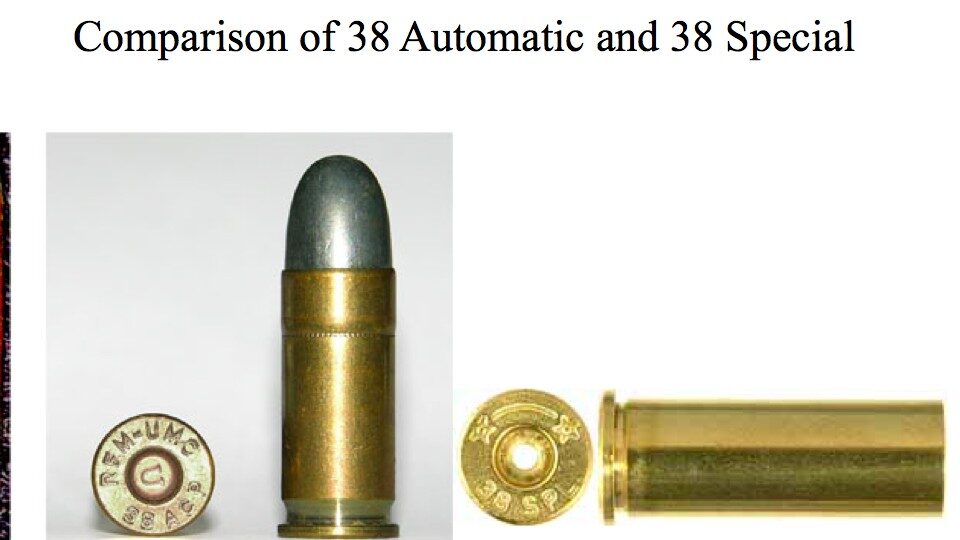
– misidentified one of the shells at the Tippit shooting as an “automatic” (it was a 38 special), and lied about under oath to the Warren Commission. He only admitted it in the 1980s (in Dale Myers’ book).
The backstory: Jerry Hill made a radio call at 1:40 pm on November 22, 1963 and reported that the hulls came from a 38 automatic, rather than a 38 special. The 38 special bullets were used by the Dallas police and were extremely well-known. Both 38 special and 38 automatic hulls are clearly identified at their base –- Hill’s misidentification cannot be passed off as a simple mistake.
When Hill testified before the Warren Commission, he threw gasoline on the fire. In the face of a very carefully phrased question by David Belin, Hill denied under oath that he made the radio call about the finding of 38 automatic hulls at 1:40 pm. Hill claimed that he wasn’t using his call number “550-2” as much as another officer, and that it was wrong to think that he made the call.
Twenty-two years later, in 1986, Hill admitted to researcher Dale Myers that he made the call. When he was asked how he determined that the hulls were 38 caliber, Hill said, “Thirty-eight’s stamped on the bottom of it. I looked on the bottom.”
Hill’s problem is that the bottom of the hull will spell out for you what type of 38 it is! (See Dale Myers, With Malice, p. 261).
— The two hulls found by Domingo Benavides at the Tippit crime scene were useless as evidence.
Officer J.M. Poe told the FBI that he marked these hulls with his initials “JMP.”
The backstory: When he testified before the Commission, Poe stated under oath that he could not swear that he put his initials on these hulls.
Hence, there was no chain of custody. Detective Jim Leavelle, a veteran of the force, told author Joe McBride, author of Into the Nightmare, that the hulls were useless as evidence.
Officer Jerry Hill complicated matters still further by claiming that Poe showed him three hulls. Did Poe lie, or were the hulls switched?
– Hill misidentified where the four shells were found at the Tippit scene.
The backstory: It could be argued that the two hulls found by two sisters, Barbara and Virginia Davis should be admitted because of the clear stories about two different officers that received them from the Davis sisters.
However, there are several problems. The hulls provided to the police were not found at the crime scene, but down the street and later in the day -– a good case that they were planted. Furthermore, the Davis sisters said that the marked hulls were not the hulls that they originally provided to the police.
Hill told Dale Myers that all of the shells were found within a foot and a half of each other. The problem with Hill’s story is that the police reports and testimony state that the four shells were found many yards apart.
– made the false claim that Oswald pulled the trigger on his revolver in the Texas Theatre but the gun misfired. Hill claimed there was a visible mark on the primer. FBI agent Cunningham testified to the Warren Commission that no such mark existed.
The story: Dallas officer Jerry Hill and other policemen always insisted that Oswald fired his revolver in the theater in an effort to kill, but that the revolver misfired.
Hill wrote in his report that one of the shells had a hammer mark on the primer.
Firearms and toolmark expert Cortlandt Cunningham testified to the Warren Commission, “We found nothing to indicate that this weapon’s firing pin had struck the primer of any of these cartridges.” In other words, Cunningham called Hill a liar.
The Warren Commission agreed with Cunningham’s finding.
– Hill leads the charge into the balcony, where Oswald could have been killed.
The backstory: At 1:46, In response to Hill’s question, Dallas police dispatcher says the suspect entered the theater, hiding in the balcony. Also see WC 705, pp. 29-30; see Armstrong, p. 864.
Police arrive at the theater. Hill and his pals charge directly into the balcony from the rear fire escape…
While Westbrook leads the main group into the main floor.
Two of the officers sprain their ankles running from the balcony the main floor when they learn the suspect is downstairs.
The backstory: Oswald is arrested, so scared that he may have pulled out his revolver, convinced that he is about to be killed. But was the one in evidence planted on him?
Hill testified that he initialed the revolver after he arrived at the police station with Oswald. The claim is that Carroll removed it from Oswald at the theatre.
As a result of this testimony, any argument that the revolver was planted on Oswald in the Texas Theatre or switched in the police station by Jerry Hill or someone else would go to the weight of the evidence, rather than admissibility.
So, assuming that the revolver was in his hand, how can they match it to the other items of evidence?
3:30 I believe this is why Buell’s sister Linnie Randle walks across the street and interrupts Ruth Paine’s interrogation by the cops to tell them that she saw Oswald carrying a bag, while Buell’s whereabouts are mysteriously unknown between 2-6 pm. Buell claims all the police records are wrong.
The backstory: Buell Frazier’s sister Linnie walks across the street and says to the police at the Paine house “we saw the bag”, that Buell said Oswald told him had “curtain rods” in it. It was probably a woman who dreamed up that story, unlikely that Frazier, Oswald or any man could have come up with “curtain rods” without Linnie’s help.
Told Warren Commission later that it was 24 inches, too small to carry a rifle. But that night wanted to keep Buell out of prison. Buell can’t be found until after 6 pm, at the hospital bedside of his estranged stepfather.
Hill also talks at length about LHO’s time in Russia, said later he learned it all from Westbrook. In a written transcript from that day, Hill tells Bob Whitten, Sacramento radio station KCRA, hat he admitted in interrogation “he was an active Communist”, and that he defected to Russia and came back with a Russian bride. Westbrook and Hill know more about this case at 5 pm than virtually any law enforcement agent in the country!
Reserve sergeant Kenneth Croy (who allegedly found another “Oswald wallet” at the Tippit scene and didn’t report it (in Armstrong’s book), and who shielded Ruby from view as he slunk into position to shoot Oswald, as we can now see in the famous videos, even the Warren Commission was suspicious of him);