Produced by AW Media Group and Dan Storper, AARC is pleased to present this extraordinary 3-Part series.
Courtesy of the estate of Dan Storper:
Special thanks to Lee Shepard and Matt Ehling.
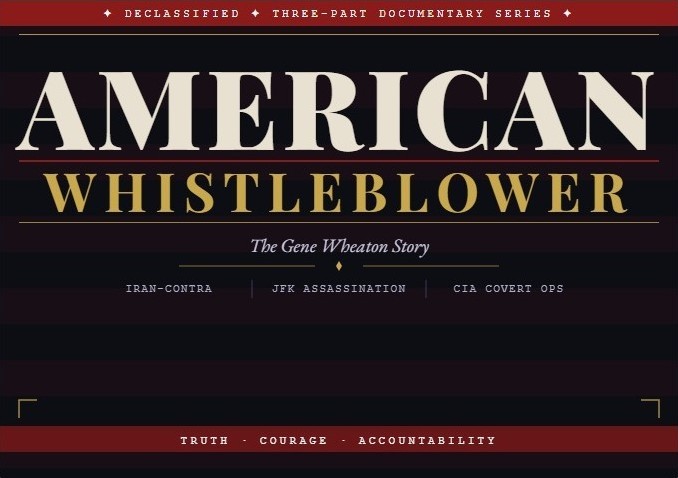
Part 1.
Transcript Ep.1 AM. WHISTLEBLOWER GENE WHEATON STORY©2025 AW MEDIA GROUP, LLC
Part 2.
Transcript Ep. 2 AM. WHISTLEBLOWER GENE WHEATON STORY©2025 AW MEDIA GROUP, LLC
Part 3.
Transcript Ep. 3 AM. WHISTLEBLOWER GENE WHEATON STORY©2025 AW MEDIA GROUP, LLC
* * *
The story behind “American Whistleblower:
The Gene Wheaton Story”
By Matt Ehling
“American Whistleblower: The Gene Wheaton Story” is the work of the late music producer and researcher Dan Storper, who passed away in 2025. The project is a three-part podcast series, which Dan intended to be the initial episodes of a larger audio project focused on intelligence agency whistleblowers.
Dan first contacted me in 2021, after I spoke on a panel discussion hosted by JFK assassination writer Bill Kelly. By then, Dan had already been involved in extensive research into the JFK assassination, as well as the activities of American intelligence agencies during the 1960s.
Bill Kelly’s panel centered on comments that former military criminal investigator Gene Wheaton made to JFK researcher William Matson Law in 2005. Law had contacted Wheaton after some of his correspondence was discovered in the National Archives. The documents indicated that Wheaton had notified the Assassination Records Review Board (ARRB) in 1994 about claims made by former colleagues regarding their involvement in the Kennedy assassination.
In a brief, videotaped conversation, Wheaton confirmed to Law that he had authored the correspondence, and provided additional details about 1980s-era conversations with intelligence operatives he had worked with during the so-called “Iran-Contra” operation. (Wheaton later became a whistleblower regarding the same project.)
Wheaton told Law that his former colleagues had described their involvement in a CIA assassination program originally directed at Fidel Castro, which was later turned against President Kennedy. Wheaton’s correspondence with the ARRB related those same claims; asked for confidentiality; and suggested that the Board contact his former colleagues.
During the panel discussion, Kelly played Law’s recording, and presentations were given by both myself and JFK researcher Lee Shepard. Kelly had invited me to participate due to my years of extensive correspondence with Gene Wheaton, which began in 1998.
Meeting Wheaton
That year, I was in the planning stages of a documentary project on problems in the American intelligence community, and I received Wheaton’s contact information from Michael Andregg — then an adjunct faculty member at the University of Saint Thomas. I traveled to California to interview Wheaton on camera, and we established a rapport. That led to several other interviews, as well as the exchange of scores of documents between 1999 and 2002.
I utilized Wheaton’s interview material in a number of television and radio programs, and we continued to correspond until 2010. In early 2006, Wheaton briefly mentioned Law’s visit, but did not discuss the Kennedy assassination matters he had related to him. (Law, in fact, had contacted me shortly before Wheaton’s call, seeking access to the Wheaton interviews I had recorded, which I then provided to him.)
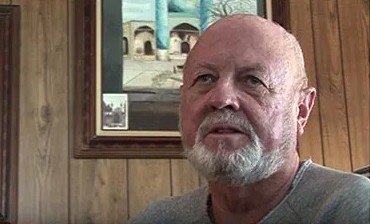
Other than mentioning the Kennedy assassination in a brief, parenthetical note within one document he provided, Wheaton did not discuss the assassination with me, or otherwise bring it to my attention. Our conversations primarily covered the Iran-Contra operation, key players in intelligence affairs during the 1970s and 80s, and a host of structural issues involving American military and intelligence agencies. He shared extensive documentation about all of those matters with me.
Wheaton had a unique perspective from which to view the United States military and intelligence establishments. From the 1950s through the 1980s, he served in varied roles inside of those communities. And from his 1980s whistleblowing until his death in 2015, he also served as an outside investigator of those same worlds.
Wheaton was a former U.S. Marine, and worked for several years as a police officer in Tulsa, Oklahoma. During his three-decade career in the United States military, Wheaton served as a criminal investigator at installations at home and abroad. After retiring from the military, he engaged in private security work for the Saudi Royal family, as well as for defense and intelligence contractors that included the Rockwell Corporation. During the 1970s, Rockwell was busy installing a border surveillance program (code-named “IBEX”) for the Shah of Iran, under an agreement with the U.S. government. Wheaton served as the head of IBEX program security for a time, and became familiar with multiple members of the U.S. intelligence community.
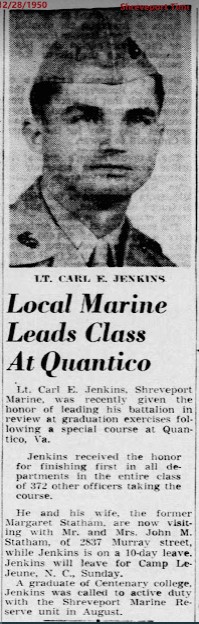
After the Shah’s government collapsed, Wheaton returned to the United States. He kept in touch with his intelligence agency contacts, including paramilitary trainer Carl Jenkins. While seeking government contracts for freight company National Air, Wheaton tapped Jenkins for leads, and stayed at his apartment multiple times in both business and social capacities. Jenkins had been active in training cuban exiles for the Bay of Pigs invasion, and Wheaton described socializing with Jenkins and a cadre of intelligence agency-connected Cuban expatriates, including Rafael “Chi Chi” Quintero. Wheaton noted that Jenkins had paved the way for the use of National Air cargo planes to haul material to the Nicaraguan Contra rebels. Once Wheaton became aware of the program’s illegal dimensions, he alerted officials in Washington, and eventually partnered with attorney Danny Sheehan to expose the operation further. He continued to investigate intelligence agency abuses well into his retirement years.
By 2007, I had started to publish certain of Wheaton’s papers on the internet. After Wheaton’s death, Law’s interview with Wheaton was uploaded to YouTube, and I was contacted by researchers who were interested in reviewing my own collection of Wheaton recordings. That ultimately led to Bill Kelly’s invitation to speak at the 2021 CAPA conference, which connected me with Dan Storper.
American Whistleblower
Storper considered Wheaton to be an important whistleblower on a number of intelligence-related topics. Through our years of interactions, I considered Wheaton to be a highly credible source and key historical witness to the Iran-Contra era. I made my collection of Wheaton materials available to Dan, and also provided him with access to an archive of other intelligence-related conversations I had recorded over the years. This material, along with new interviews with Danny Sheehan, William Matson Law, and Larry Hancock, was compiled into the American Whistleblower series. The series was completed just prior to Dan’s death, and it provides a window into the hidden history of the Cold War era, as seen through the remarkable life of Gene Wheaton.
Dan Storper (1951-2025): Dan Storper was the founder and CEO of the record label Putumayo World Music. Beginning in 2015, he conducted extensive research into the assassination of President John F. Kennedy, as well as intelligence agency activities of the 1960s. He was an advisor on the Rob Reiner/Soledad O’Brien podcast “Who Killed JFK?”
Matt Ehling: For three decades, Matt Ehling has been involved in multiple aspects of journalism and media production, as well as non-partisan public advocacy around civil liberties and government accountability issues. He has produced television documentaries for PBS, and has had extensive involvement in public records-based journalism, legal affairs, and policy matters.
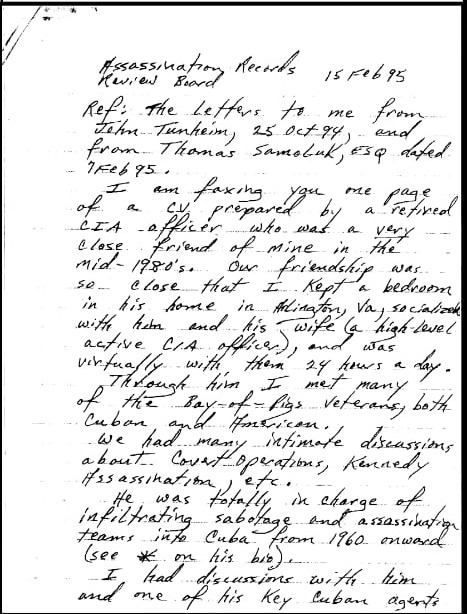
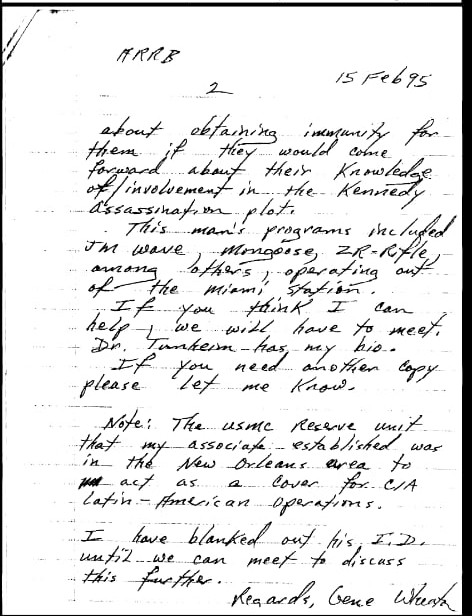
The Wheaton Lead: An Exploration
by Larry Hancock and David Boylan, April 2020
[Right Click on images and select Open In New Tab.]